1-805-484-2992
Quotes - Engineering - SalesPharmaceutical Condensers
Hygienic Condensing Under cGMP and ASME BPE
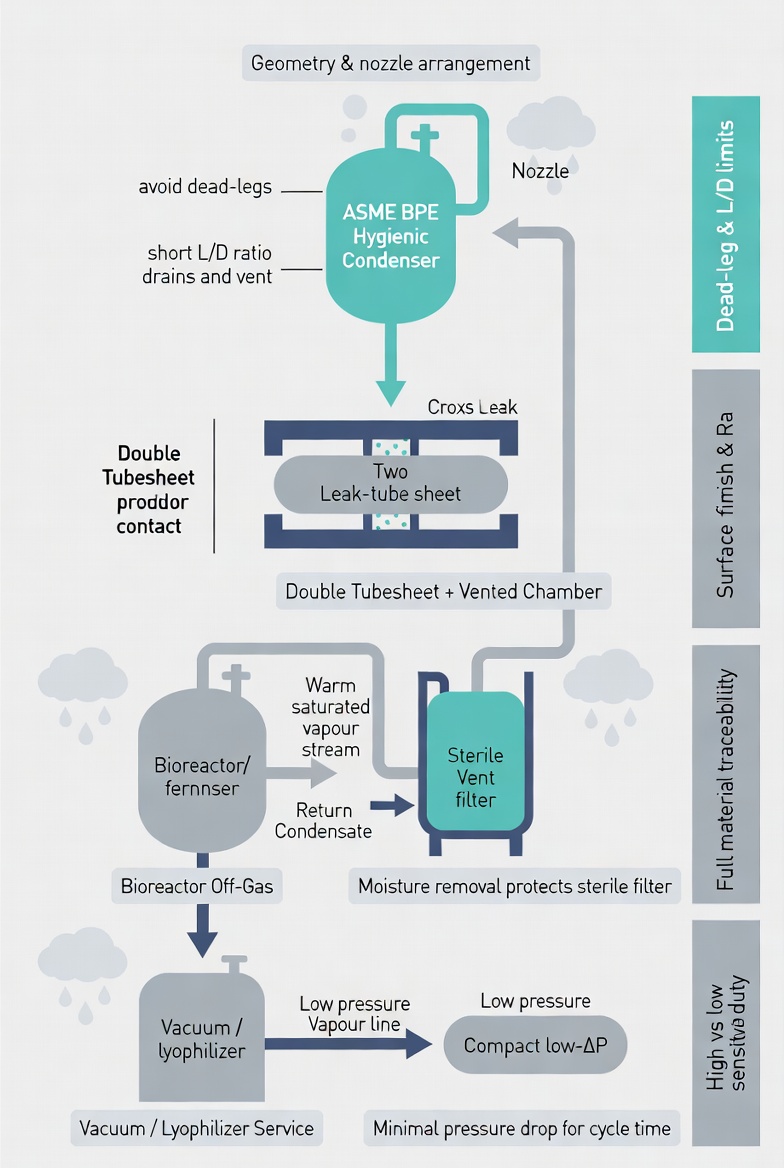
ASME BPE is not a collection of good ideas — it is a detailed technical standard that governs the design, fabrication, finish and documentation of equipment in contact with product in pharmaceutical, biotech and bioprocess facilities. First published in 1997 and revised on a regular cycle, it covers acceptable materials with full traceability, surface finish and maximum roughness, hygienic welding procedures with qualification and inspection, dimensions and tolerances, dead-leg and L/D limits, examination and testing during manufacture, and the delivery documentation needed for qualification. When a supplier says a unit complies with ASME BPE, that is the set of chapters being invoked.
Geometry decides compliance as much as material does. The standard sets specific criteria for dead legs, maximum L/D ratios and T-connection configurations, because any volume of product sitting outside the main flow path is by definition a risk zone. That applies directly to how inlet, outlet, drain and vent connections on a condenser are arranged. Two thermally identical units can differ on compliance purely through how their nozzles are detailed — which is why hygienic design has to be settled at drawing stage, not corrected later.
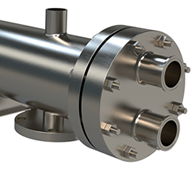
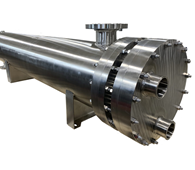
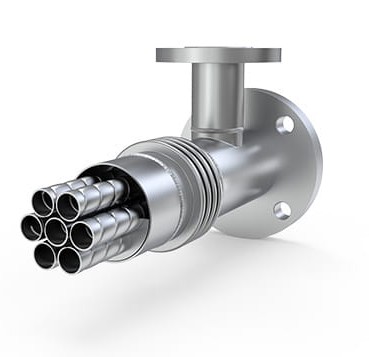
Where a wall failure would mix streams, the standard points toward configurations that eliminate the risk rather than monitor for it. The established solution is a double tubesheet with an intermediate vented chamber, so a leak is detected before it can reach product.
Bioreactor and fermenter off-gas. Exhaust from a live culture is warm, saturated and continuous. Condensing the moisture out ahead of the sterile vent filter keeps the filter from wetting out and blinding, which would restrict the vent path and drive vessel pressure up mid-run. The condensate typically returns to the vessel or goes to a contained drain. Duty has to hold across the whole batch, because gas rate and humidity both change as the culture develops.
Dryer, lyophilizer and vacuum service. Vacuum drying and freeze drying generate vapor at low absolute pressure where allowable pressure drop is the binding constraint on the design. Get that wrong and the condenser limits the vacuum the system can reach, which extends cycle time on every batch thereafter.
High and low sensitivity duty are not the same job. Some services contact product directly; others support systems that do, such as a tank jacket loop. Both need careful fabrication, but they do not need identical specifications, and pretending otherwise adds cost without adding control. Part of what we do at quotation is help sort which is which on your P&ID.
For compendial water duty see WFI condensers; for solvent-driven duty see API process condensers. Related market pages include bioreactor off-gas condensers and solvent recovery condensers.