
1-805-484-2992
Quotes - Engineering - Sales| PRODUCT | STYLE | TEMA TYPE | BUNDLE |
| Vapor Condenser | Fixed Tubesheet | BEM / AEM / NEN | Not removable |
Fixed Tubesheet Condensers
Welded Tubesheets, Lowest Cost per Square Foot
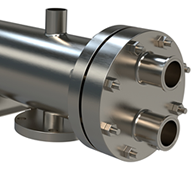
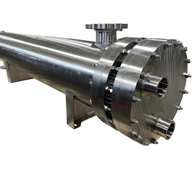
In a fixed tubesheet exchanger the tubesheets are welded directly to the shell and the tubes run straight between them. There are no packed or gasketed joints on the shell side, no floating components and no U-bends. The construction is about as simple as a shell and tube exchanger can be, and that simplicity is exactly the point: fixed tubesheet units are the least expensive TEMA design per square foot of heat transfer surface, and the NEN variant — where both the shell and the head are welded to the tubesheet — is the lowest cost of all.
What you gain. Cost, obviously. But also a genuinely leak-tight shell side, because there is nothing on that side to leak through. Straight tubes mean the tube bores can be cleaned mechanically or chemically without difficulty, and a bolted cover plate on the front head makes that access straightforward. For a condensing duty where the vapor is on the tube side and the coolant on the shell side, that combination is often ideal.
What you give up. Two things, and both matter on condensing service. First, the outside of the tubes is inaccessible: the bundle cannot be removed, so shell-side cleaning is chemical only. If the condensing fluid is on the shell side and it fouls, that is a serious constraint. Second, there is no provision for differential thermal expansion. The shell and the tubes are rigidly connected at both ends, so if they want to change length by different amounts, something is carrying that load.
The expansion joint question. Condensing duty often involves a large temperature difference — saturated steam on one side, cold cooling water on the other. That produces exactly the differential expansion a fixed tubesheet cannot absorb, and the answer is a shell-side expansion joint, sometimes combined with rod baffles for tube support. The joint works, but it adds cost and one more component that can fail, and it erodes the cost advantage that made fixed tubesheet attractive in the first place. This is the standard trade-off: once an expansion joint is required, a U-tube bundle may well come out cheaper.
Thermal shock is the real caution. Steady-state temperature difference is predictable and can be engineered around. Rapid transients are harder. Steam cleaning a fixed tubesheet unit that has no expansion joint is generally not recommended, and any condensing service subject to sudden startup, trip or blowdown transients deserves a hard look at whether fixed tubesheet is the right choice at all.
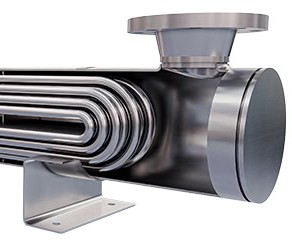
Where a bundle must come out for cleaning, see U-tube and floating head construction. For the shell type decision, see our shell and tube overview.
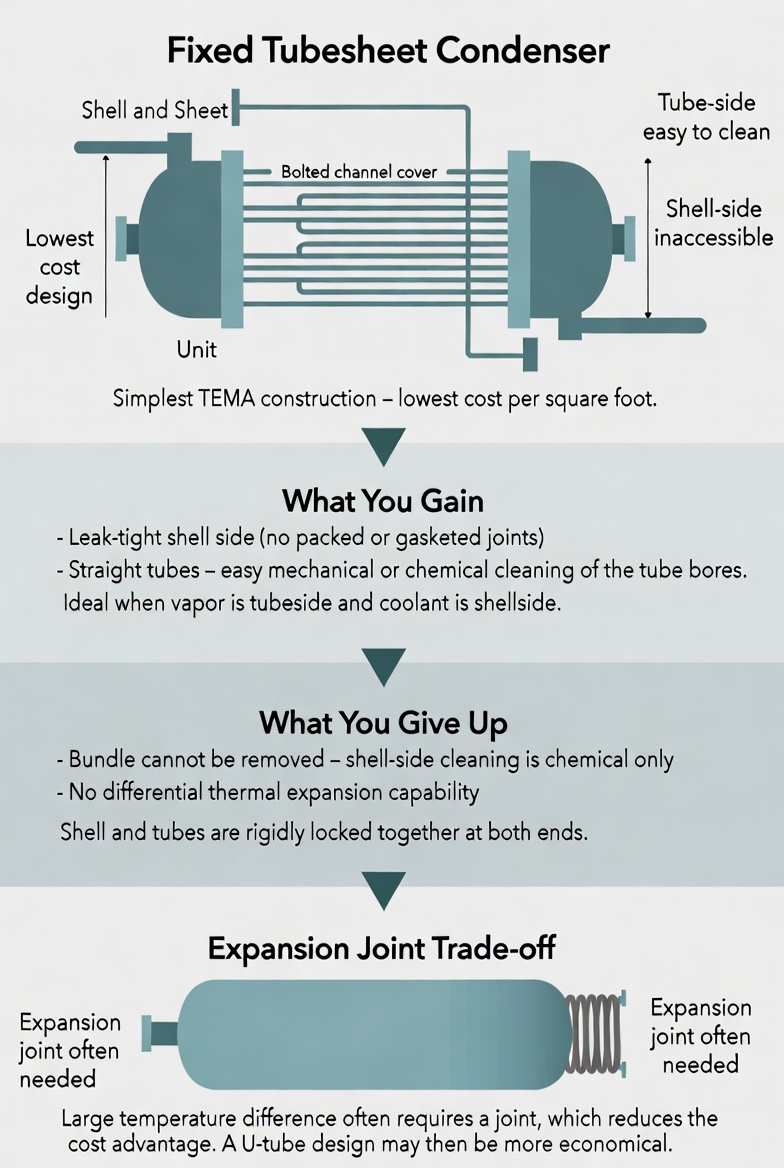
Fixed Tubesheet Condenser Configuration
Typical arrangement for condensing duty. Final configuration always depends on vapor composition, pressure, temperature difference, fouling and cleaning requirements.
Configuration
- TEMA Types: BEM, AEM, NEN
- Bundle: Not removable
- Expansion: Joint if required
- Vapor Side: Usually tube side
Features
- Lowest cost per sq ft
- No shell-side joints
- Straight, cleanable tubes
- Bolted cover plate option
- Rod baffle tube support
Typical Condensing Duty
- Clean steam condensing
- Surface condensers
- Vent and flash condensing
- Refrigerant condensing
- Utility condensing duty
Selecting Fixed Tubesheet for Condensing Service
When It Is the Right Answer
Fixed tubesheet construction suits condensing duty where three things are true: the fouling side is the tube side or neither side fouls appreciably, the steady-state temperature difference between shell and tubes is moderate, and the service is not subject to severe thermal transients. Under those conditions it delivers the same thermal performance as a far more expensive configuration and there is no good reason to pay for a removable bundle you will never remove.
Clean steam condensing with the steam in the tubes and cooling water in the shell is a textbook fit. So are many surface condenser, vent condenser and refrigerant condenser duties. The common thread is a clean condensing stream and a coolant that can be managed chemically.
When to Look Elsewhere
If the condensing fluid is on the shell side and carries anything that will deposit — polymer, salts, entrained solids, heavy ends — fixed tubesheet is a poor choice, because you will never get a brush onto that surface. If the temperature difference is large enough to require an expansion joint, price a U-tube alternative before committing, because the cost advantage may already have evaporated. And if the unit will see rapid thermal cycling, the case for U-tube construction is strong on mechanical grounds alone.
Practical Details Worth Specifying
A bolted cover plate rather than a welded bonnet on the front head costs little and makes tube cleaning genuinely practical rather than nominally possible. Rod baffles instead of plate baffles can reduce the stresses that drive the need for an expansion joint while also lowering shell-side pressure drop, which is useful on vacuum condensing. And on any condensing duty, the position of the noncondensable vent connection deserves as much thought as it does in a more expensive exchanger — a cheap condenser blanketed with gas performs no better than an expensive one.