1-805-484-2992
Quotes - Engineering - SalesProcess Condensers
Industrial Vapor Condensing for Reactor, Stripper and Waste Gas Duty
Most condensing duty in an operating plant is not governed by a hygienic standard or a distillation specification. It is a process function: a vapor stream exists, it has to become liquid at a defined condition, and the unit doing that has to keep working in a real plant with real cooling water and real fouling. The engineering that makes these units succeed or fail is less about exotic design and more about being honest at the sizing stage.
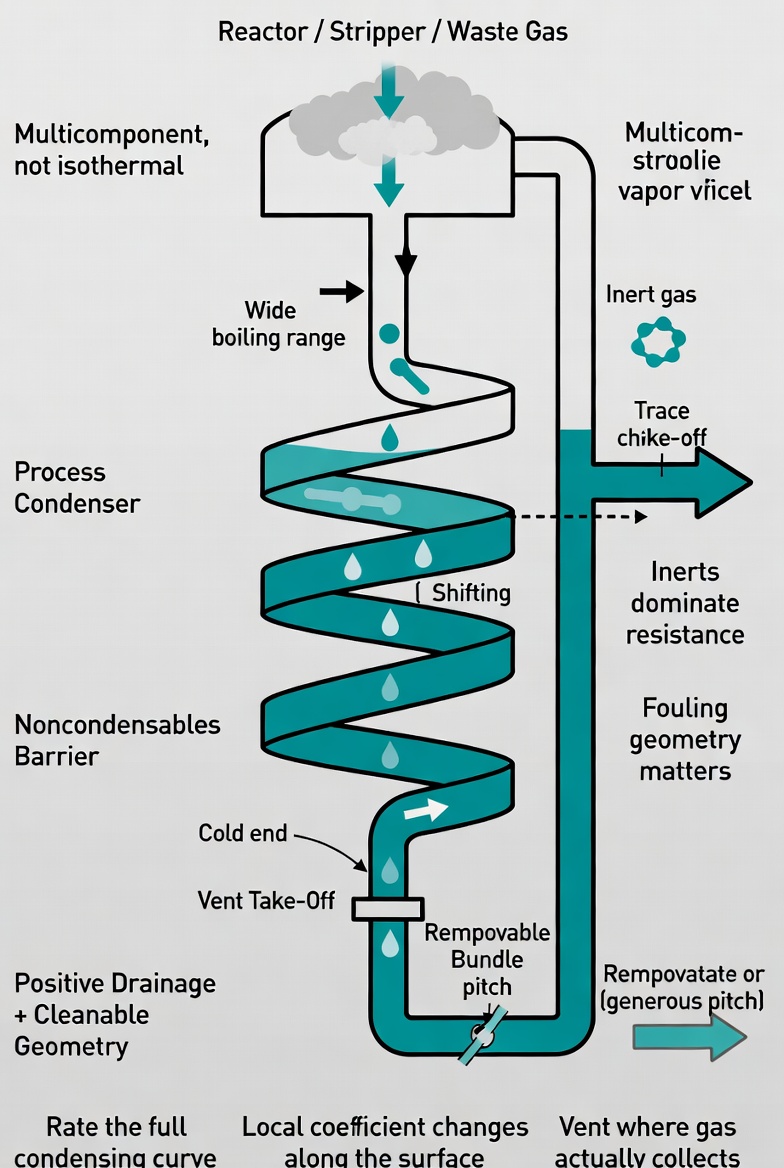
Rate the curve, not the point. A pure single-component vapor condenses at constant temperature and a single log mean temperature difference calculation describes it adequately. Almost nothing in a plant is a pure single component. A multicomponent mixture condenses over a temperature range, the local coefficient changes as composition shifts along the surface, and treating that as isothermal will produce an undersized exchanger. Wide-boiling mixtures are the worst offenders because the error compounds through the bundle.
Noncondensables are usually the actual constraint. Inerts carried with the feed, air in-leakage, nitrogen from a blanket, or gas coming out of solution all migrate to the condensing surface and form a diffusion barrier the vapor has to cross. This resistance is far larger than the tube wall's, and it accumulates in the coldest and most stagnant part of the bundle. Design has to place the vent take-off where gas will actually collect and buy area knowing the coefficient will be depressed — not assume a gas-free stream that never materializes.
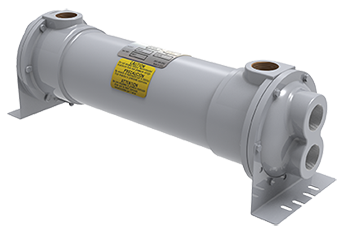
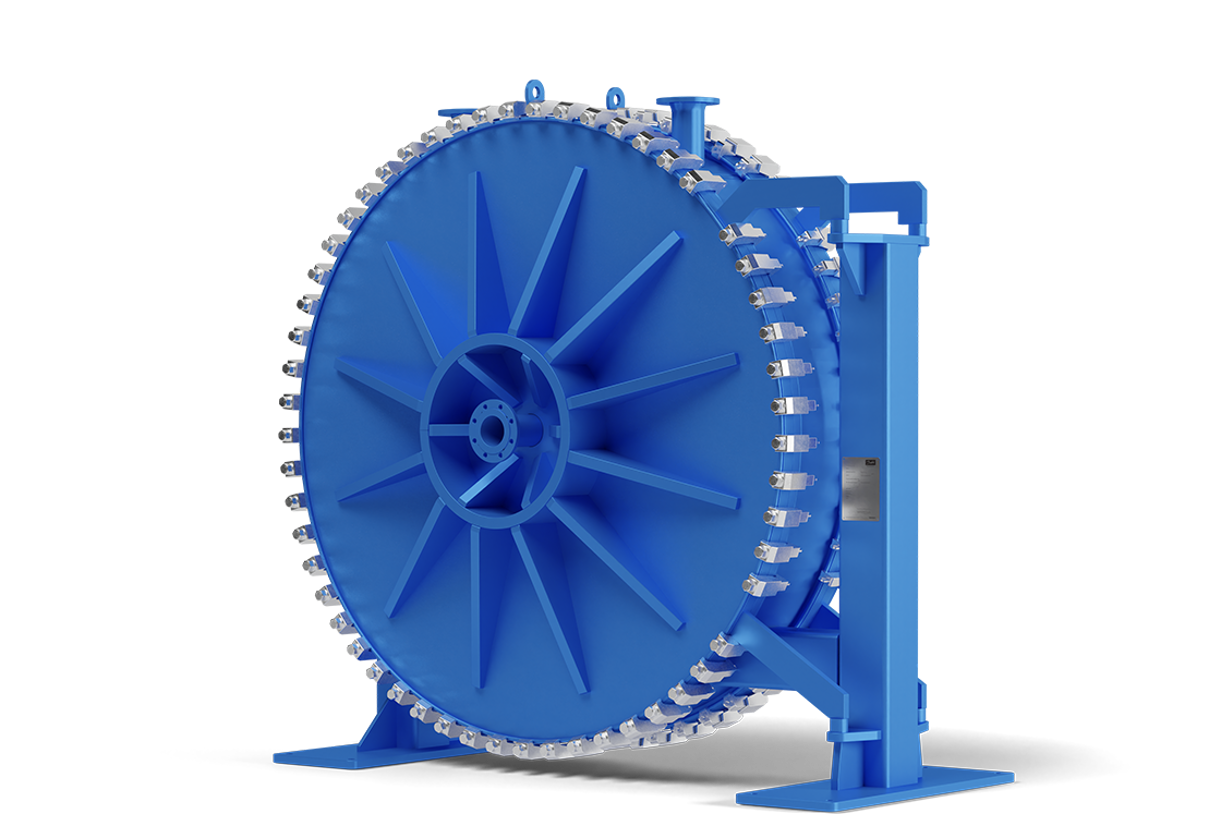
Fouling factors are not a substitute for thinking. A generic 0.001 fouling allowance on both sides is a convention, not a prediction. Polymerizing monomers, salting-out chemistry, biological growth in a cooling water loop and solids carried over from a scrubber all behave differently, and some of them foul in weeks rather than years. Where fouling is the known enemy, geometry that can be cleaned — a removable bundle, a spiral single-channel unit, generous tube pitch — is worth more than a larger fouling factor on a unit nobody can get into.
Materials follow the trace chemistry. Chlorides pit austenitic stainless, and the concentration that matters is the one in the condensate film at the surface, which can be far higher than in the bulk vapor. Acid dewpoint corrosion attacks the cold end of flue gas and waste gas condensers specifically. Duplex, titanium and high-nickel alloys exist for these duties; so do graphite and lined units. The right answer depends on what is genuinely in the stream, minor components included.
Condensate has to be able to leave. A condenser that cannot drain floods from the bottom up, losing surface as it does, which shows up as gradually worsening performance that looks like fouling but is not. Positive drainage, adequate nozzle sizing and attention to what happens at low load prevent a problem that is very difficult to diagnose from the control room.
Specific duties are covered on our surface steam, vacuum, vent and evaporator condenser pages. For column overhead duty see overhead condensers.