
1-805-484-2992
Quotes - Engineering - SalesSanitary Condensing Duty
A condenser in sanitary service has to satisfy two masters. It has to hit the thermal duty — take a vapor load to condensate at a defined temperature and pressure — and it has to survive audit. That means every internal surface reachable by product or clean steam is smooth, positively drained, and cleanable in place, with no crevice or dead leg where condensate can sit between runs. Those two requirements pull against each other more than people expect: the baffle arrangement that gives you the best shell-side heat transfer coefficient is often the arrangement that traps liquid. Getting both right is a design decision, not a catalog lookup, and it is where most of our engineering time on these projects goes.
- Clean and culinary steam condensing for kettles, retorts, sterilizers and steam-injection systems, where the condensate is either recovered as high-purity water or sent to drain.
- Evaporator and vacuum pan vapor condensing on milk, whey, juice, coffee and plant-protein concentration duty, including aroma-recovery service where the condensate carries value.
- Cooker, blancher and oven exhaust condensing to knock down steam plume, cut make-up water and reduce the load on downstream odor control equipment.
- Distillation and still overhead condensing in breweries and distilleries, where vapor composition, proof and flavor carryover all depend on how tightly the condensing curve is controlled.
- CIP and SIP compatibility built in from the start: sloped shells, low-point drains, full-penetration internal welds and a surface finish specified to the cleaning method, not left to the shop.
- Materials matched to the chemistry actually present — chlorides in brine and vegetable streams, organic acids in dairy and fruit, and caustic or acid cleaning solutions at temperature.
Sanitary Shell & Tube:
Product Contact & Clean Steam
- 316L, Ra finish to spec
- Double tubesheet available
- Drainable, CIP-ready
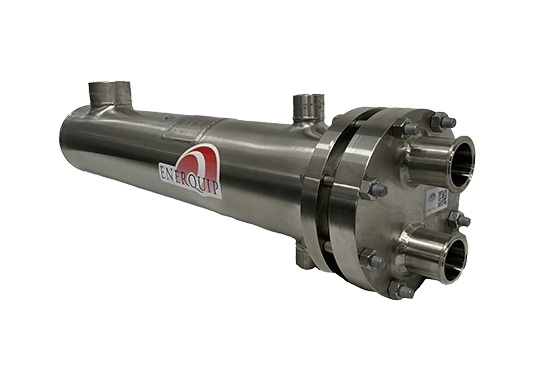
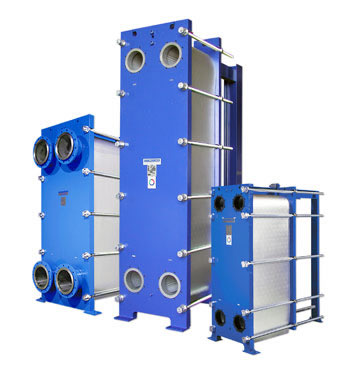
Plate Exchangers:
High Duty, Tight Approach
- Close temperature approach
- Compact footprint
- Openable for inspection
Why Drainability Decides a Sanitary Condenser
In a sanitary condenser the vapor side is the dirty side, which is the reverse of most industrial condensing duty. Whatever the vapor carries — milk solids, sugars, protein, fines from a cooker — ends up concentrated on the condensing surface and in the condensate film. If that film cannot leave the exchanger completely under gravity, it stays warm, and warm residue in a stainless shell is a bioburden problem waiting for the next production run.
This is why we tend to argue for vertical orientation with the vapor on the tube side on product-contact and clean steam duty. Condensate runs down the inside of the tubes, out the bottom head and away, with no shell-side pocket to trap it and no horizontal tube run holding a puddle. It also makes the vapor side straightforward to clean, because the same path the vapor takes is the path the CIP solution takes.
Where the exchanger separates product from a utility fluid, a double tubesheet with a vented interspace turns a tube-to-tubesheet leak into something you find on a visual check rather than in a finished-goods test. It costs surface area and money. On a duty where a cross-contamination event means destroying a batch, it is usually the cheapest part of the project.
Surface finish, weld quality, connection style and slope all get specified against the actual cleaning regime, whether that is CIP recirculation, SIP with clean steam, or manual strip-down. Tell us how the unit will be cleaned and we will design backward from that.
Sanitary Condensing Applications
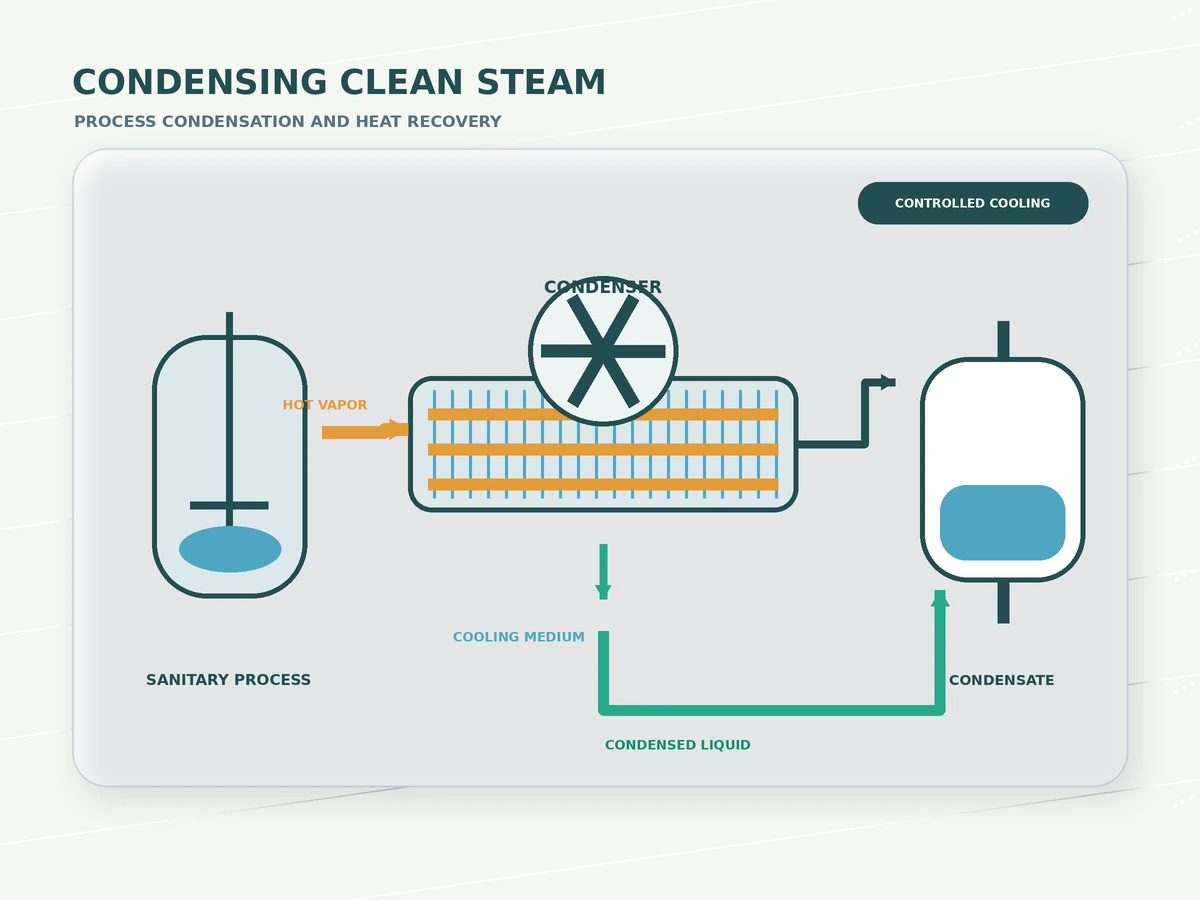
SANITARY • CLEAN STEAM
Clean Steam Condensers
Condensing culinary and clean steam to high-purity condensate, with drainable geometry and sanitary connections throughout.
+ Learn More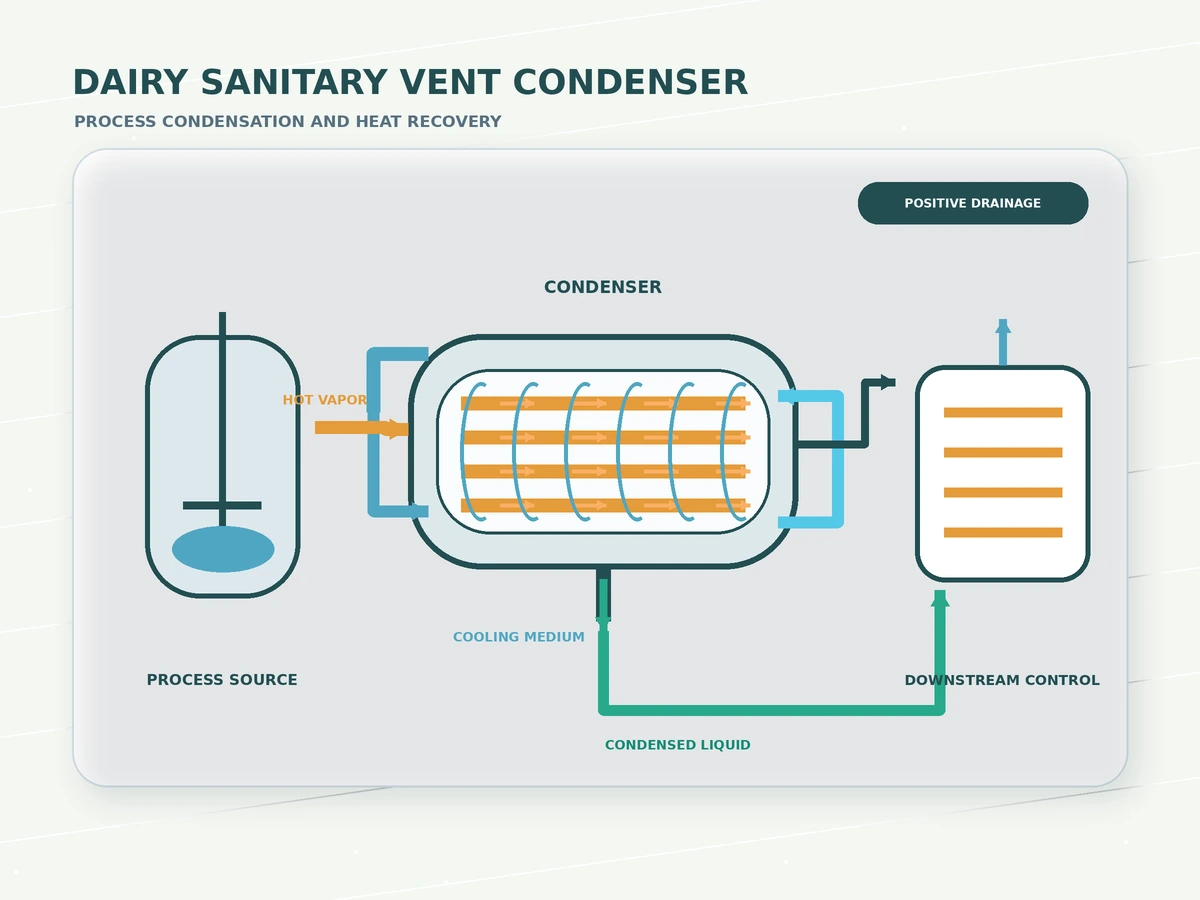
FOOD & BEVERAGE • DAIRY
Dairy Vapor Condensing
Evaporator and dryer vapor condensing on milk, whey and cream duty, sized for vacuum stability and clean condensate.
+ Learn More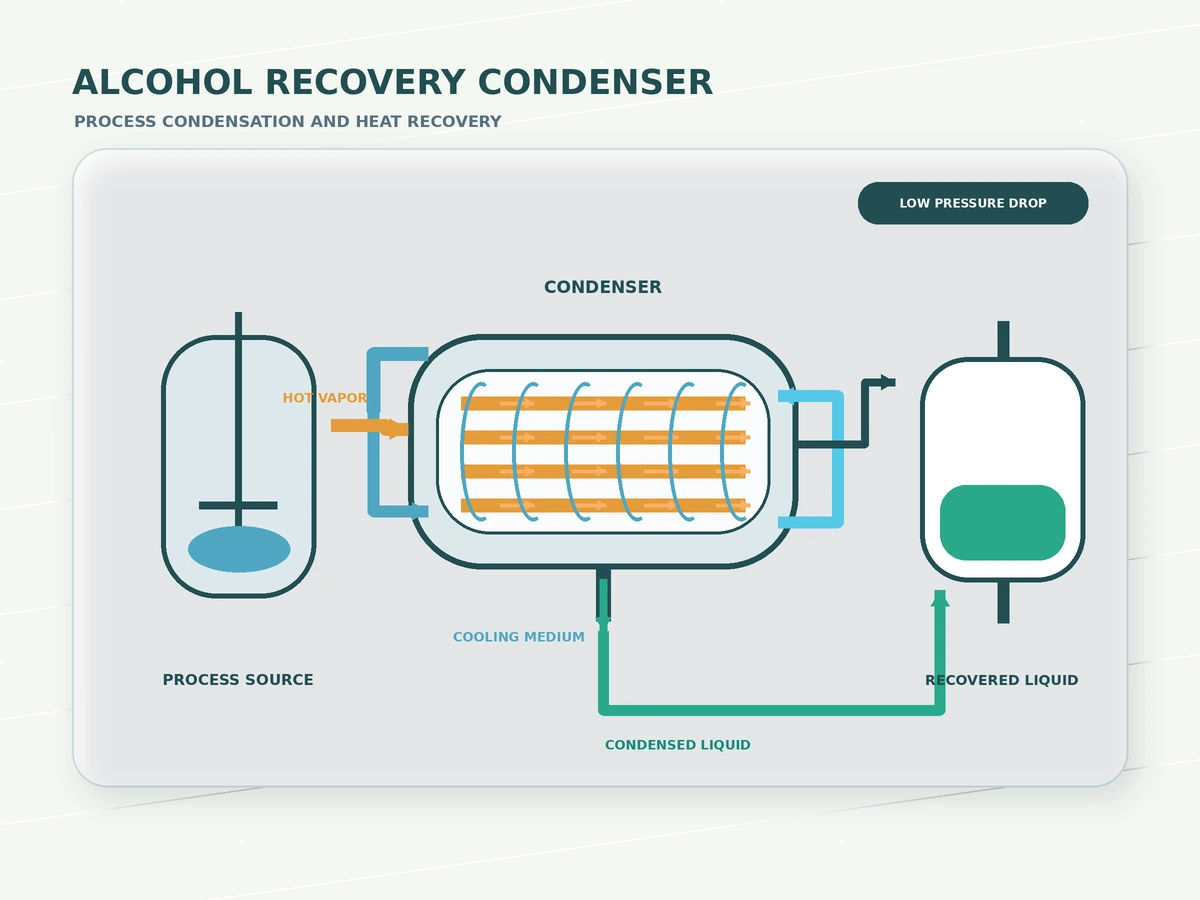
FOOD & BEVERAGE • ALCOHOL
Distilled Spirits
Spirit, reflux and dephlegmator duty where the condensing curve sets proof, cut points and flavor carryover.
+ Learn More