
1-805-484-2992
Quotes - Engineering - SalesHeat Exchangers For
Condensing Steam That Touches Product
Clean steam is generated from purified water and used wherever steam or its condensate meets product, product equipment or a sterile boundary. Condensers in this family return clean steam to liquid for sampling, for cooling SIP drains, for WFI production and for thermal balancing of sanitary loops. Because the condensate is itself a pharmaceutical-grade fluid, these exchangers are judged on drainability, surface finish and freedom from dead legs as much as on heat transfer.
Six pages sit under this topic. High-purity clean steam condensers serve semiconductor and electronics plants where ionic and particle cleanliness matters. Pharmaceutical clean steam condensers cover GMP plants with documented materials and finish. SIP clean steam condensers cool the steam and condensate leaving vessels and lines after a sterilize-in-place cycle. Sanitary clean steam condensers serve food, dairy and beverage plants working to 3-A practice. Sterilization condensers support autoclaves and sterilizers. WFI condensers are the final stage of a still producing water for injection.
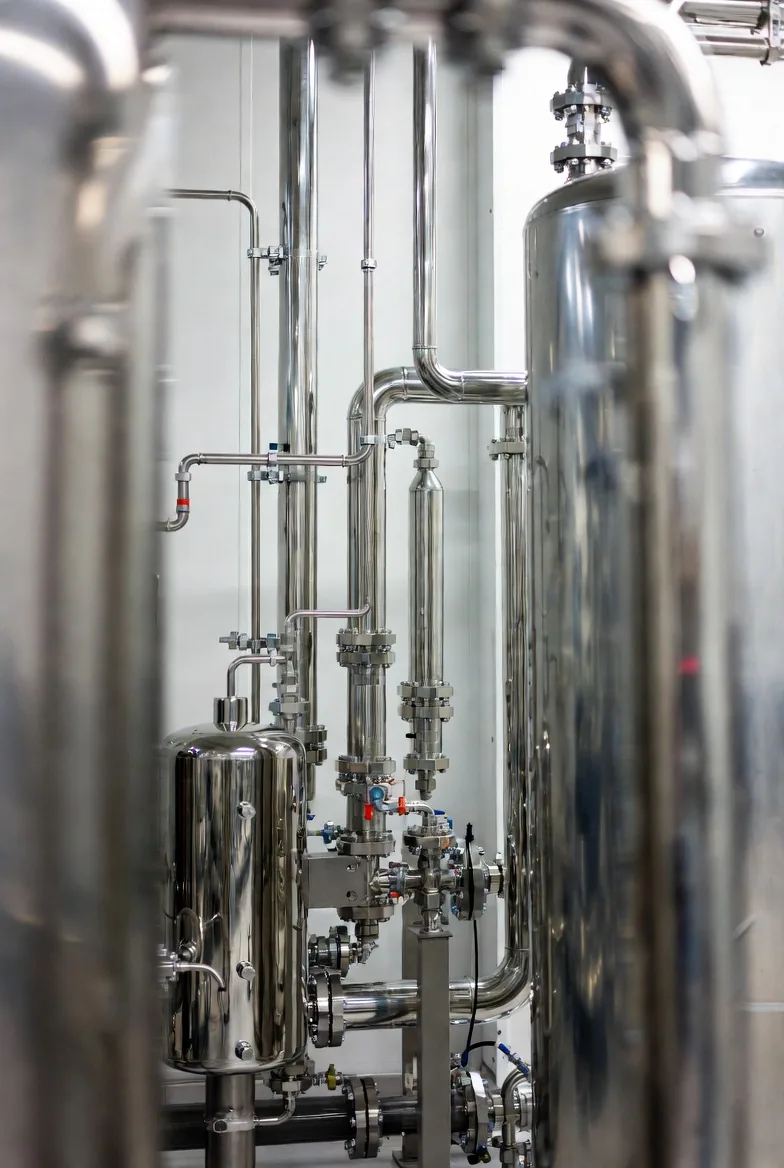
Most buyers are validation-minded process and facilities engineers who will ask for material certificates, surface roughness records and weld documentation before installation.
Request a Quote



From Sampling Coolers to WFI Stills
The clean steam duties split into two groups. Sampling, SIP and sterilization condensers are small to mid-size and intermittent: they see a burst of steam and condensate during a cycle and then sit cold, so thermal cycling and condensate pooling between cycles drive the design. Pharmaceutical, sanitary and high-purity condensers on continuous distribution loops run steadier and are rated for steady condensing with controlled subcooling, so the condensate leaves at a temperature that suits the next step.
WFI condensers stand alone. They condense the vapor leaving a multiple-effect or vapor-compression still, the product is WFI itself, and the condenser is part of a validated purification step. Double tubesheet construction is standard there, so a tube-joint leak can never let cooling water reach the distillate.
Selecting a Clean Steam Condenser
Start from what the condensate becomes. If it becomes WFI or product-contact water, the condenser belongs to the validated system and needs double tubesheets, ASME BPE finish and full drainability. If the condensate is a sample, prioritize low hold-up and quick flushing so the result represents the steam. If it is SIP drain, temperature cycling and cooling the condensate below a safe drain temperature govern. The error found most often is a condenser mounted level without slope, leaving condensate in the shell after each cycle where it becomes a bioburden finding.
Fixed Tubesheet and U-Tube Options
A Fixed Tubesheet shell and tube condenser in double tubesheet form is the default for WFI and pharmaceutical clean steam: straight tubes are inspectable end to end, the steam side drains completely when mounted vertically or sloped, and polished tubes can be borescoped. A U-Tube design absorbs thermal expansion better on cycling SIP and sterilization duties where shell and tubes swing widely in temperature, and its removable bundle eases inspection. The trade-off is the U-bend, harder to inspect and drain in some orientations, so it suits utility-side condensing better than product-side service.
What Getting It Right Prevents
A drainable, documented condenser passes qualification without rework, and sample results reflect the steam rather than the cooler that produced them.
Eliminating standing condensate removes a source of rouge and biofilm, which lengthens the interval between passivation and derouging campaigns.
Finish, Alloy and Documentation
Product-contact surfaces are typically 316L with an electropolished finish to ASME BPE surface roughness designations, orbital welds with weld maps and borescope records, and material test reports traceable to the heat. Gaskets on sanitary connections are compliant elastomers or PTFE. The cooling-water side can be 304 or 316, though chloride in tower water argues for 316 there as well. High-purity semiconductor duties may add limits on extractables and specific cleaning before shipment.
Shared Inputs for Clean Steam Quotes
For any of the six duties, provide steam flow or condensing duty, steam pressure, required condensate outlet temperature, coolant type and supply temperature, required surface finish and documentation package, connection type, and the mounting orientation available. For cyclic duties include the cycle length and how fast the unit must reach its cooled condition. For WFI, state the still capacity and whether the site specification calls for a double tubesheet.