
1-805-484-2992
Quotes - Engineering - Sales| ARRANGEMENT | FAN POSITION | AIR AT FAN | MAIN ADVANTAGE |
| Forced Draft | Below bundle | Cool ambient | Fan life & access |
| Induced Draft | Above bundle | Heated exit air | Even distribution |
Forced and Induced Draft
Where the Fan Sits and Why It Matters
Every air cooled condenser has to move a very large volume of air through a finned bundle. There are only two places to put the fan, and the choice has consequences that run through the whole design.
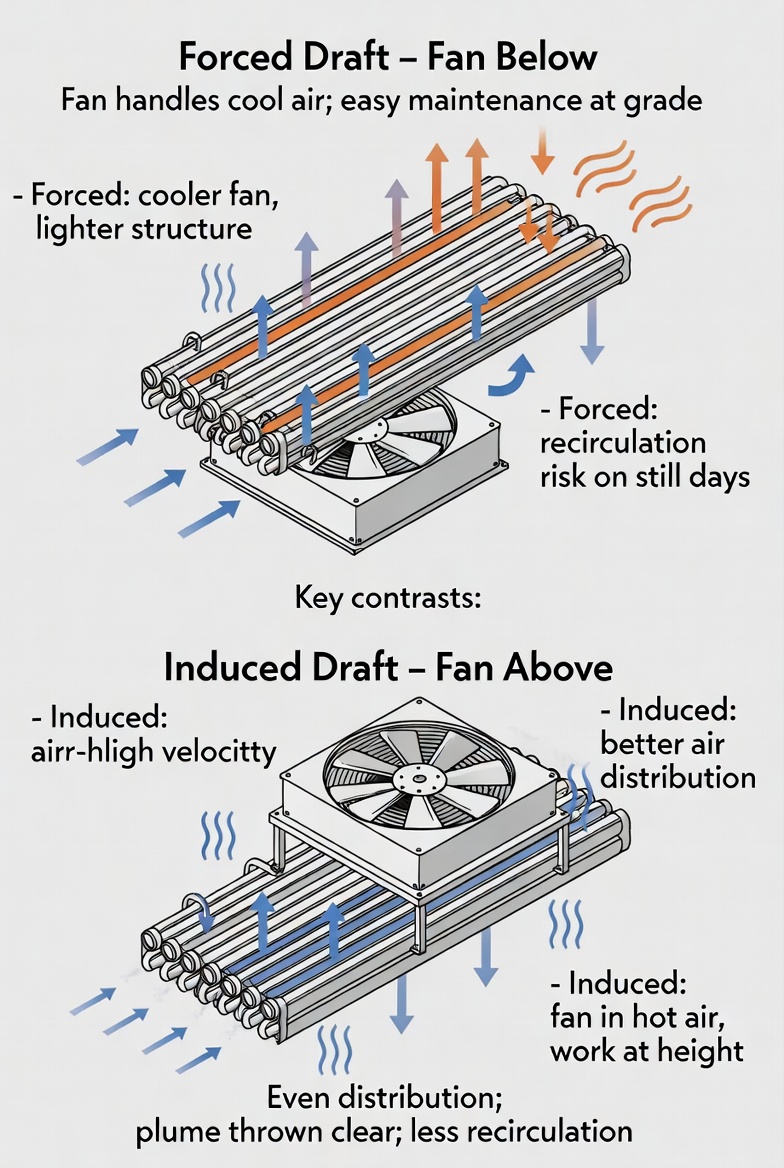
Forced draft puts the fan below the bundle, pushing ambient air upward through it. The fan handles cool air, so the fan, bearings, motor and drive all run at ambient temperature and last longer. Everything needing maintenance sits at grade or close to it, which makes service straightforward and cheap. Structural requirements are lighter because the fan and drive are not supported above the bundle.
The weaknesses are air distribution and recirculation. A fan discharging into a plenum produces an uneven velocity profile, with a fast core and slow edges, so parts of the bundle see less air than others. And because the air leaves the top of the bundle at low velocity, it tends to drift — and on a still day it can drift straight back down into the fan inlet. That recirculation raises the effective inlet air temperature, sometimes by several degrees, and derates the condenser in exactly the hot, still conditions where you most need it.
Induced draft puts the fan above the bundle, drawing air up through it. Because the fan pulls rather than pushes, the pressure profile beneath the bundle is more uniform and air distributes far more evenly across the face. Discharge velocity is high, so the plume is thrown clear and recirculation is much less likely. The bundle is shaded from direct sun and sheltered from rain and hail, and the unit is significantly less sensitive to cross-winds.
The costs are real. The fan runs in heated exit air, which limits material choice and shortens bearing and belt life. The fan, motor and drive sit above the bundle, so the structure is heavier and maintenance requires working at height. Fan power is slightly higher because the air being moved is hotter and therefore less dense.
A practical way to decide. If the plant is in a hot climate where recirculation on still days would hurt, or exposed to strong cross-winds, or where even distribution across a large bundle matters, induced draft usually earns its cost. If the process temperature is high enough that exit air would cook a fan, if maintenance access is a serious constraint, or if capital cost is the binding factor, forced draft is the sensible answer.
See horizontal fin fan and V-bank arrangements, or the air cooled overview.
Draft Arrangement Selection
The choice follows from site conditions, process temperature and maintenance philosophy as much as from thermal performance.
Configuration
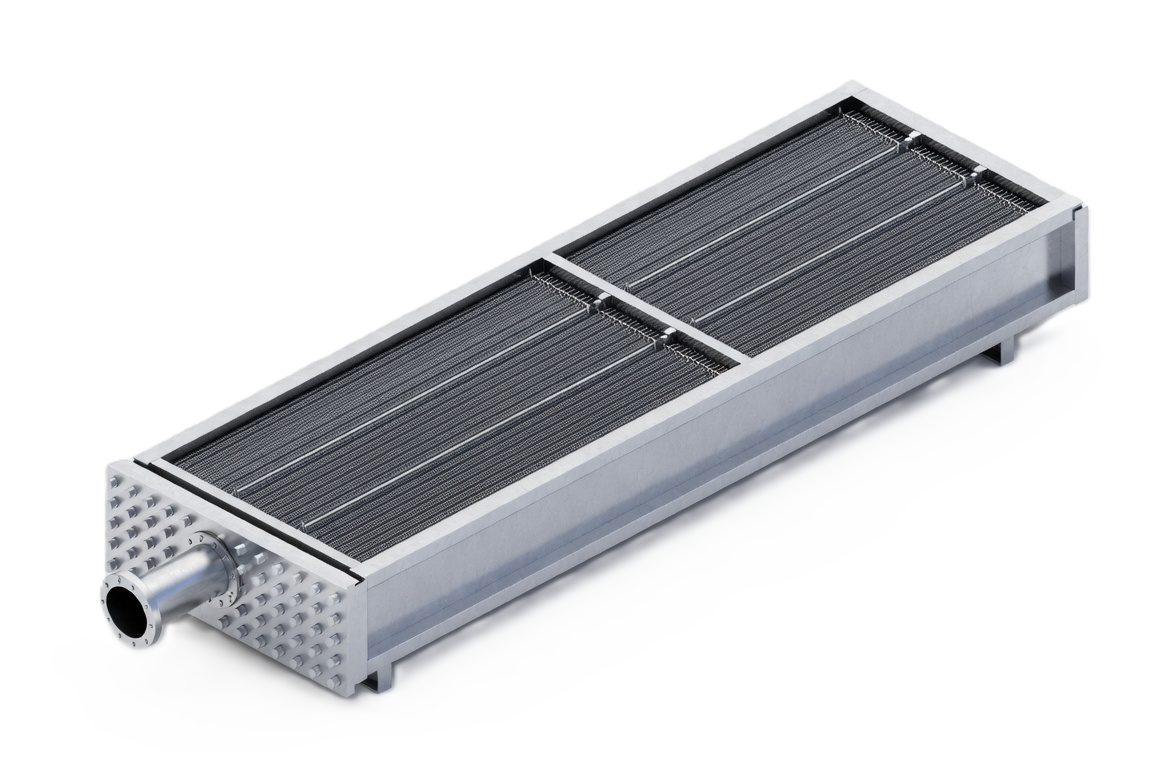
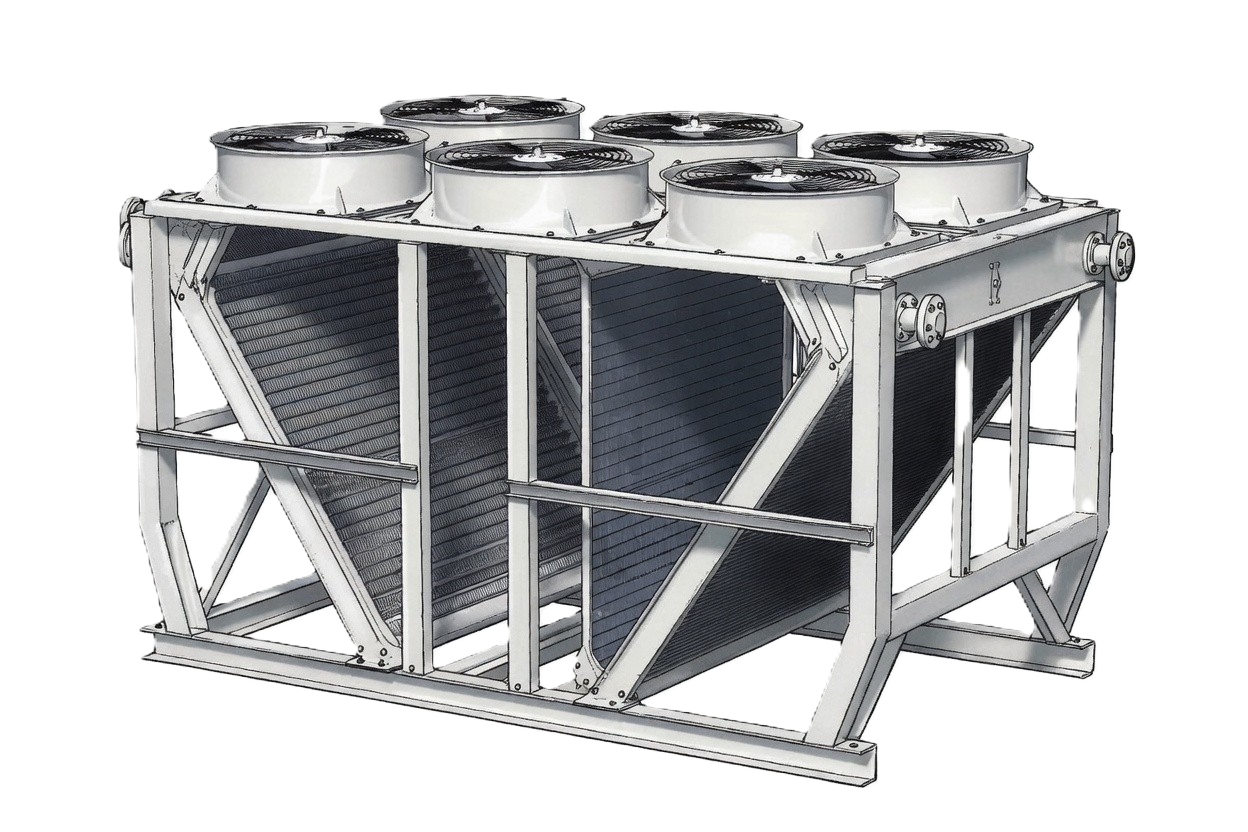
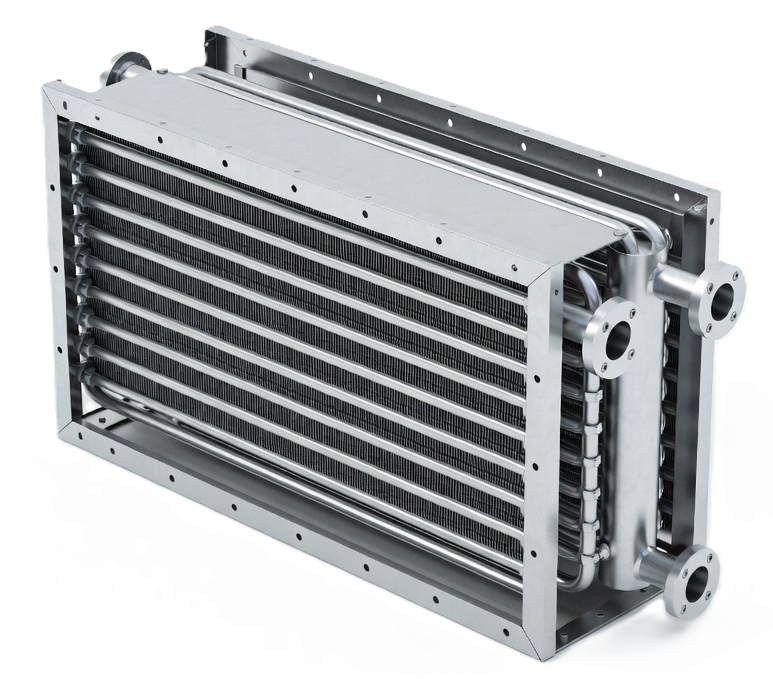
- Forced Draft: Fan below bundle
- Induced Draft: Fan above bundle
- Control: VFD, two-speed, louvres
- Fans: Axial, adjustable pitch
Features
- Variable speed control
- Adjustable pitch blades
- Louvre control option
- Recirculation ducting
- Auto-variable fan hubs
Typical Condensing Duty
- Process vapor condensing
- Steam condensing cells
- Hot climate installations
- High wind exposure sites
- Cold climate freeze control
Controlling an Air Cooled Condenser
Why Control Is Not Optional on Condensing Duty
An air cooled condenser is sized for the hot design day and spends most of the year with surplus capacity. On a liquid cooling duty that surplus is harmless — the outlet simply runs colder. On a condensing duty it is not, because condensing pressure is tied to condensing temperature. Over-condense and system pressure falls below where the process wants it, control valves lose authority, and in some systems flow through the condenser becomes unstable.
So an air cooled condenser needs a way to reduce its own capacity. Variable frequency drives on the fans are the most flexible and also save considerable fan energy at part load. Two-speed motors are a cheaper approximation. Staging fans off in a multi-fan bay is coarse but effective. Adjustable-pitch or auto-variable hubs change the air flow without changing fan speed. Louvres throttle air flow mechanically and are particularly useful in cold weather.
Recirculation, and How to Design Against It
Recirculation is hot discharge air finding its way back to the inlet. It is worst on forced draft units on still, hot days, precisely when the condenser has the least margin. The effect is a silent derate: the unit performs as if the ambient temperature were several degrees higher than the thermometer says, and no instrument on the skid reports the cause.
Design responses include raising the bundle to increase the distance discharge air must travel to return, avoiding tight clusters of bays that trap air between them, orienting the installation with respect to prevailing wind, fitting wind walls where cross-flow is a known problem, and choosing induced draft where the risk is high. On an existing unit that underperforms in summer with no other explanation, recirculation is worth investigating before adding surface.
Cold Weather Operation
In cold ambient conditions the problem inverts. Too much cooling can subcool condensate heavily, collapse system pressure, or freeze stagnant liquid inside tubes. Warm air recirculation ducting deliberately routes some discharge air back to the inlet — the same phenomenon that is a problem in summer, used on purpose in winter. Louvres reduce air flow, fans can be slowed, stopped or in some designs reversed, and internal recirculation can be arranged within a bay.
The important point is that freeze protection is a design feature rather than an operating procedure. Retrofitting it after the first cold snap splits a tube is expensive, and the arrangement of passes and headers that makes it work has to be settled before fabrication.