
1-805-484-2992
Quotes - Engineering - SalesHeat Exchangers For
Still Condensers for Whiskey, Rum, Gin and Neutral Spirit
A still condenser does two jobs at once: it removes the latent heat of an ethanol-water vapor, and it is the last metal the spirit touches before the spirit safe. Pot stills deliver vapor in a batch whose proof falls through heads, hearts and tails. Column stills deliver steady vapor close to the azeotrope from a rectifier, often after a dephlegmator. The condenser has to follow those changes without losing control of distillate temperature.
Fixed Tubesheet shell and tube condensers, in copper or stainless, are standard on most pot and column stills: vapor on the shell or in the tubes, cooling water in counterflow and a straight bore that can be rodded. U-Tube construction comes in where thermal cycling from batch heat-ups is severe or where the bundle needs to come out for inspection without disturbing the vapor connections.
Hot alcohol vapor is a fire hazard. A condenser undersized for the peak of a stripping run sends vapor past the parrot and into the still house, and that, not lost yield, is the first reason to size generously.
Gin adds another wrinkle. Vapor-infused gin passes through a botanical basket before the condenser, and the oils it carries can coat cold tube surfaces and flavor the next distillate if the unit is not flushed. Neutral spirit columns sit at the other end, running long steady campaigns where water-side scaling matters more than flavor carryover.
Request a Quote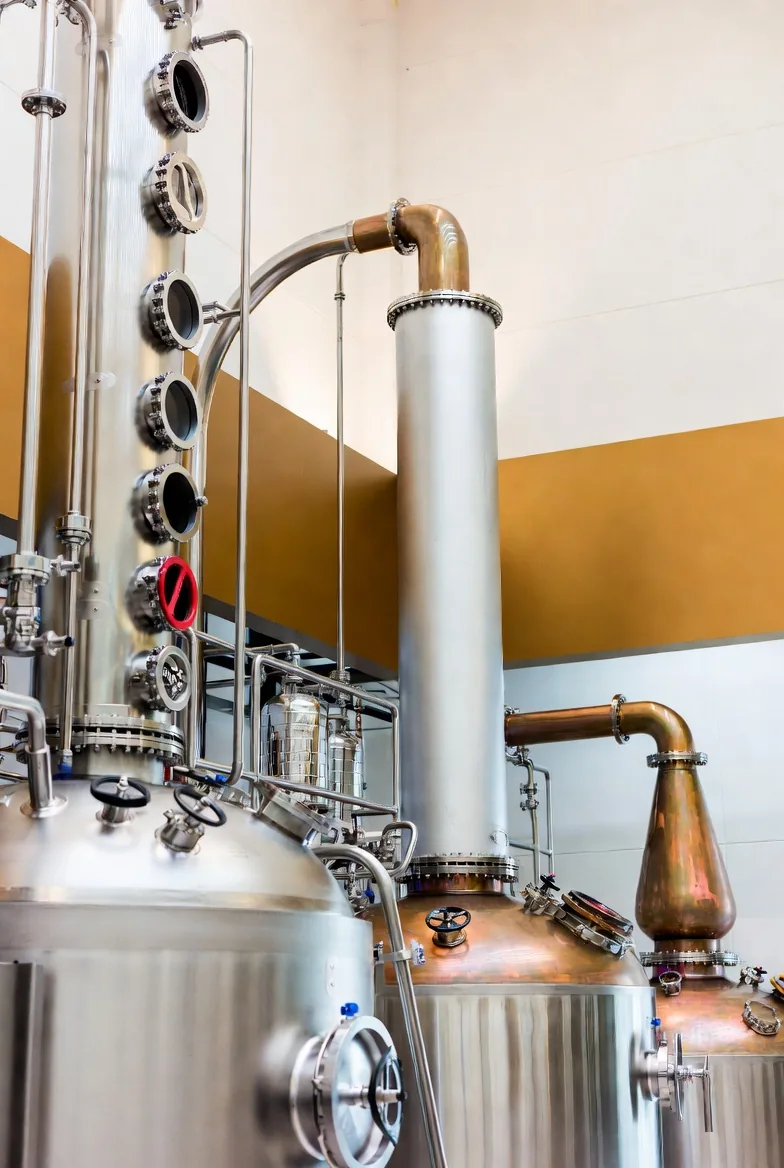




Why Copper Matters
Copper in the vapor path removes sulfur compounds such as dimethyl trisulfide and hydrogen sulfide that give new make a meaty or rubbery note. The reaction happens on hot, wet copper, and the condenser tubes are a large share of that surface, especially in shell and tube designs where vapor meets copper at condensing temperature.
Distillers who switch to an all-stainless condenser for durability often notice a change in character. A common compromise is copper tubes in a stainless shell, or a stainless condenser with extra copper elsewhere in the vapor path.
Pot Still or Column Still
A pot still condenser sees a rising and falling load: low at the start, a hard peak when the charge is in full boil, then a long tail. It has to swallow the peak without vapor breaking through. A column still condenser runs at steady load near top-tray proof, often with a dephlegmator taking part of the duty and returning reflux. Give us the boil-up rate, not just the still volume.
Fixed Tubesheet Versus U-Tube
Fixed Tubesheet condensers are simple, can be built entirely in copper and allow tubes to be rodded. Because they swing from cold to near 200 F every run, a shell expansion joint is often added. U-Tube condensers absorb that expansion freely and the bundle can be pulled, but U-bends cannot be mechanically cleaned, so the bends belong on the clean cooling-water side. Tube-in-tube designs suit small craft stills but grow long quickly as load rises.
Distillate Temperature and Proof
Distillate leaving in the 60s F is easier to proof, measure and collect, with lower vapor losses from the spirit safe. Warm distillate gives up aroma and alcohol to the room.
An ethanol-water mixture condenses over a temperature glide, so the condenser must take vapor through the dew point and well into subcooling with adequate area in each zone; a unit that condenses but does not subcool sends warm spirit forward.
Well Water, City Water or Tower
Many distilleries run on well water, city water or a small cooling tower. Cold well water allows a compact condenser; tower water in the mid-80s F needs far more area to bring distillate down. Tell us the summer worst case and wether water is recirculated, because the warm outlet water can be routed to preheat the next charge or the wash.
Hard well water scales the water side of a condenser quickly at the outlet temperatures a still produces. Put the cooling water in the tubes where it can be rodded, or treat the water, and expect distillate temperature to creep up through the year if neither is done.
Cleaning and Inspection
Copper condensers slowly give up metal to the sulfur reaction and to acidic tails, and the corrosion products form a dark film that should be flushed out regularly. Check tube wall thickness on older copper units and plan replacement before a pinhole lets cooling water into the spirit.
Related
FOOD & BEVERAGE • MARKET
Beverage Production
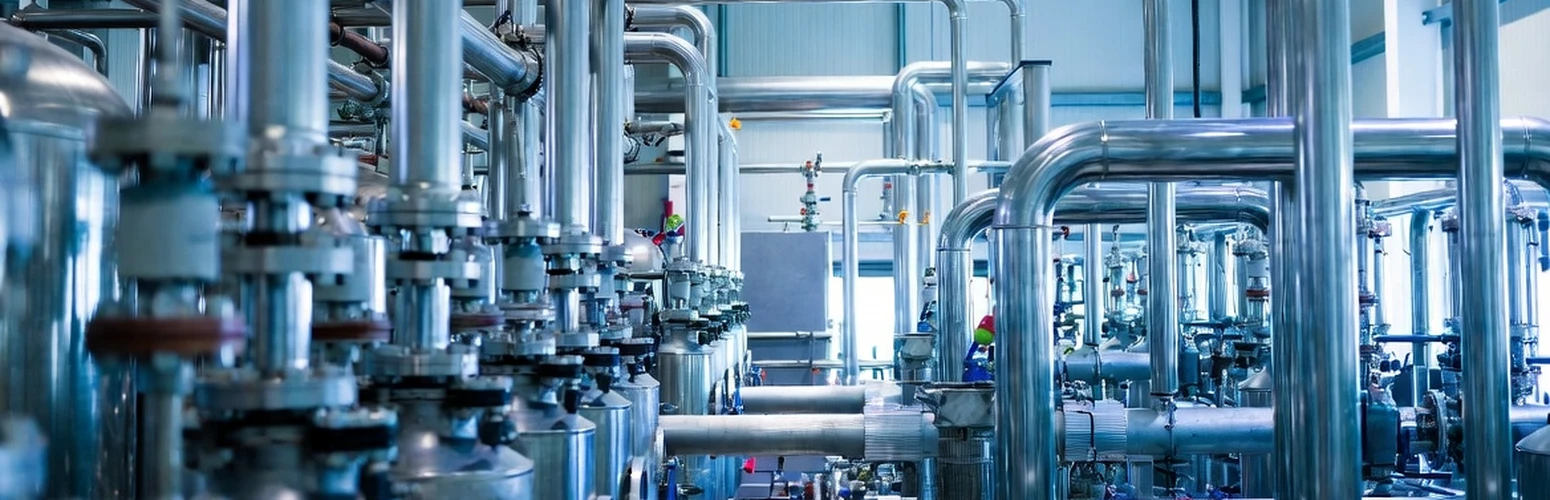
Juice essence, flavor concentrate and syrup room vapor carry product. Condensers for beverage plants that recover it rather than waste it.
+ Learn More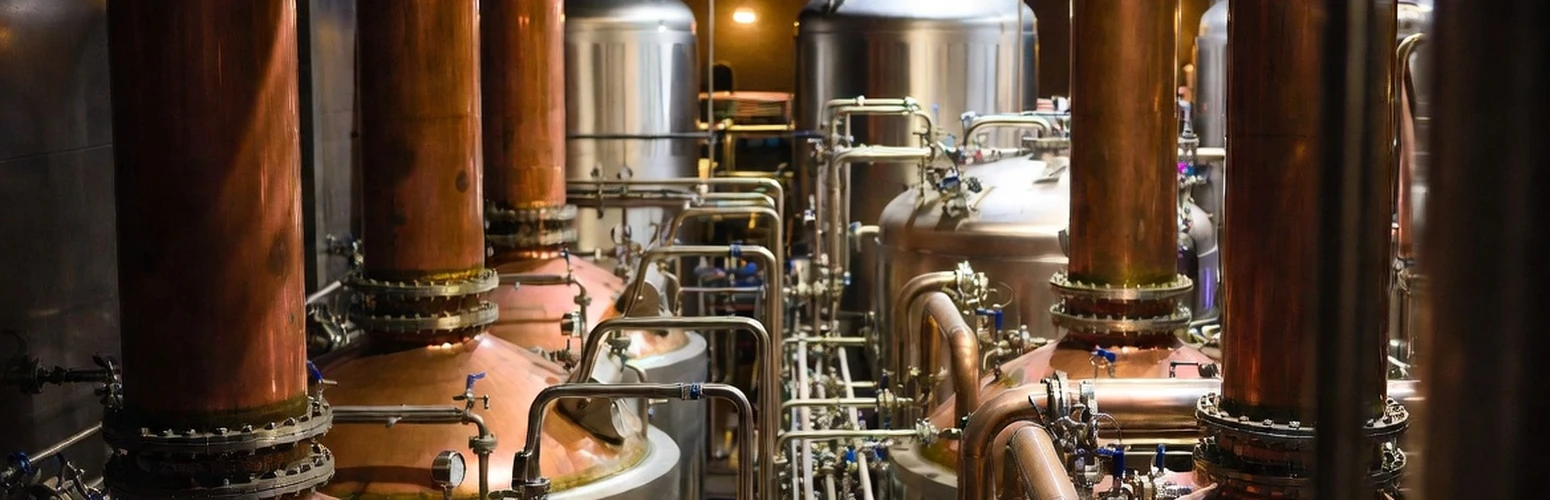
FOOD & BEVERAGE • MARKET
Brewery
A wort kettle boils off several percent of its volume per hour. Turn that plume into hot water for the next brew and cut odor at the stack.
+ Learn More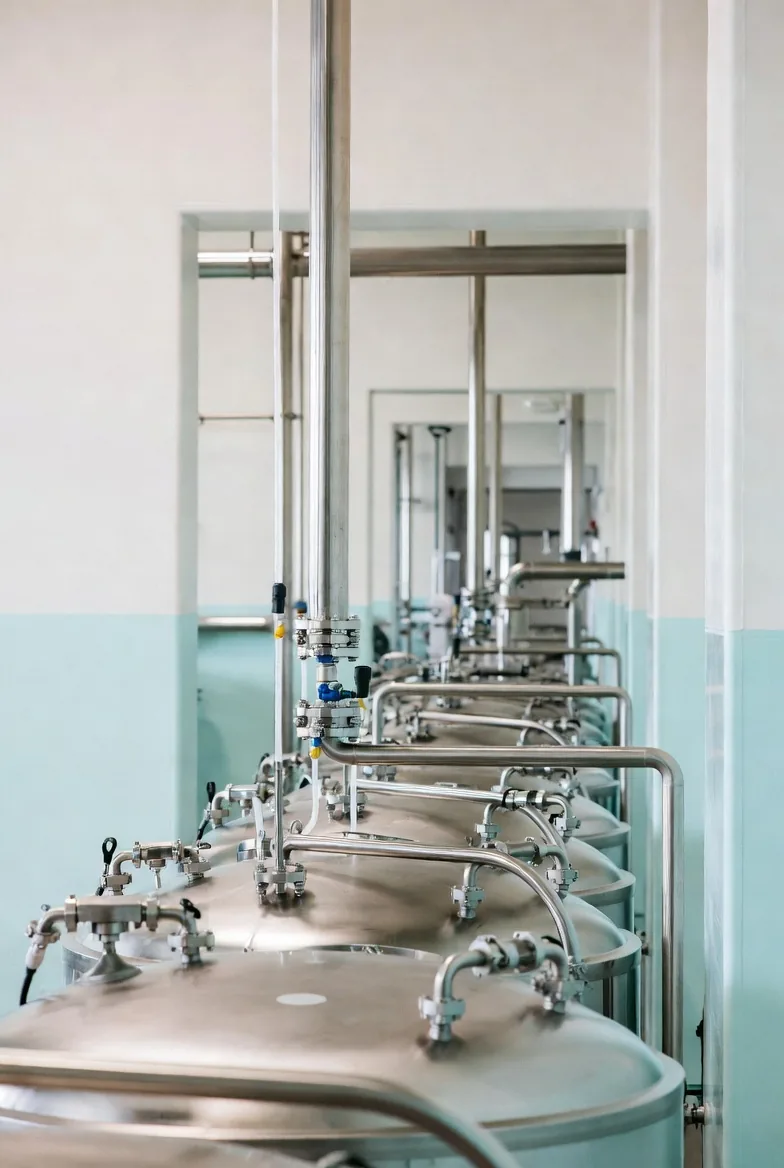
FOOD & BEVERAGE • MARKET
Dairy
The last-effect condenser sets the vacuum for a milk or whey evaporator. Size it to hold 100 to 120 F condensing against tower or chilled water.
+ Learn More