
1-805-484-2992
Quotes - Engineering - SalesHeat Exchangers For
Pulling Value Out of Waste Gas
Waste gas recovery condensers work on streams the process has finished with: furnace and engine exhaust, reactor off-gas, purge streams from synthesis loops, and the collected vent gas of a plant header. The gas is mostly noncondensable, but it carries water, hydrocarbons or valuable components, and often enough sensible and latent heat to be worth capturing. The condenser's job is to take the gas below its dew point and pull out the liquid without restricting the source.
Five duties fall under this topic. Exhaust gas recovery cools hot combustion or dryer exhaust to reclaim water and heat. Off-gas recovery handles reactor or fermenter gas carrying entrained product and solvent. Process waste gas recovery deals with mixed streams from separation or treatment units. Purge gas recovery reclaims expensive components, frequently heavier hydrocarbons, ammonia or methanol riding in a hydrogen-rich loop purge. Vent gas recovery takes the combined vents of a tank farm or unit and treats them as one stream.
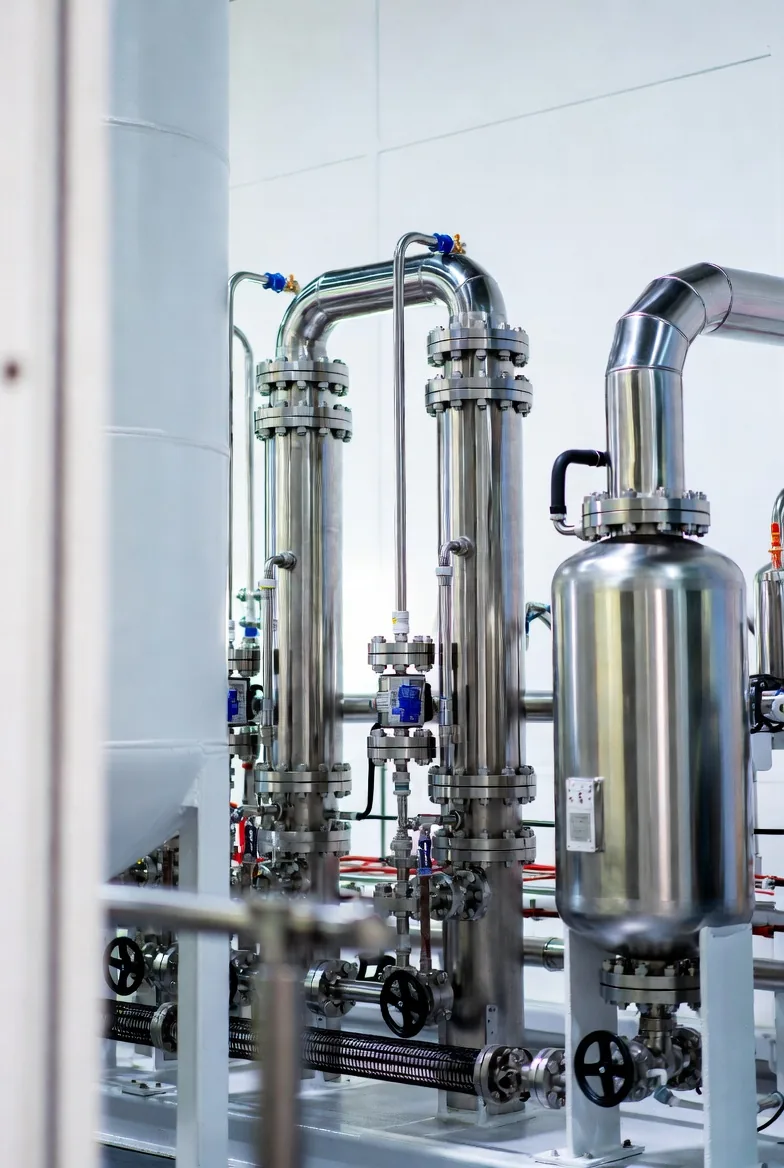
Backpressure ties the five together. The source was designed to discharge to atmosphere or a flare at low pressure, so every inch of water column across the condenser is borrowed from someone else's equipment.
Request a Quote



How the Five Waste Gas Duties Differ
Exhaust and process waste gas are hot and dirty. Combustion exhaust condenses acidic water once it crosses the acid dew point, and dryer or kiln exhaust carries dust that turns to mud on a wet tube. Those streams need generous tube spacing, a cleanable bundle path and alloys that survive dilute sulfuric or carbonic acid. Off-gas from reactors and fermenters is cooler and cleaner but often carries an aerosol mist that passes straight through a condenser unless a coalescing stage follows it.
Purge gas is the high-pressure member of the family. A purge from a hydrogen or ammonia loop may sit at several hundred psig, which favors gas in the tubes and makes condensing the heavier components unusually easy, since elevated pressure lifts their dew point. Vent gas is the opposite case: near atmospheric, highly variable in flow and composition, and governed by the worst simultaneous release into the header.
Selecting Among the Five
Decide wether the value is the liquid, the heat or compliance. If heat, the exchanger is rated against a water or air stream that can use it, and the condensing load becomes a boiler feed or space heating credit. If a recovered component, purity and outlet partial pressure govern. If compliance, the outlet condition is fixed and the question is how much surface reaches it. The failures seen in the field are an exchanger sized for heat recovery that floods with condensate it was never drained for, and a mist that sails through and shows up as a plume.
Shell and Tube Versus Fin Fan on Waste Gas
A Fixed Tubesheet shell and tube unit suits most waste gas duties, with dirty gas routed to the side that can be washed or lanced and condensate drained continuously. For high-pressure purge gas, putting the gas in the tubes keeps the shell thin. A Horizontal Fin Fan cools hot exhaust or vent gas without consuming water and passes large volumetric flows at low pressure drop, which protects the source from backpressure. It cannot reach low outlet temperatures in summer, so recovery that depends on deep cooling needs a water- or glycol-cooled final stage.
Recovered Heat, Water and Product
Exhaust condensers return heat to process water or boiler feed and can reclaim a meaningful volume of water from combustion or drying, which counts at water-limited sites.
Purge and off-gas condensers return product that would otherwise go to the flare, and cleaner gas downstream means less flare load, less smoke and less flare tip maintenance.
Corrosion Below the Dew Point
Combustion gas containing sulfur turns aggressive once surface temperatures fall below the acid dew point, and that zone migrates through the exchanger as load and coolant temperature change. Stainless steel, duplex or alloy tubes are normal in the condensing section, with carbon steel reserved for portions that stay hot and dry. Fermentation off-gas carrying carbon dioxide and organic acids favors 316L. Hydrogen-rich purges call for attention to hydrogen service limits on carbon steel at temperature.
Common Data for Any Waste Gas Stream
Send gas flow with its range, full composition including water and any acid gases, inlet temperature and pressure, the pressure drop the source can tolerate, particulate or mist loading if known, and the cooling medium available. State whether the goal is heat, liquid or emissions, because that decides which outlet condition is the design point. For vent headers, describe the largest simultaneous release case.