
1-805-484-2992
Quotes - Engineering - SalesUtility and Process Condensing
This is the widest section of the site, because most condensing duty in an industrial plant is not tied to a hygienic standard or a distillation spec — it is a utility function that has to work reliably and cheaply. What these duties share is that they are almost always harder than the datasheet suggests. Noncondensables blanket surface and destroy the coefficient. Vacuum service makes pressure drop a first-order design constraint instead of an afterthought. Cooling water quality drifts with the season. A unit sized against a single clean design point and a generic fouling factor is the most common reason a condenser underperforms in the field.
- Surface steam condensers on turbine and turbine-drive exhaust, holding back pressure down with a water box, hotwell and an air removal system sized for realistic air in-leakage.
- Vacuum condensers on dryers, deodorizers, crystallizers and ejector systems, where inter- and after-condenser staging and low vapor-side pressure drop set the achievable vacuum.
- Vent condensers on deaerator vents, condensate flash tanks, storage tanks and nitrogen-blanketed equipment, recovering flash steam and solvent while eliminating visible plume.
- Evaporator condensers on multiple-effect, TVR and MVR concentration plant, condensing surplus vapor and holding the vacuum that lets the evaporator run at low temperature.
- General process condensing on reactors, strippers, scrubbers and waste gas streams, in carbon steel, stainless, duplex, titanium or high-nickel alloy as the chemistry requires.
- Rated across the full condensing curve and at realistic turndown, with noncondensable loading, venting arrangement and condensate drainage all treated as design inputs.
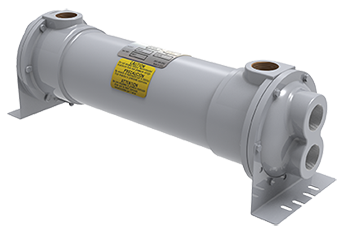
Fixed Tubesheet:
Surface & Vacuum Condensing
- TEMA construction
- Water box and hotwell
- Air removal connections
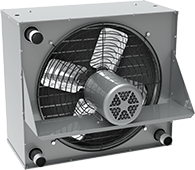
Air Cooled:
Where Water Is Short
- No cooling water needed
- A-frame and horizontal
- Low water-treatment cost
Noncondensables Are Usually the Real Problem
When a condenser does not make its duty, the cause is more often gas than water. A small fraction of noncondensable gas — air in-leakage, dissolved gas coming out of solution, nitrogen from a blanket, inerts carried in with the feed — migrates to the condensing surface and forms a film the vapor has to diffuse through before it can reach the tube wall. That film is a far worse thermal resistance than the tube itself, and it accumulates exactly where you least want it: in the coldest, most stagnant part of the bundle.
The consequences differ by service but the mechanism is the same. On a surface condenser, air in-leakage raises back pressure and directly degrades turbine heat rate, which is why vacuum tightness and flood testing are standard commissioning practice. On a vacuum system, gas loading determines how much work the ejectors or liquid ring pumps have to do. On a vent condenser the stream is mostly noncondensable by definition, so the design has to accept a much lower coefficient and buy area accordingly rather than pretend otherwise.
Practical design responses are unglamorous and effective: rate the complete condensing curve rather than a single point, put the vent take-off where gas actually collects, keep the vapor-side pressure drop low enough that the cold end is not starved, provide positive condensate drainage so tubes do not flood from the bottom up, and control the coolant so surface stays active at turndown as well as at full load.
Tell us the expected noncondensable loading, or tell us you do not know it, and we will size for it either way. It is a much cheaper conversation before fabrication than after startup.
Process & Utility Applications
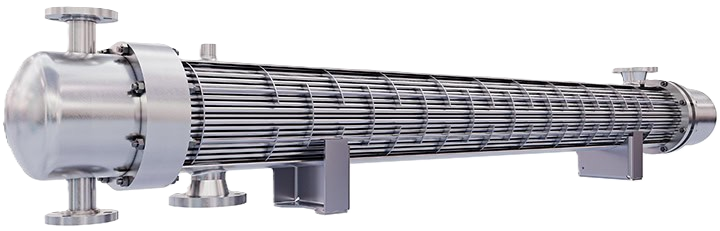
UTILITY • STEAM SYSTEMS
Surface Condensers
Turbine and turbine-drive exhaust condensing under vacuum, with hotwell and air removal sized for real in-leakage.
+ Learn More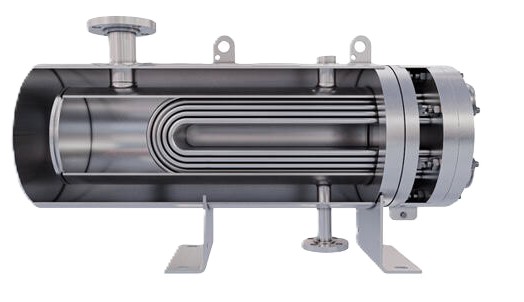
UTILITY • HEAT RECOVERY
Vent Condensers
Recovering flash steam and solvent from vents and flash tanks, cutting make-up water and killing the plume.
+ Learn More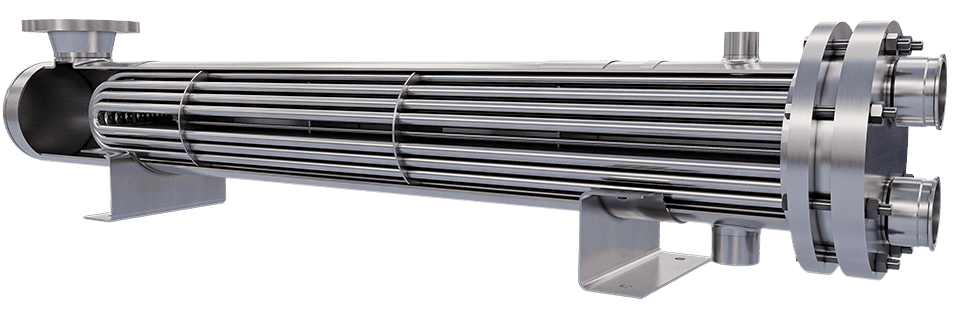
PROCESS • EVAPORATION
Evaporator Condensers
Condensing surplus vapor on multiple-effect, TVR and MVR plant and holding the vacuum the evaporator depends on.
+ Learn More