
1-805-484-2992
Quotes - Engineering - SalesCondensing as Part of the Separation
Everywhere else on this site, the condenser's job is to turn vapor into liquid. Here it also decides what ends up in which product. A total condenser liquefies the entire overhead and hands reflux control to a drum and a pump. A partial condenser liquefies part of the overhead and takes a vapor product as well, which buys you a separation stage but couples the condenser directly into the column's mass balance. A dephlegmator sits on top of the column and generates reflux internally, with no drum and no reflux pump at all. Those are three genuinely different process decisions with different control characteristics, and the right one depends on what the column is being asked to do.
- Total condensers on distillation and fractionation overheads, sized for the full range of vapor composition and pressure the column will actually see across its operating envelope.
- Partial condensers where a vapor product is drawn alongside liquid reflux, rated over the whole condensing curve rather than at a single bubble-point assumption.
- Reflux and knock-back condensers on reactors, batch stills and solvent recovery systems, returning condensate to the vessel while letting light ends and inerts pass to vent treatment.
- Dephlegmators mounted directly on the column for internal reflux generation, designed for countercurrent vapor and condensate flow with adequate margin against flooding.
- Multicomponent and wide-boiling mixtures where the condensing curve is strongly non-linear and a single log mean temperature difference calculation will mislead you.
- Vacuum overhead service, where allowable vapor-side pressure drop is often the binding constraint on the design and drives orientation, tube count and nozzle sizing.
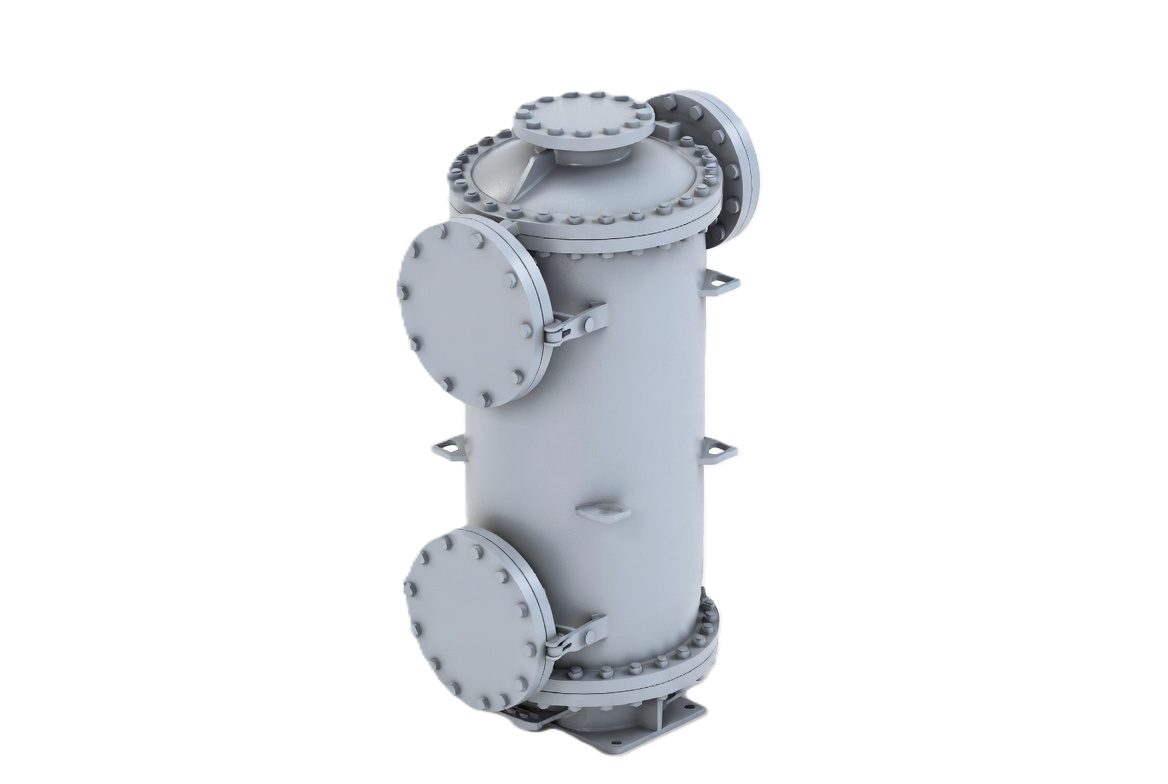
Vertical Shell & Tube:
Reflux & Dephlegmator Duty
- Vapor in tubes
- Countercurrent flow design
- Flooding margin checked
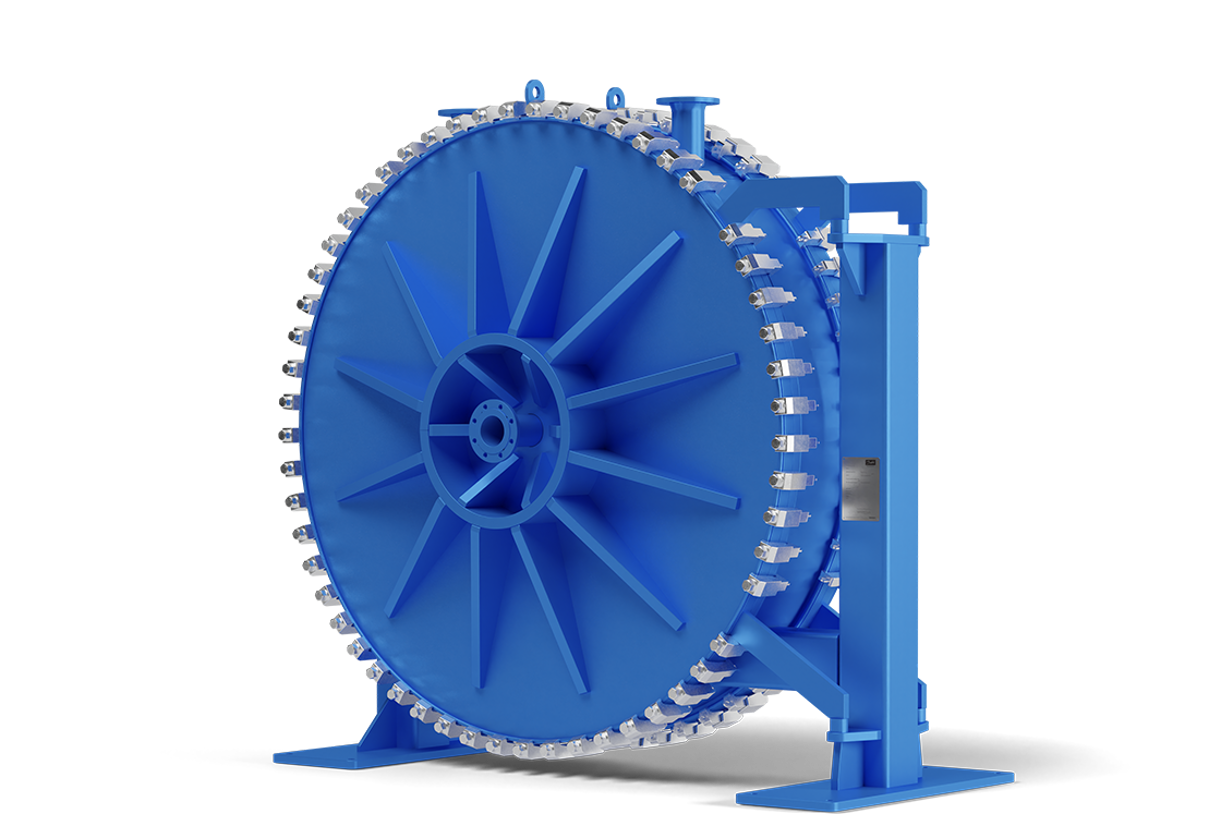
Spiral Exchangers:
Fouling & Vacuum Overheads
- Self-cleaning channel
- Low vapor pressure drop
- Handles solids
Dephlegmator or External Condenser?
A dephlegmator is a condenser mounted directly on top of the column. Vapor rises into the tubes, coolant runs on the shell side, part of the vapor condenses, and the condensate falls straight back down the column as reflux. What you gain is real: no reflux drum, no reflux pump, no return piping, less structural steel and floor space, a much smaller inventory of material at the top of the column, and fewer flanged joints that can leak. On a hazardous, toxic or corrosive service those last two points can dominate the decision on their own.
What you give up is control authority. An external condenser with a reflux drum gives you a measurable, independently controllable reflux flow, and the drum's liquid inventory buffers the column against upsets in coolant temperature, vapor rate or inert loading. A dephlegmator has essentially no holdup, so reflux can only be inferred from an energy balance, and any disturbance in condensing rate propagates into the column immediately. On a column with tight product specifications or frequent rate changes, that sensitivity is a genuine operating problem.
There are mechanical trade-offs too. A dephlegmator has to be supported at the top of the column, coolant has to be piped to that elevation, maintenance means physically removing the unit, and cleaning is more awkward than on a unit at grade. The tubes must be designed for countercurrent vapor and condensate flow, and flooding sets a hard limit on vapor velocity that has to be checked rather than assumed.
None of this makes either arrangement the right default. It makes it a question worth asking early, while the plot plan is still soft. We are happy to work through both cases with you.
Separation Condensing Applications
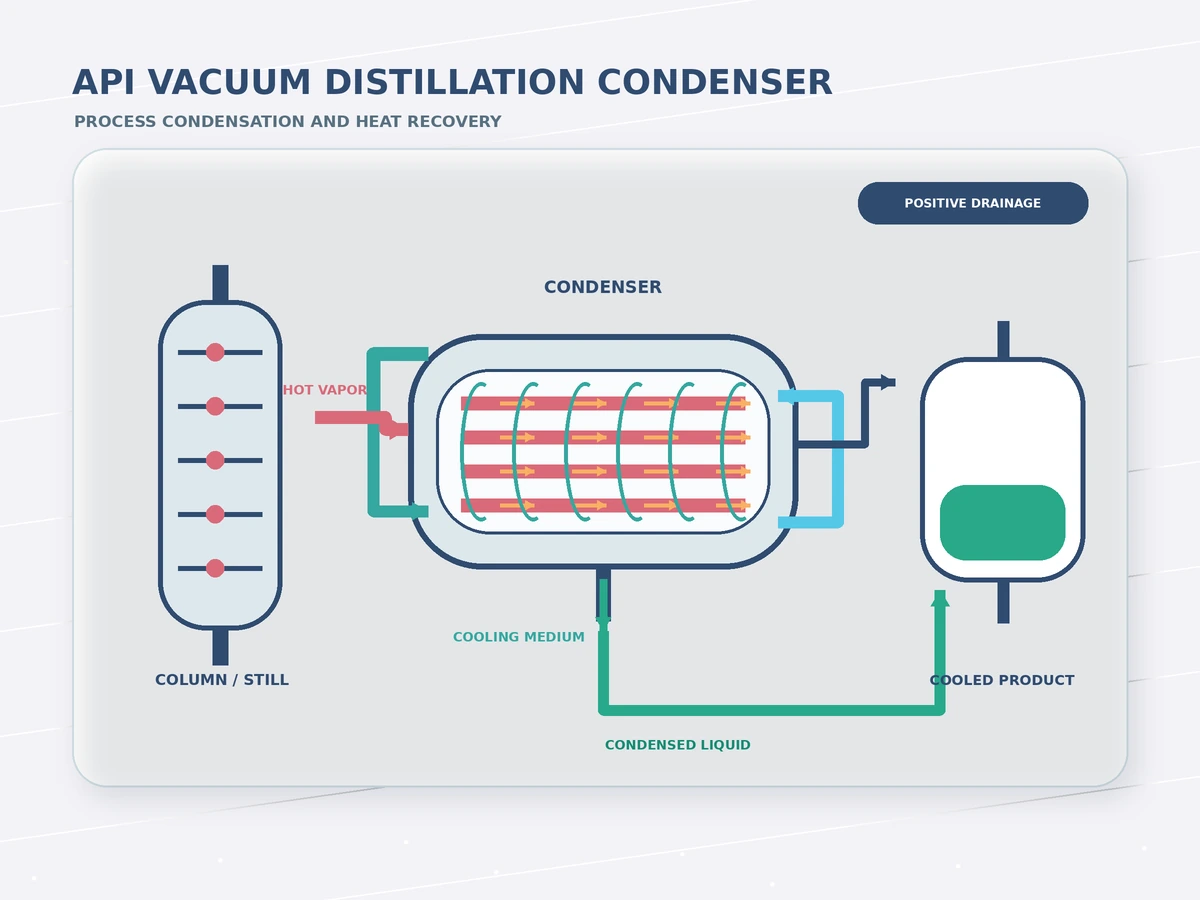
SEPARATION • DISTILLATION
Distillation Condensers
Total and partial condensing on distillation and fractionation columns, rated across the real condensing curve.
+ Learn More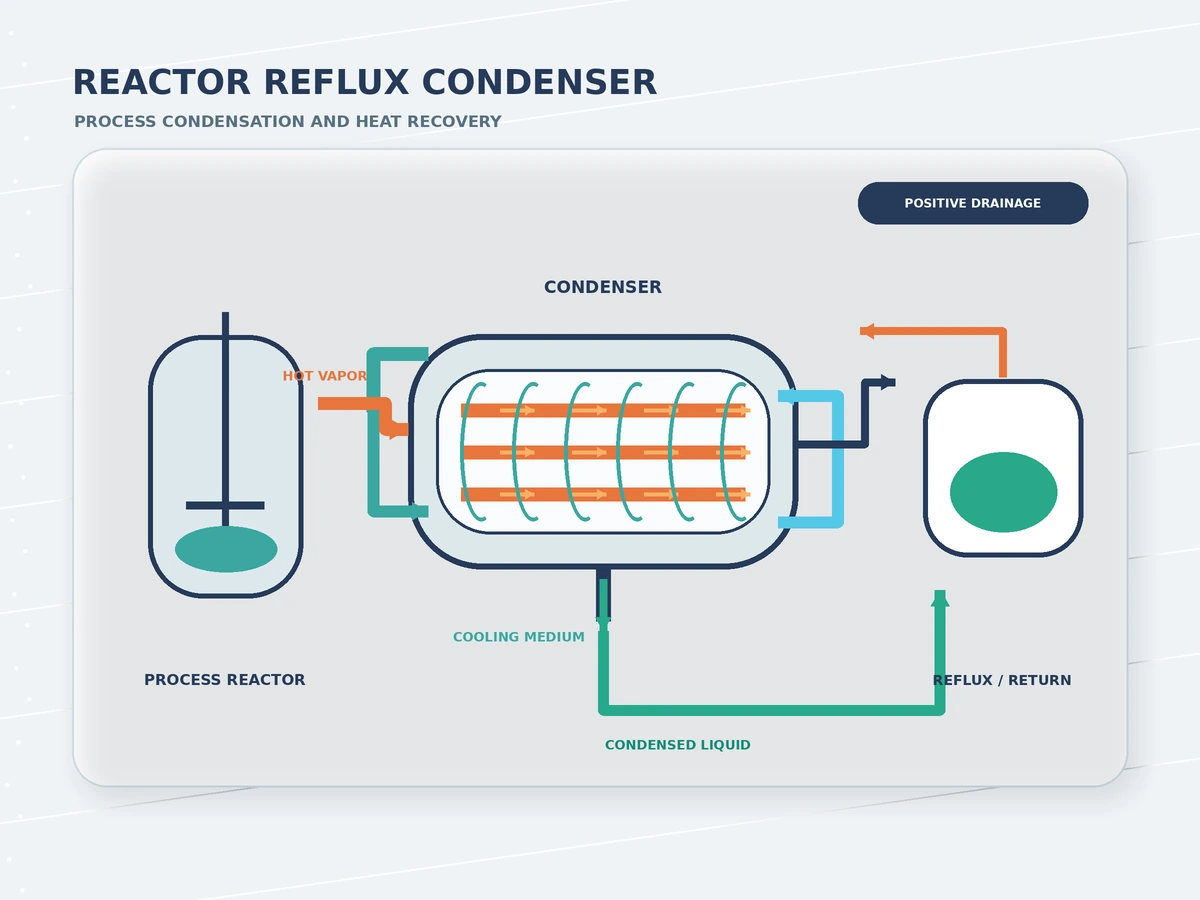
SEPARATION • REFLUX
Reflux Condensers
Knock-back and reflux duty on reactors and batch stills, returning condensate while venting light ends.
+ Learn More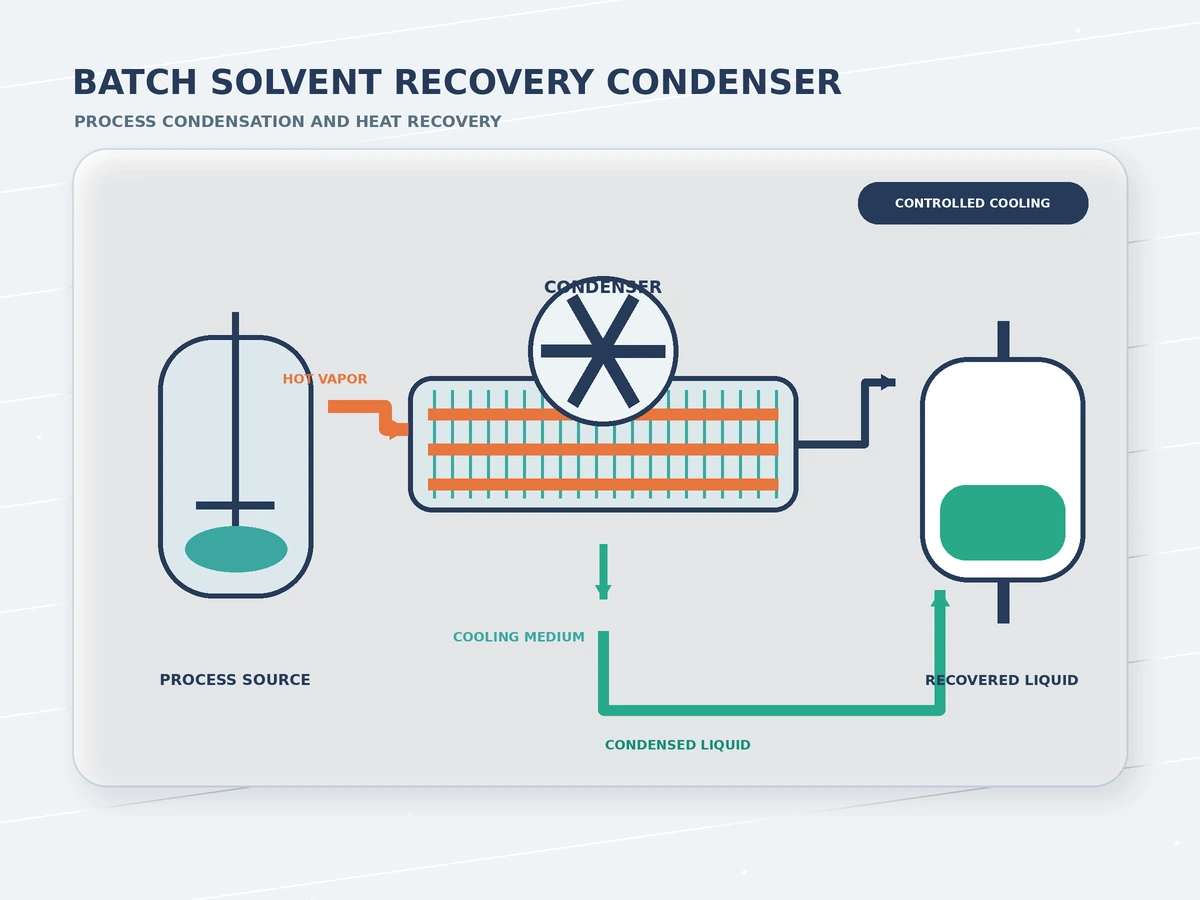
SEPARATION • RECOVERY
Solvent Recovery
Column and stripper condensing where recovery yield, emissions limits and product purity all move together.
+ Learn More