
1-805-484-2992
Quotes - Engineering - SalesSteam System Condensers
This section covers the places in a steam system where a condenser earns its keep. Clean steam condensers return pure or pharmaceutical steam to liquid for sampling, SIP drains, sterilizers and WFI stills. Condensate recovery condensers capture flash, exhaust, process and utility steam that would otherwise vent to atmosphere. Feedwater heating condensers use low-grade steam to warm boiler feedwater and makeup water before they reach the boiler or deaerator. The heat transfer is similar across all three; purity, pressure and where the condensate goes are not.
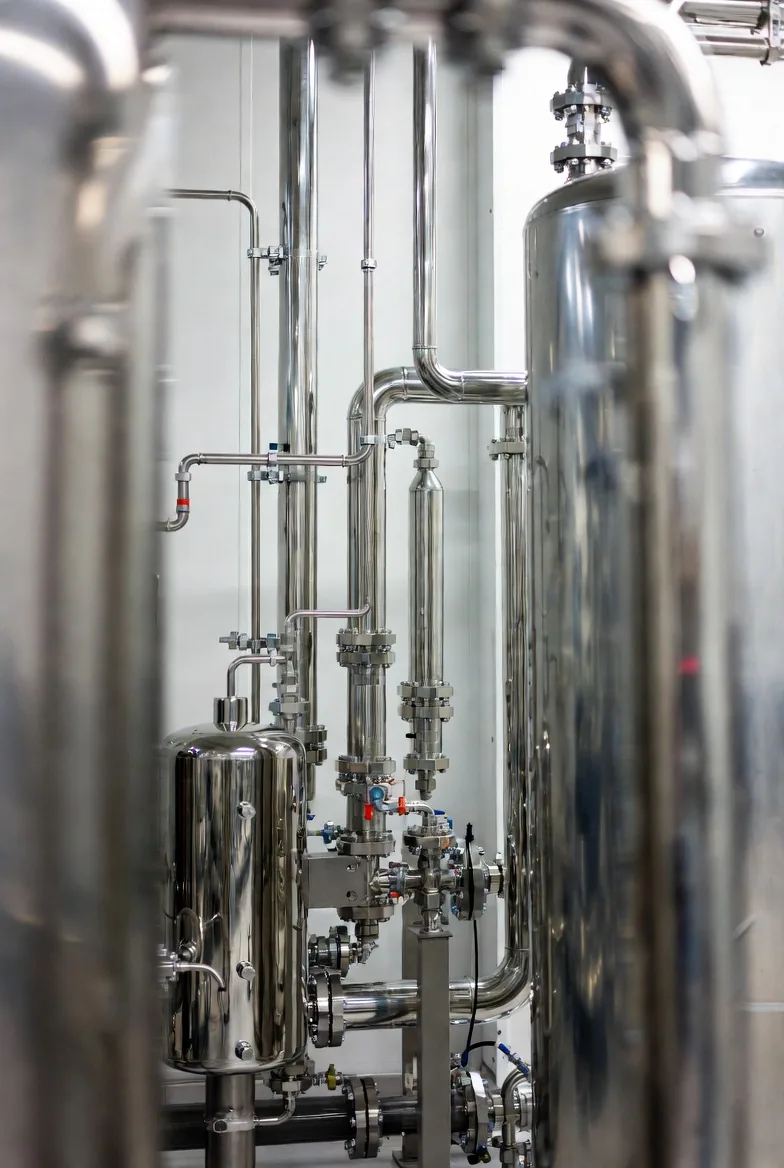
On a clean steam condenser the condensate is a regulated fluid, so construction follows ASME BPE or 3-A practice: 316L product contact, electropolished surfaces, orbital welds, and a steam side that drains completely by gravity. WFI stills add double tubesheets so a tube-joint leak cannot reach the distillate. These features add cost that a utility condenser does not need, and specifying them where the condensate goes to drain is a common way to overspend.
A flash tank vent or turbine exhaust that plumes off a roof is losing treated water, treatment chemicals and the fuel spent heating them. A condenser on that vent, cooled by a water stream the plant can use, returns all three. The design is governed by backpressure: traps and turbines upstream were sized to discharge at a set pressure, and a condenser that adds more than they can tolerate backs condensate into equipment or cuts turbine output.
Feedwater and makeup preheaters take low-pressure steam that has little other use and put its latent heat into water headed for the boiler. A feedwater heater downstream of the feed pump sees full boiler feed pressure on the water side; a makeup heater upstream of the deaerator sees cold, oxygen-laden water at low pressure. The two need different pressure ratings and tube materials even though both are steam-to-water condensers.
Steam condensers fail quietly when the condensate cannot leave. A trap that cannot pass condensate at low steam pressure, a drain line that rises, or a level controller tuned for full load all let condensate back up into the shell, flooding tubes and reducing usable surface. Sizing the drain and trap for the minimum steam pressure, not only the design point, keeps the condenser performing across the turndown range where it spends most of its hours.
Steam carries air and carbon dioxide picked up in the boiler, the condensate return and through vacuum breakers. Those gases collect where steam velocity falls, usually at the end of the shell away from the inlet, and form a stagnant layer that sharply reduces heat transfer. A thermostatic air vent at that point, and baffling that sweeps gas toward it, restores the surface. Carbon dioxide left in contact with condensate also forms carbonic acid that pits carbon steel.
Each linked page treats one steam duty in depth: what the steam is, where it comes from, which constructions suit it and what to send for a sized quote. Start with the duty that matches your system.




What the Steam Balance Tells You
Most steam system condenser projects begin with a plant steam balance, even a rough one: boiler output, process users, flash and vent losses, condensate return percentage and makeup rate. That balance shows where steam is being wasted, which streams could use recovered heat, and how much condensate is going to drain. It also reveals the pressure levels available, which decide wether a recovery condenser can heat feedwater directly or only makeup water at lower temperature.
Shell & Tube or Plate for Steam
U-Tube shell and tube units are the default where steam pressure is significant, the water side runs at boiler feed pressure, or thermal shock from slugs of condensate is expected; the U-bends absorb expansion and the bundle comes out for cleaning. Fixed Tubesheet units in double tubesheet form serve clean steam and WFI. Gasketed Plate & Frame exchangers give the closest approach for makeup heating and clean flash steam at moderate pressure, but gasket limits rule them out on high-pressure steam.
Related
STEAM SYSTEMS • APPLICATION
Clean Steam
An overview of clean steam condensers where the condensate is a pharmaceutical-grade fluid, for engineers in pharmaceutical, biotech and sanitary...
+ Learn More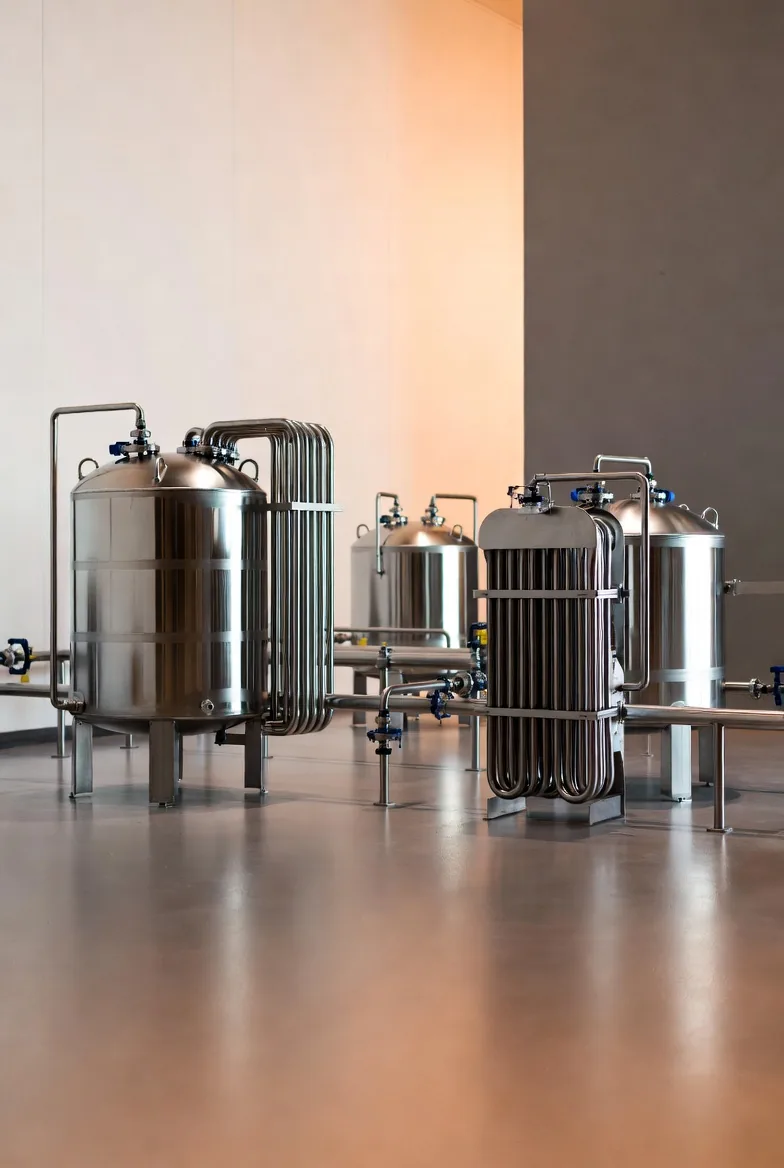
STEAM SYSTEMS • APPLICATION
Condensate Recovery
An overview of clean steam condensers where the condensate is a pharmaceutical-grade fluid, for engineers in pharmaceutical, biotech and sanitary...
+ Learn More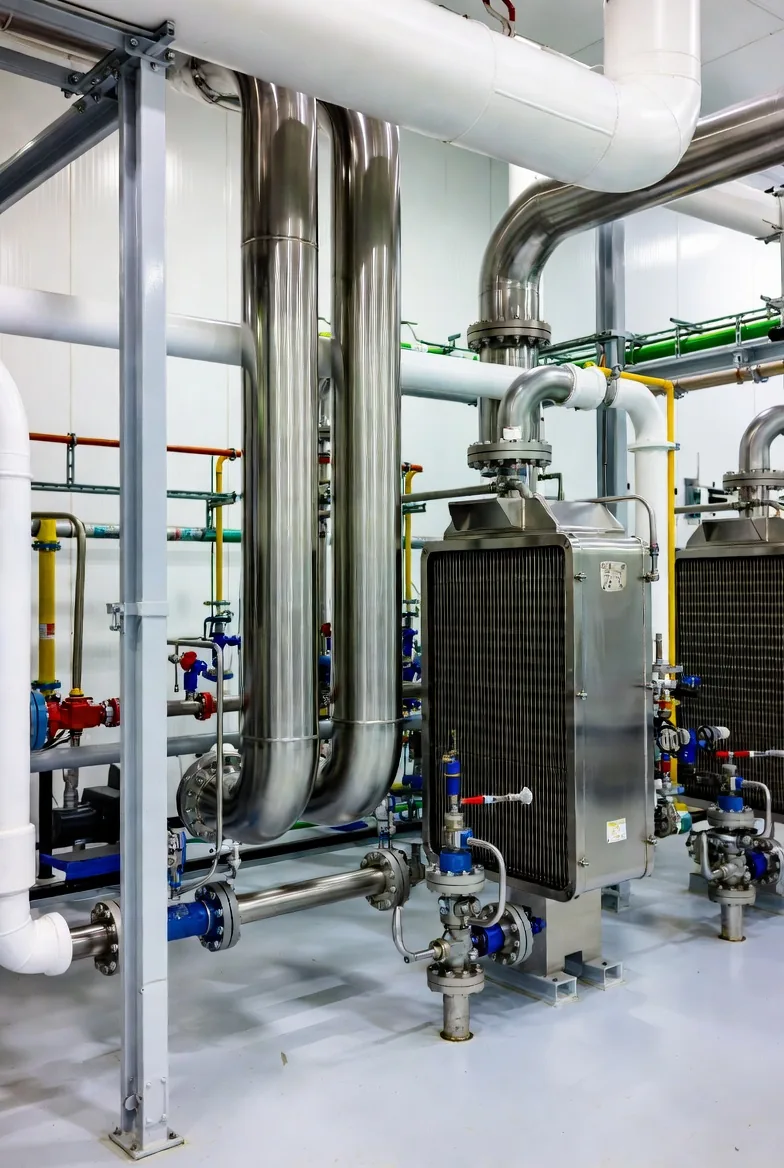
STEAM SYSTEMS • APPLICATION
Feedwater Heating
An overview of clean steam condensers where the condensate is a pharmaceutical-grade fluid, for engineers in pharmaceutical, biotech and sanitary...
+ Learn More