
1-805-484-2992
Quotes - Engineering - SalesHeat Exchangers For
Reactor Vapors
Vapor Condensing
A reactor vapors exchanger is selected from vapor composition, flow profile, operating pressure, cooling-medium availability, allowable pressure drop and required recovery. The rating includes cooling above the dew point, latent heat during condensation and any specified liquid subcooling.
Fixed Tubesheet construction is common because it provides high pressure capability, broad alloy selection, reliable condensation. Welded Plate equipment is also widely applied when plot space, utility availability, thermal approach, fouling or maintenance strategy favors that design.
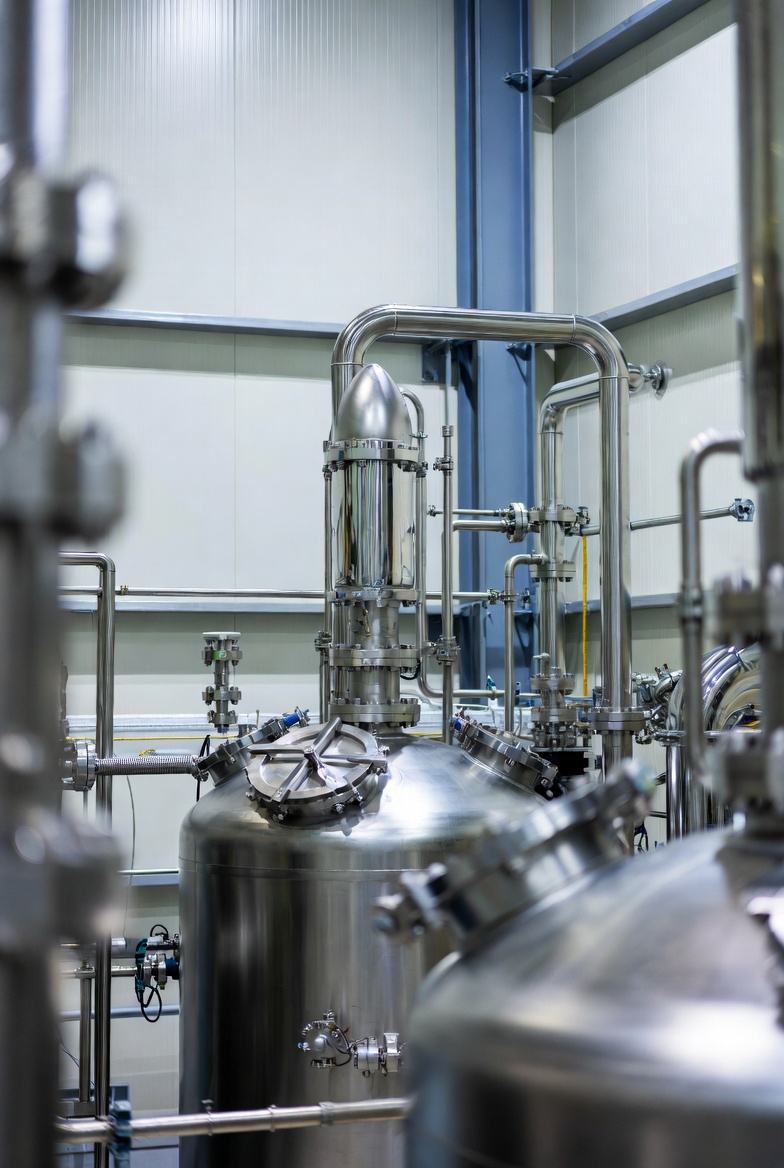
Reliable performance requires noncondensable venting, stable utility control, compatible materials and unrestricted condensate drainage. These details increase recovered yield, protect downstream equipment and support predictable operation.
Request a QuoteReactor Vapors Condenser Applications



Reactor Vapors Process Duty
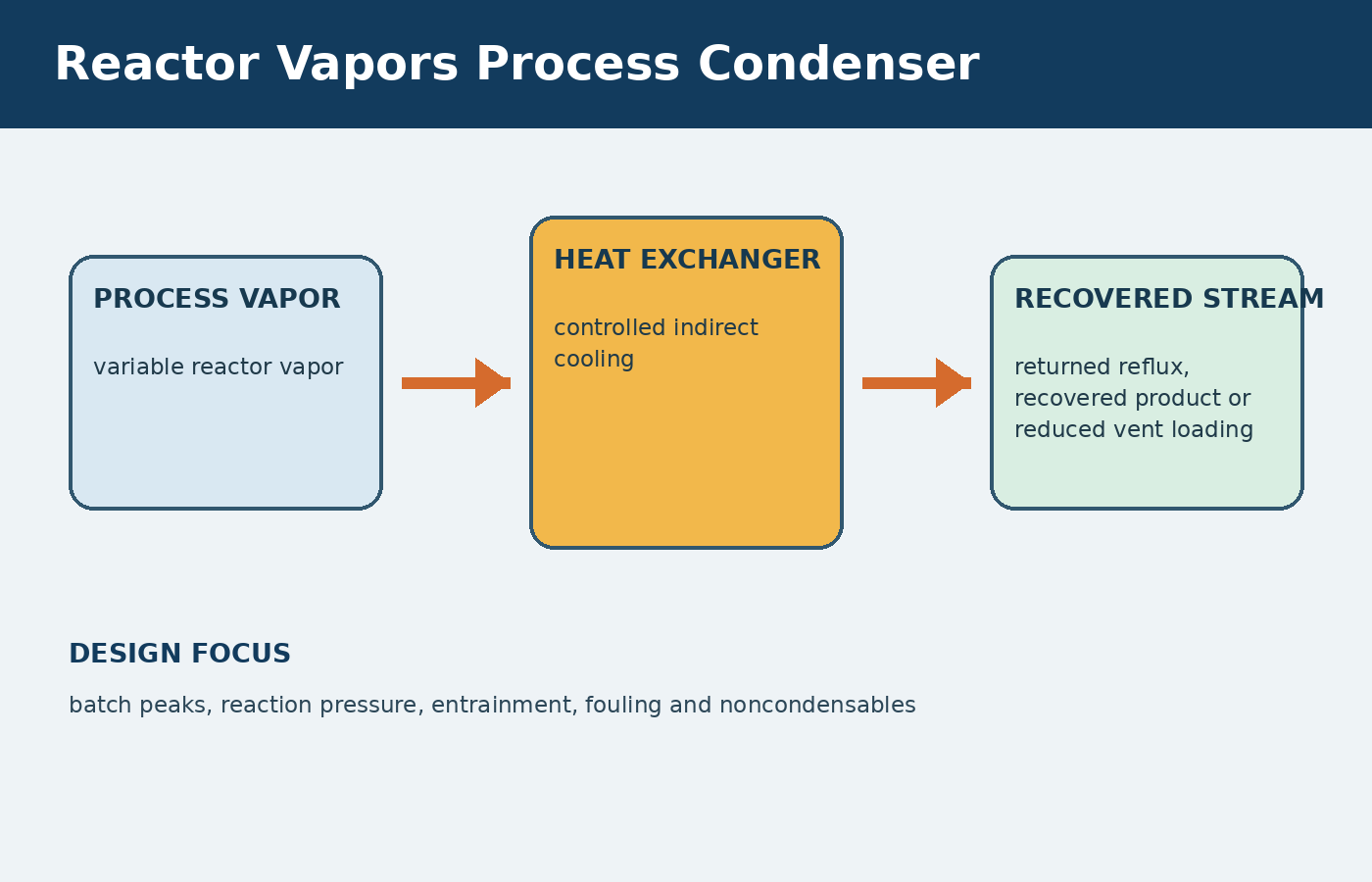
Effective reactor vapors depends on batch peaks, reaction pressure, entrainment, fouling and noncondensables. The exchanger must match the full operating envelope, including startup, peak load, turndown and upset conditions.
The exchanger is rated for variable reactor vapor, including peak load, turndown and utility variation. Condensation temperature, noncondensables, pressure drop and drainage are evaluated together.
Thermal Design Requirements
Reliable sizing requires vapor composition, flow rate, pressure, inlet temperature, target outlet condition, cooling-medium data, allowable pressure drop, fouling expectations and all startup, normal, turndown and upset cases. Sensible cooling, latent heat, temperature glide, noncondensables and condensate subcooling are evaluated together.
Common Heat Exchanger Types
Shell & Tube - Fixed Tubesheet offers high pressure capability, broad alloy selection, reliable condensation. Plate Exchanger - Welded Plate offers compact high duty, no process gaskets, high heat transfer rate. Final selection depends on pressure, temperature, fouling, cleanability, utility availability, plot space and required approach temperature.
Process and Operating Benefits
Stable heat removal maintains the required outlet state and supports predictable pressure, separation and production performance.
Materials, seals, surface finish and cleaning access are selected for the process chemistry and operating environment.
Materials and Construction
Pressure-containing components are selected for design pressure, temperature, process chemistry and applicable code requirements. Alloy upgrades, corrosion allowance, sour-service provisions, removable bundles and mechanically cleanable passages are considered when the operating environment demands them.
Controls and Maintenance
Stable performance depends on coordinated coolant or fan control, noncondensable venting and unrestricted condensate drainage. Temperature, pressure and differential-pressure trends help identify fouling, flooding or utility limitations before recovery efficiency and production capacity are affected.