
1-805-484-2992
Quotes - Engineering - SalesHeat Exchangers For
Condensers Inside the GMP Boundary
Active pharmaceutical ingredient synthesis is solvent chemistry carried out under GMP. Reactors reflux and distill, crystallizers are concentrated under vacuum, and filter dryers pull solvent out of wet cake for hours. Every one of those steps has a condenser, and when its condensate goes back to the process or its surfaces contact product vapor, it becomes part of the validated equipment train. That brings documentation, cleaning validation and, for high-potency compounds, containment into what would otherwise be a straightforward thermal duty.
A vertical Fixed Tubesheet unit with process in the tubes is the workhorse, often with a double tubesheet so a tube-to-tubesheet joint leak drains to atmosphere where it can be seen instead of letting coolant reach the product. A Welded Plate condenser has no gaskets on the process side and packs a lot of surface into a small skid, but its channels cannot be swabbed or borescoped, so it fits best on non-product-contact recovery or vent duties.
For a quote, bring the step that sets the size (usually the fastest distillation or the start of drying), the solvents, the vacuum level, the cooling or chilled media available and the GMP classification of the condenser. The turnover documentation you need affects the price and schedule as much as the surface area does.
Request a Quote




What GMP Adds to a Vapor Duty
If condensate is returned to the reactor or reused as process solvent, the condenser is product-contact equipment. Its materials, surface finish, elastomers and weld quality must be documented, and anything that could shed, leach or harbor residue becomes a quality question. Sight glasses, threaded fittings and horizontal dead legs on the process side all attract audit comments.
High-potency compounds raise the containment level. A closed drain, a vent routed through filtration, sampling points that do not open the process and a condenser that can be washed in place before it is opened are typical requirements once occupational exposure bands get tight. Plan those connections at the quote stage; adding them to a finished unit is costly.
Sizing for Distillation and Drying
Batch distillations deliver high vapor rates for a short time, while agitated filter dryers and conical dryers deliver a modest vapor rate diluted by nitrogen sweep and air leakage. The dryer case is the harder one to condense: a high noncondensable fraction suppresses heat transfer, and the solvent only leaves the gas if the outlet is cold, which often means chilled glycol or brine. Each step should be rated separately.
Double Tubesheet and Welded Plate
Shell & Tube - Fixed Tubesheet with a double tubesheet gives positive leak segregation, process-in-tube drainability when mounted vertically and full access for swabbing during cleaning verification. Plate Exchanger - Welded Plate offers compact high duty with no process gaskets and works well as a chilled vent condenser after the main unit. It should not be placed where the cleaning validation protocol requires direct visual or swab confirmation of product-contact surfaces.
Benefits That Hold Up in an Audit
A condenser purchased with a complete turnover package of material certificates, weld logs, surface finish records, passivation reports and pressure test records slots straight into the qualification protocol. Missing paperwork, not missing performence, is what usually delays IQ.
Tight condensing on drying steps shortens dryer cycles and recovers solvent that would otherwise load the vaccum system and the thermal oxidizer, which matters on high-value or regulated solvents.
Finish, Passivation and Traceability
Product-contact surfaces are normally 316L with a polished finish to an agreed roughness, passivated after fabrication, with full heat-number traceability. Hastelloy C-22 or C-276 is used where HCl or other halides are generated. Elastomers should carry USP Class VI or equivalent certification, and gaskets on solvent service are usually PTFE-based. Specify the ASME BPE requirements you want applied rather than assuming they come by default.
Cleaning Validation and Change Control
Design the unit so the cleaning procedure can reach and verify every product-contact surface: spray devices in the heads, a low-point drain and access for swab sampling in the channel. Once qualified, the condenser is under change control, so replacement tubes, gaskets or a retube need equivalent documentation. Keep the original data package with the equipment file to make that straightforward.
Related
PHARMACEUTICAL • MARKET
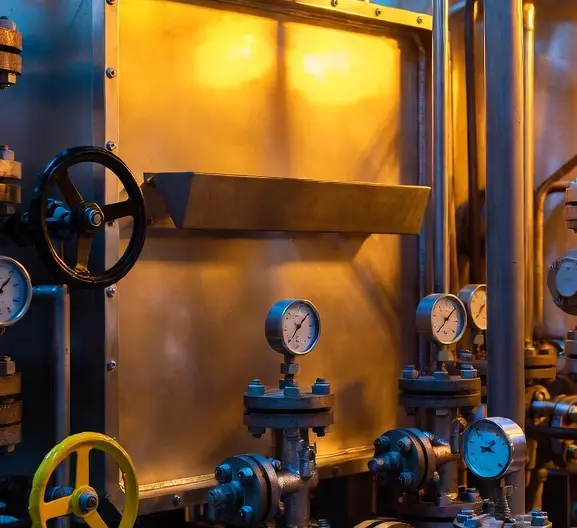
Solvent Recovery (Pharma)
Recovered IPA, acetone, THF or DCM must meet spec to go back into a GMP process. The condenser sets how much you recover and how clean it is.
+ Learn More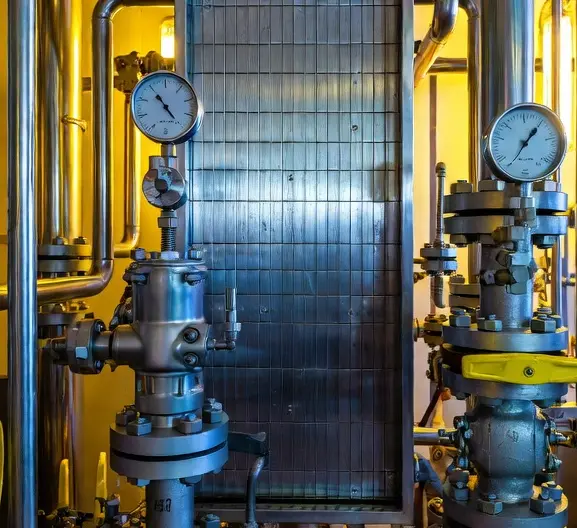
PHARMACEUTICAL • MARKET
Bioreactor Off-Gas
Wet off-gas can flood a sterile vent filter and break the batch boundary. Condense the moisture first, at only a few psig of back pressure.
+ Learn More
PHARMACEUTICAL • OVERVIEW
Pharmaceutical
Pharma condensers face validation, solvent specs and sterile boundaries more than thermal limits. Materials and design for regulated duties.
+ Learn More