1-805-484-2992
Quotes - Engineering - SalesOverhead Condensers
Condensing Column and Tower Overhead Vapor
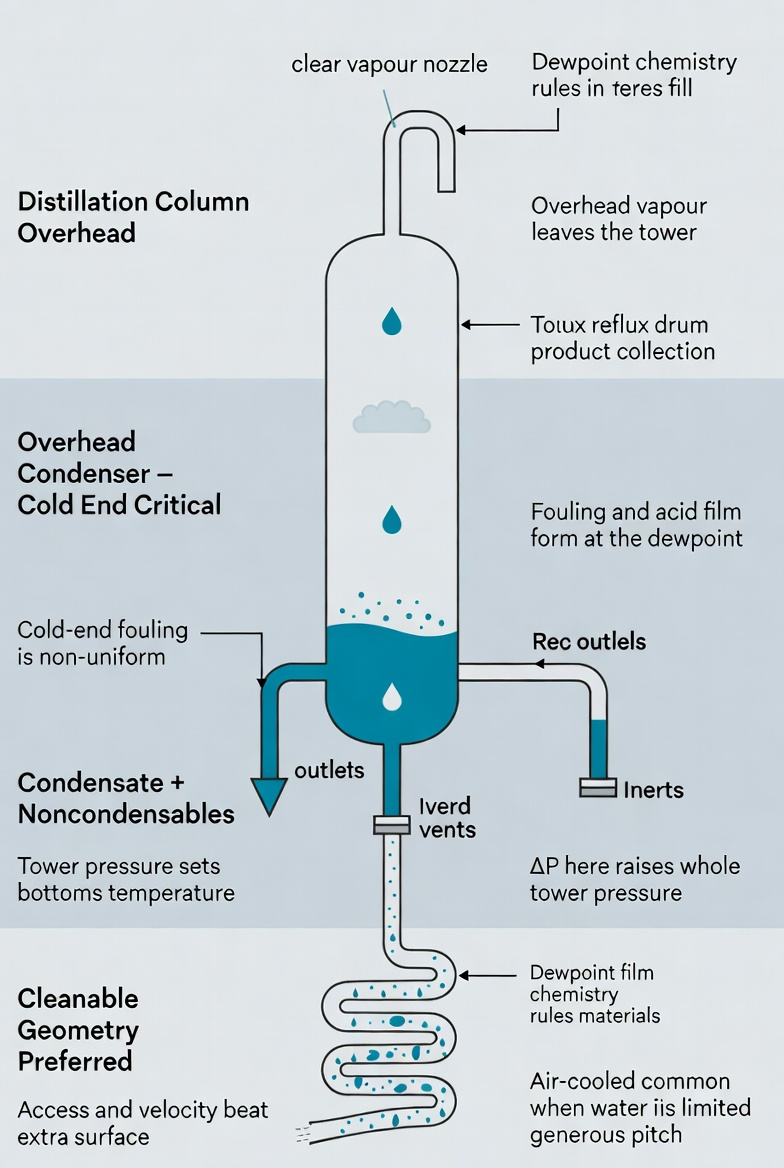
Overhead condenser is the general term for the unit that condenses vapor leaving the top of a distillation column, fractionator, stripper or absorber. Functionally it overlaps with the distillation condensers described elsewhere on this site, but the term is normally used where the emphasis is on the mechanical and materials problem rather than on the separation itself. In a working plant, the overhead condenser is very often the exchanger that gets cleaned most frequently and replaced soonest, and understanding why is most of the design job.
Fouling arrives at the cold end. Whatever is marginally soluble in the overhead becomes insoluble as the stream cools. Polymer-forming monomers cross-link, salts precipitate as water condenses, asphaltenes and heavy ends drop out, and biological growth establishes on the water side. Because this happens preferentially in the coldest region, fouling is rarely uniform — it concentrates where the deposit does most damage to the temperature approach.
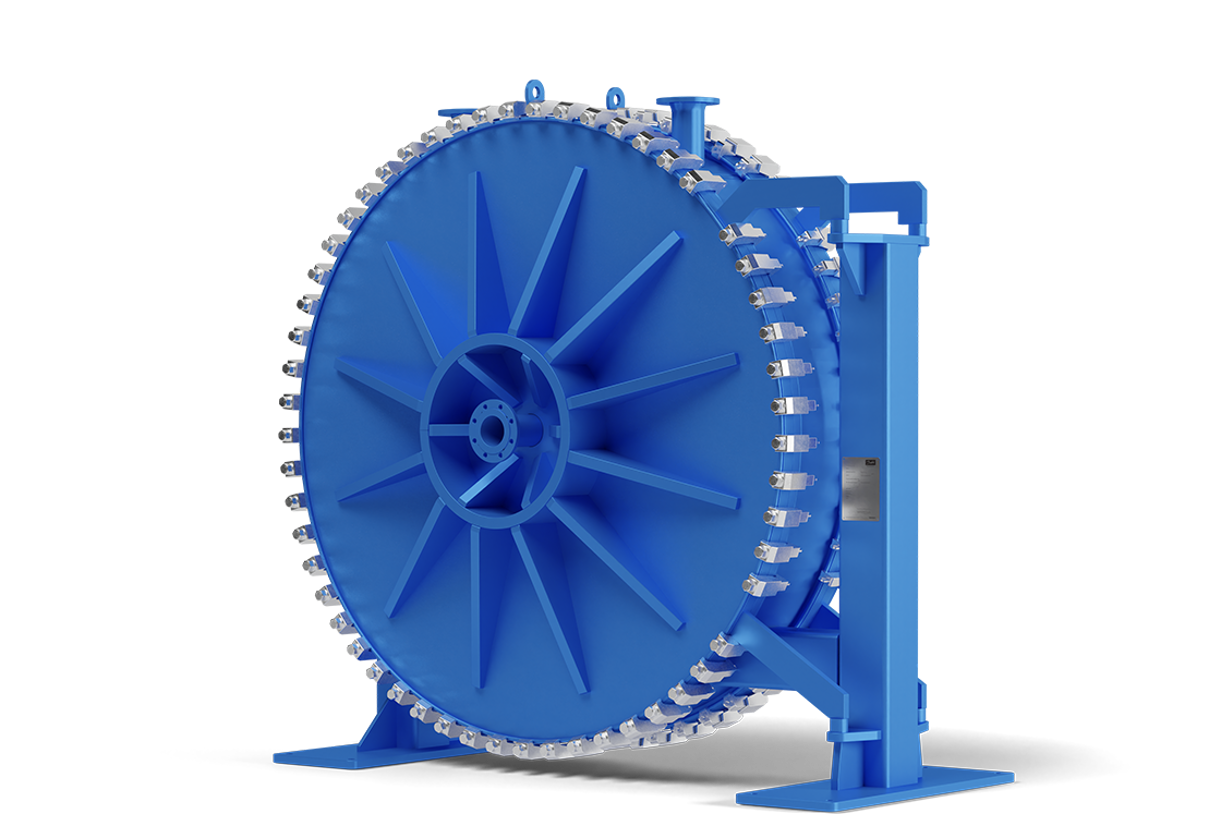
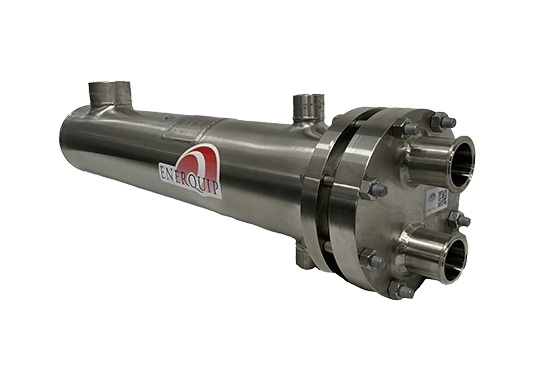
This is why geometry that can be cleaned is often worth more than extra surface. A removable bundle gives mechanical access to the shell side. A spiral exchanger's single continuous channel is self-cleaning under flow because velocity is maintained rather than dropping in dead zones, and it tolerates solids and slurries far better than a tube bundle. Generous tube pitch and square layout make hydroblasting practical.
Overhead corrosion is a chemistry problem before it is a metallurgy problem. The classic case is aqueous condensation at the dewpoint concentrating whatever acid is present — hydrochloric from hydrolyzed chlorides, carbonic from CO2, organic acids from thermal decomposition — into a small volume of very aggressive water. The bulk vapor analysis may look benign while the first droplets of condensate are severely corrosive. Chloride concentration in that film is also what puts austenitic stainless at risk of pitting and stress corrosion cracking, regardless of the bulk figure.
The practical implications: know where the water dewpoint falls in the condensing path, choose material for the condensate film rather than the bulk stream, and consider duplex, titanium or high-nickel alloys where the film chemistry justifies it. On some services the answer is a sacrificial cold-end section that is expected to be replaced periodically.
Pressure drop. Whatever is lost across the overhead system raises tower pressure, and tower pressure sets bottoms temperature. On a vacuum tower protecting a heat-sensitive bottoms product, that link is the binding constraint. Even at moderate pressure, overhead pressure drop costs reboiler duty.
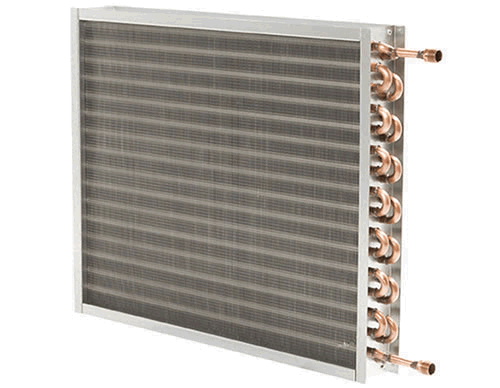
Air cooling. Air-cooled overhead condensers are widespread on refinery and petrochemical towers where cooling water is limited. Performance follows ambient dry bulb, so the summer case sizes the unit and winter operation may need louvre or fan control to avoid over-condensing.
Related pages: distillation condensers, dephlegmators, vacuum condensers, and petrochemical condensers.