1-805-484-2992
Quotes - Engineering - SalesClean Steam Condensers
Condensing Culinary and Clean Steam Without Compromising It
Clean steam — sometimes called culinary steam in food plants and pure steam in pharmaceutical work — is produced from treated feedwater in a dedicated generator specifically so that it can contact product or product-contact surfaces without adding anything to them. It carries no boiler treatment chemicals, no amines, and no corrosion products from a plant steam header. That purity is the entire reason it exists, and it is fragile: everything downstream of the generator, the condenser included, has to be built so it cannot degrade what it handles.
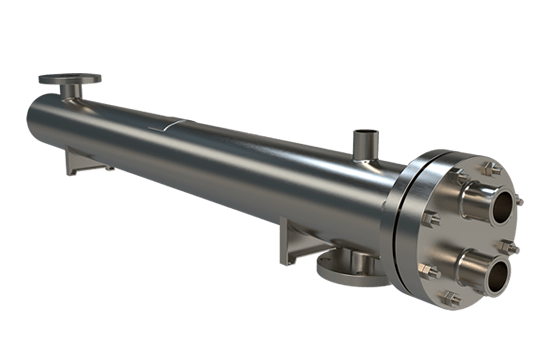
That constraint changes how the exchanger gets designed. A clean steam condenser is not a plant steam condenser in stainless. The wetted side has to be smooth, positively drained and free of crevices and dead legs, connections have to be sanitary rather than threaded or standard flanged, and the whole assembly has to survive the cleaning and sterilization cycle it will see for years without pitting or losing its finish.
Where clean steam condensing shows up: autoclave and sterilizer discharge, retort cooling, SIP (steam-in-place) return lines, clean steam sampling and quality verification, steam-injection heating where excess vapor must be knocked down, and clean steam generator condensate recovery where the condensate is valuable high-purity water.
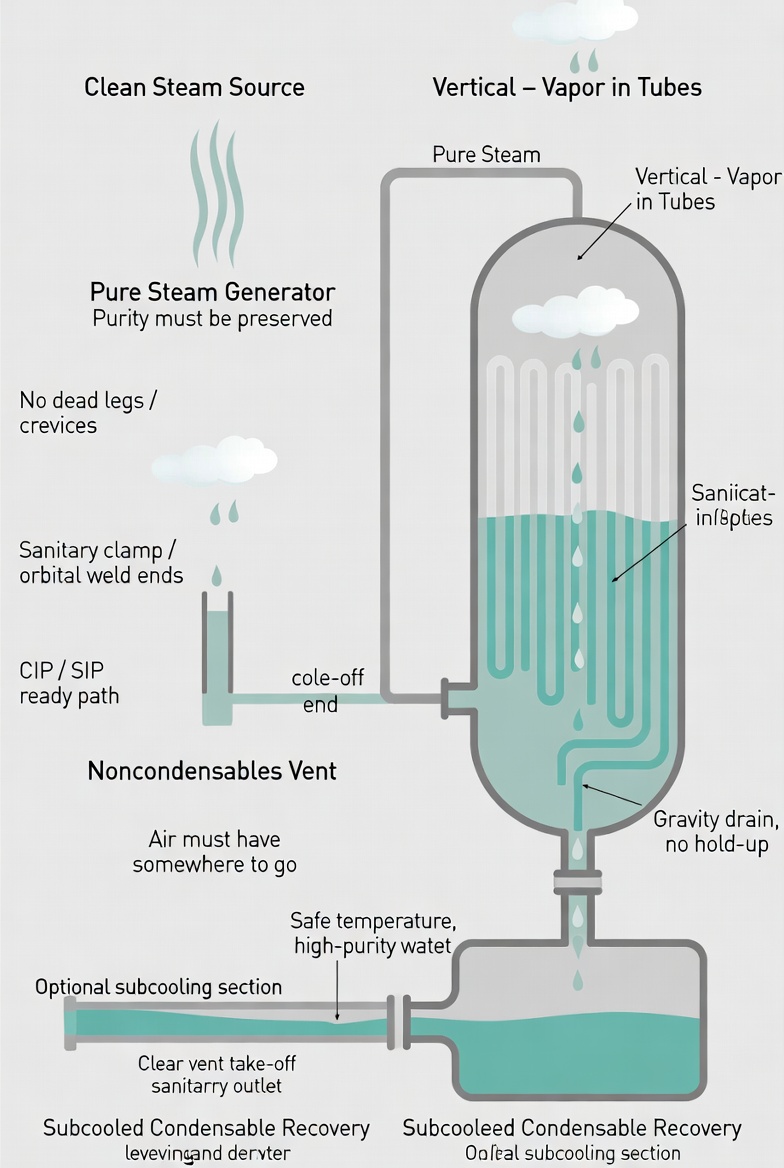
Vertical orientation, vapor in the tubes. This is our usual recommendation. Steam enters the top head, condenses on the inside of the tubes, and the condensate runs down and out the bottom under gravity with nothing holding it back. There is no shell-side pocket to trap liquid and no horizontal tube run sitting half full. It also means the CIP or SIP path follows the same route the steam takes, so cleaning the unit is straightforward rather than hopeful.
Noncondensables have to have somewhere to go. Clean steam systems routinely carry air, especially at startup and after any maintenance opening. Air collecting in the cold end of a condenser blankets tube surface and cuts the coefficient hard, and in a sterilization context an air pocket is also a place that does not reach sterilizing temperature. We put the vent take-off where gas will actually accumulate and size the condensing surface knowing gas will be present, rather than assuming a pure steam feed that never quite exists.
Connections and finish. Sanitary clamp connections are the norm for anything that gets broken down for inspection. Where the unit is welded into the line, extended tube ends give an orbital welding head room to work and keep weld heat away from the body seal. Screwed and standard flanged connections are not sanitary designs and we do not use them on product-contact or pure steam duty.
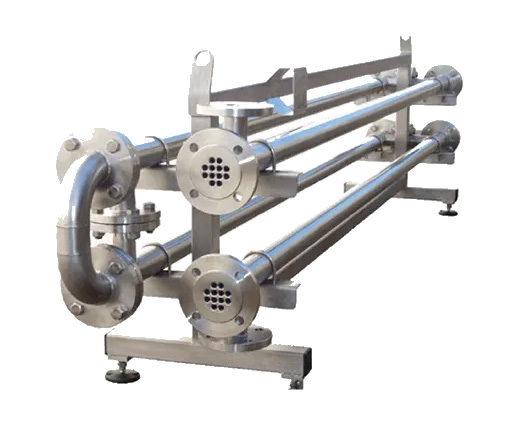
Condensate cooling. Many clean steam duties need the condensate subcooled before it reaches a drain, a sample point, or a collection tank — both for personnel safety and to stop it flashing. That can be a subcooling section in the same shell or a separate small exchanger, and which one makes sense depends on how much control you need over the outlet temperature. We are glad to work through it with you either way.
For product-contact condensing duty rather than clean steam service, see our sanitary condensers page. Clean steam condensing on the pharmaceutical side, where the condensate is a compendial product, is covered under WFI condensers.