
1-805-484-2992
Quotes - Engineering - SalesSpiral Condenser Configurations
A spiral heat exchanger is built by rolling two long metal strips around a center core, creating two curved channels that spiral outward. The geometry has an unusual and valuable property: each circuit is a single continuous channel, so all of the flow must pass through all of it. If a deposit begins to form, the local flow area shrinks, local velocity rises, and the increased shear scrubs the deposit away. The exchanger is self-cleaning in normal operation rather than merely cleanable during a shutdown. Combine that with configurations that give very low vapor-side pressure drop and you have a condenser suited to precisely the duties that give tubular units the most trouble.
- Self-cleaning channel. A single continuous channel means any local restriction raises local velocity and flushes the deposit out. Slurries, fibers, sludges and polymer-forming streams are handled routinely.
- Very low pressure drop. Crossflow spiral configurations present a large open flow area to the vapor over a short path, which is what makes them viable for deep vacuum condensing.
- Column mounted. Spiral condensers can be mounted directly on top of a column or reactor without separate structural support, eliminating large vapor pipework and often the reflux drum as well.
- Condensate subcooling. In counterflow configurations the outer turns run countercurrent to the coolant, so condensate is subcooled on its way out without a separate exchanger.
- Compact for the duty. High turbulence at low velocity gives good coefficients in a small envelope, and a shorter condensing section can allow a shorter, smaller-diameter column.
- Access for inspection. Removable covers give access to the heat transfer surfaces for inspection and manual cleaning when a duty genuinely needs it.
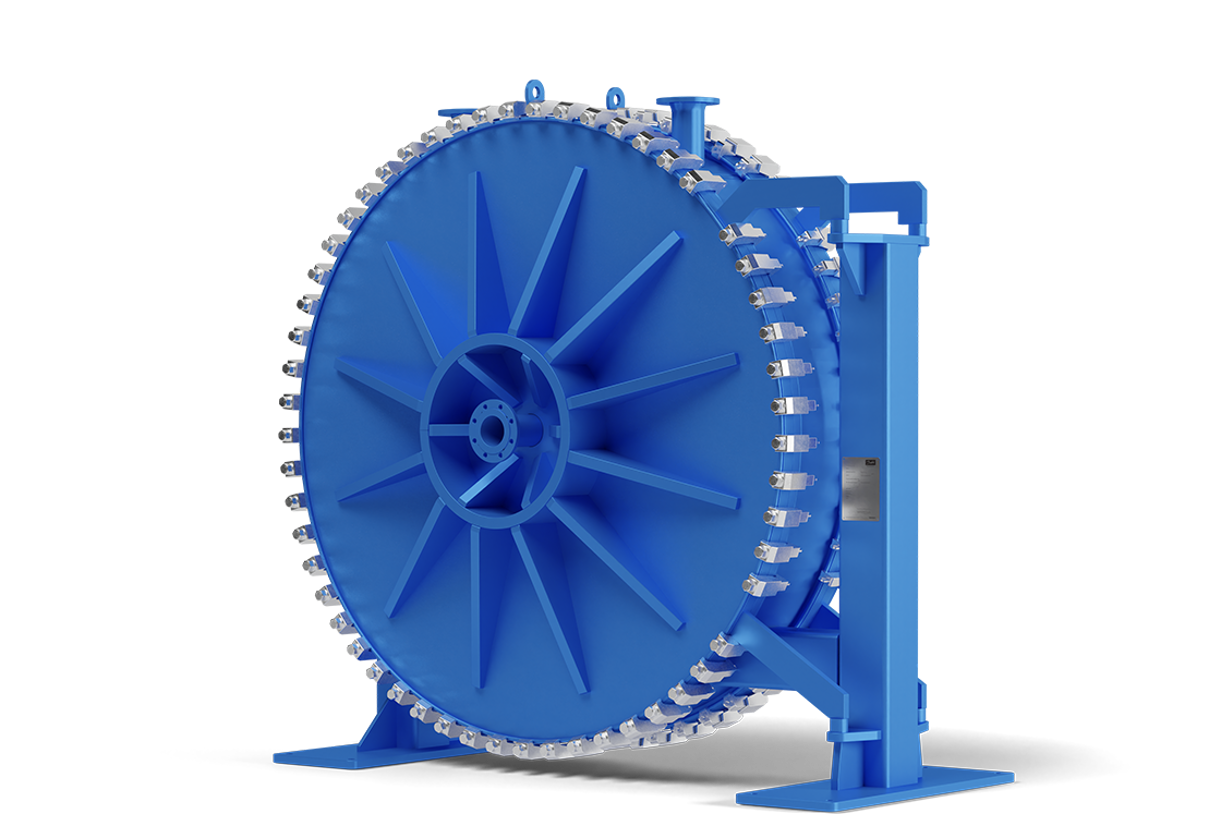
Single Spiral:
Spiral Both Sides
- Both media spiral
- Close approach temps
- Above atmospheric
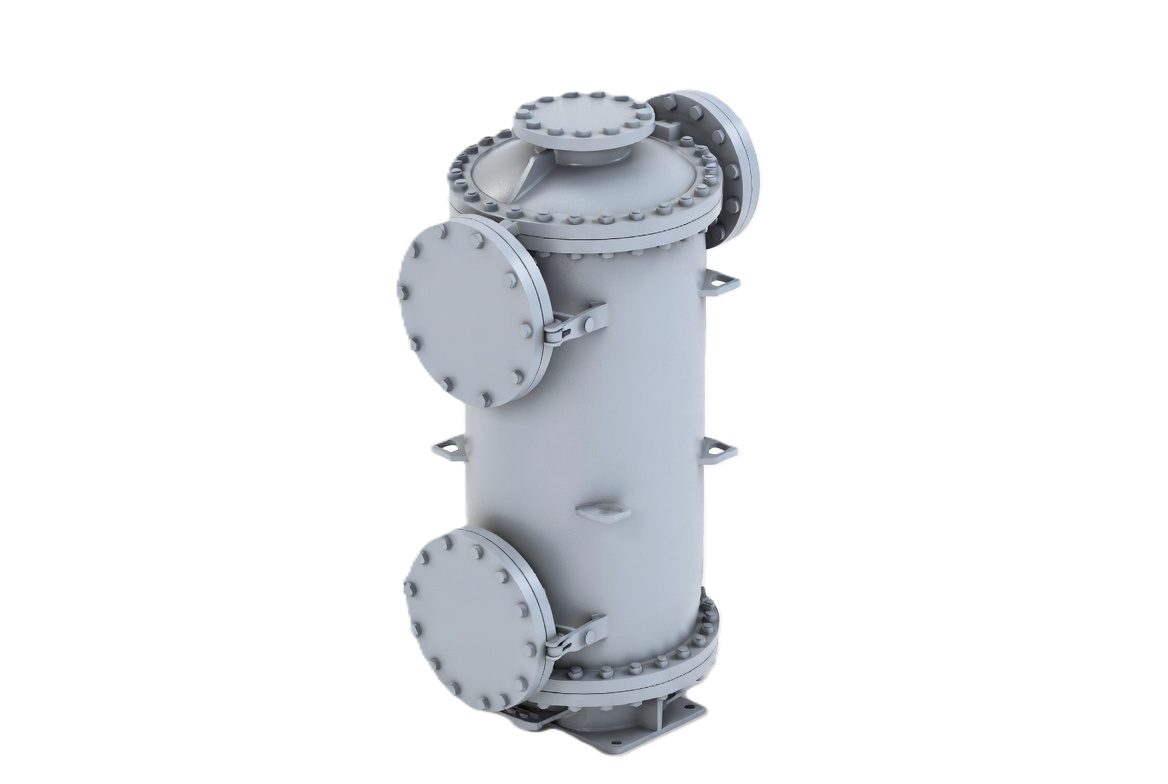
Cross-Flow Spiral:
Deep Vacuum Duty
- Vapor in crossflow
- Coolant spirals
- Very low pressure drop
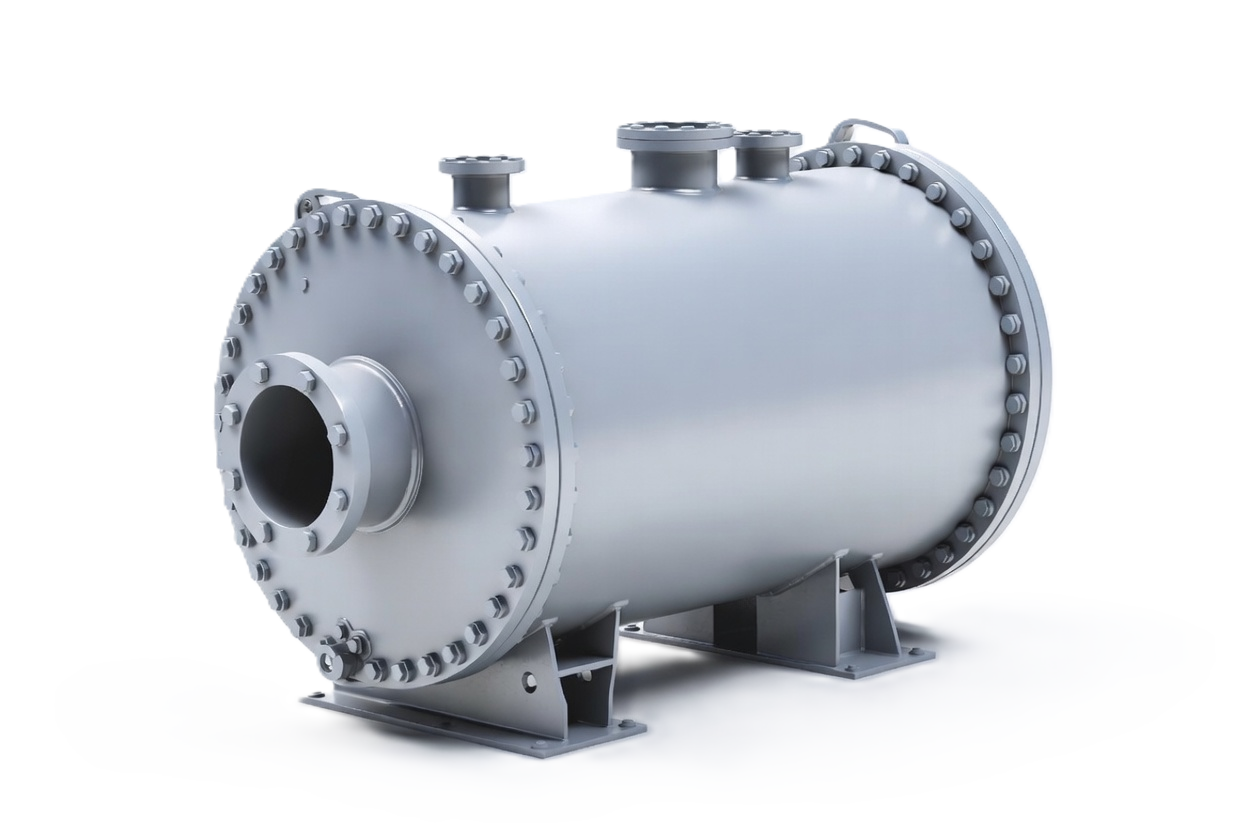
Counterflow Spiral:
Column Top Mounted
- Mounts on the column
- Subcools condensate
- Handles some inerts
Spiral Condensers in Practice
The Self-Cleaning Effect
This is the property that sells spiral exchangers, and unlike many marketing claims it follows directly from the geometry. In a tube bundle, flow divides among many parallel paths. If one tube begins to foul, its resistance rises, flow diverts to its cleaner neighbors, and the fouling tube fouls faster still. The failure mode is self-reinforcing.
A spiral circuit has one channel. All of the flow goes through all of it, so there is nowhere for flow to divert to. A deposit that narrows the channel raises the velocity through that restriction, and the higher shear tends to remove the deposit. The result is that spiral exchangers handle fibrous, particulate-laden and viscous media that would blind a plate pack quickly and foul a tube bundle steadily. On condensing duty this matters wherever the vapor carries entrained solids or forms polymer as it cools.
Three Configurations, Three Different Jobs
Spiral exchangers are not one product. The flow arrangement changes what the unit is good for, and the three arrangements are genuinely distinct.
With spiral flow on both sides, both media follow curved channels in counterflow or co-current flow. This is the general-purpose arrangement: liquid-to-liquid duty, heat recovery, steam heating, and vapor condensing at pressures above atmospheric. It gives close and crossing temperature approaches and a self-cleaning effect in both channels.
With one side in crossflow and one in spiral flow, the vapor passes straight through an open annular cross-section while the coolant spirals. The vapor path is short and unobstructed, so pressure drop is extremely low and the arrangement handles very large vapor volumes. This is the configuration for condensing under deep vacuum, and it allows a short condensing section.
Counterflow arrangements developed for column and reactor mounting take vapor in at the top with condensate falling by gravity to a collection point at the bottom, while coolant spirals from the periphery inward. Because the outer turns run countercurrent to the coolant, the condensate is effectively subcooled on the way out, and spiral flow in those outer turns gives better heat and mass transfer than crossflow alone would.
Mounting on the Column
One of the more attractive things about spiral condensers is that they can often be mounted directly on top of a column or reactor without additional structural support. That eliminates the large-diameter vapor pipework running from the column top to a remote condenser, and frequently the reflux drum, pump and return line as well. The saving in steelwork, piping and plot space can be substantial, and the reduction in flanged joints is a safety benefit on hazardous service.
Because these units are efficient and compact, the condensing section can be shorter than a conventional arrangement would require, which in some cases allows a column that is both shorter and smaller in diameter. When that happens the infrastructure saving dwarfs the difference in exchanger price.
Honest Limitations
Spiral exchangers are not universal. Counterflow spiral condensers are best suited to vapor mixtures at moderate pressure containing small to moderate amounts of noncondensable gas; operation at very low absolute pressure is often impractical in that configuration because pressure drop in the outer turns becomes excessive — which is precisely why the crossflow arrangement exists. Spiral units are also a welded construction, so major internal repair is not comparable to pulling a tube bundle, and they are generally not the cheapest option for a clean, straightforward, high-volume duty that a plain E shell would handle without complaint.
Where they earn their price is on the difficult duties: fouling streams, deep vacuum, tight plot space, close temperature approaches, and column-mounted service. On those, they frequently have no close competitor.
Spiral Condensing Duty
PROCESS • VACUUM
Vacuum Condensers
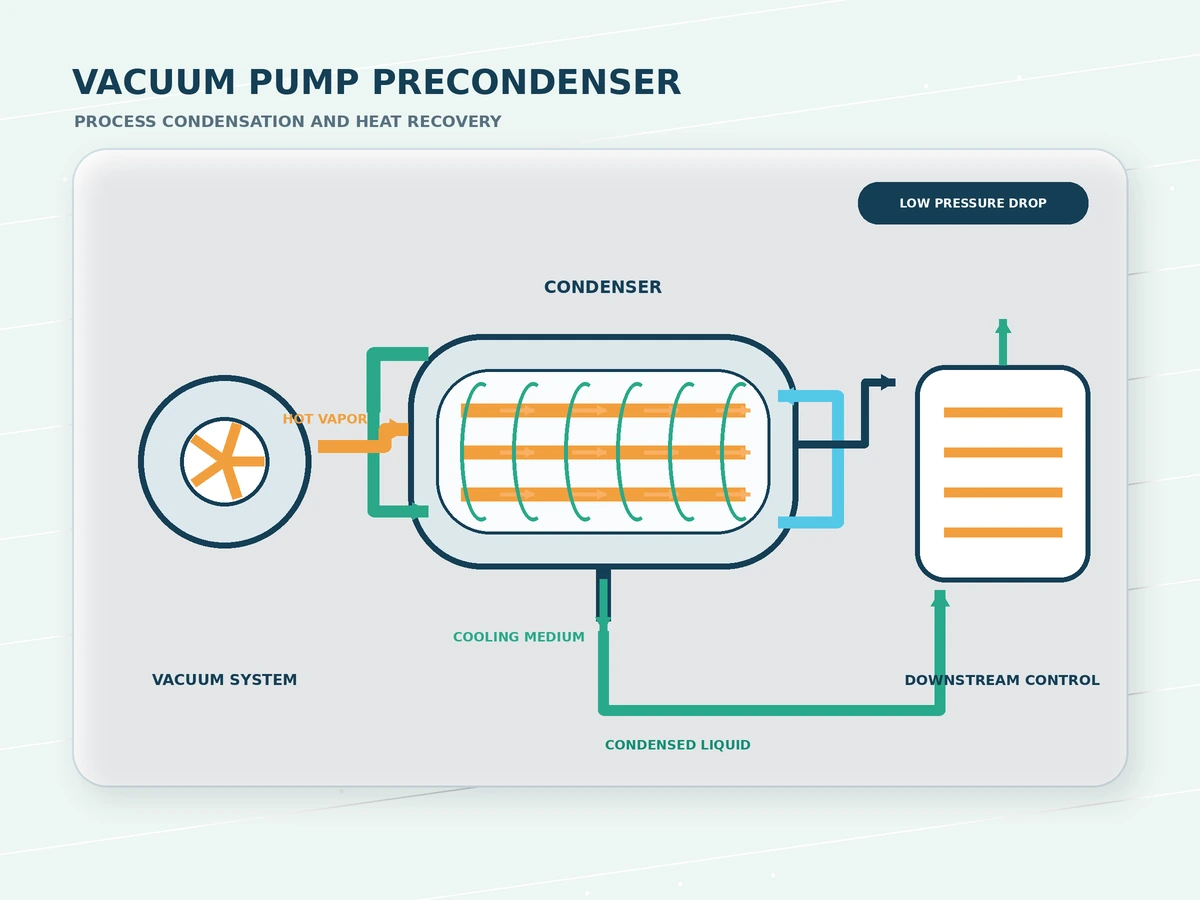
Deep vacuum condensing where vapor-side pressure drop is the binding constraint on the whole system.
+ Learn More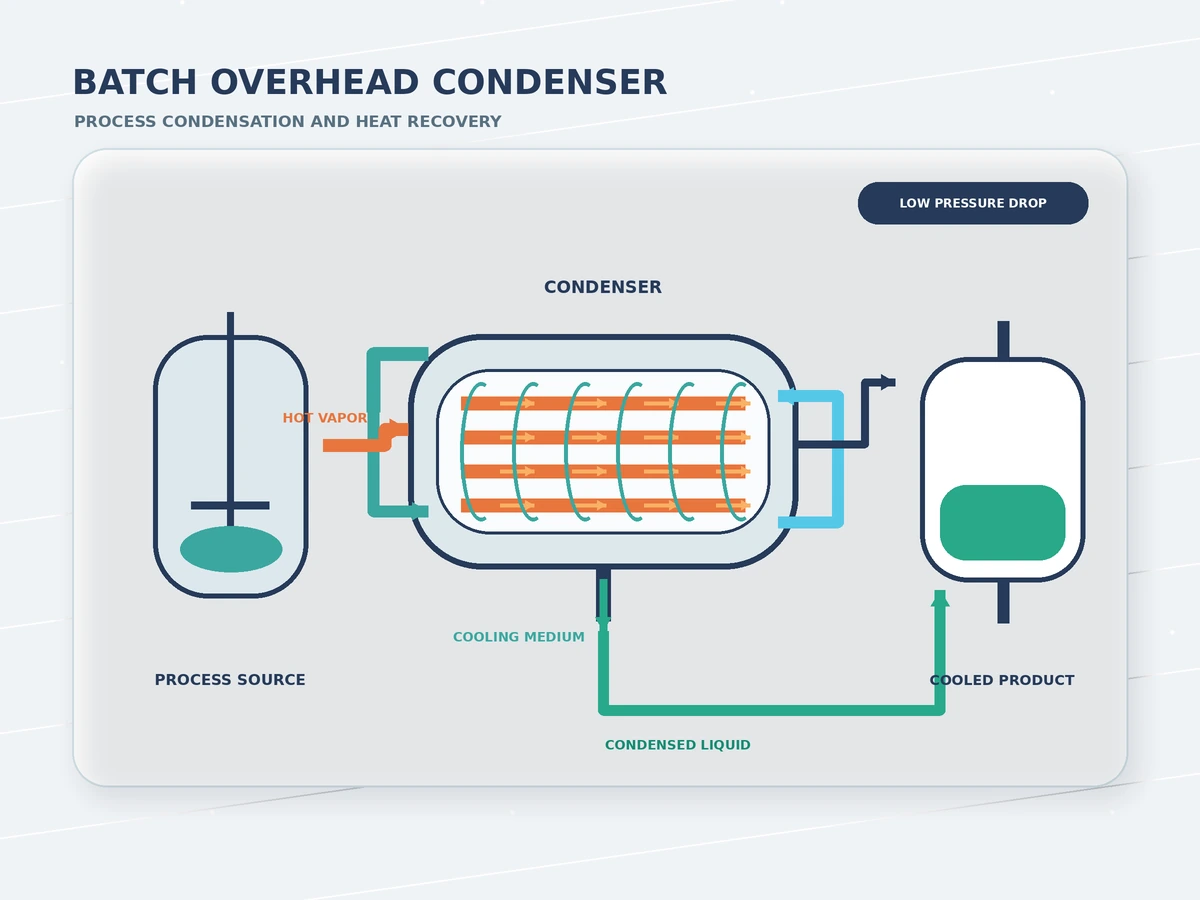
SEPARATION • FOULING
Overhead Condensers
Column overheads that foul, polymerize or carry solids, where a tube bundle needs constant cleaning.
+ Learn More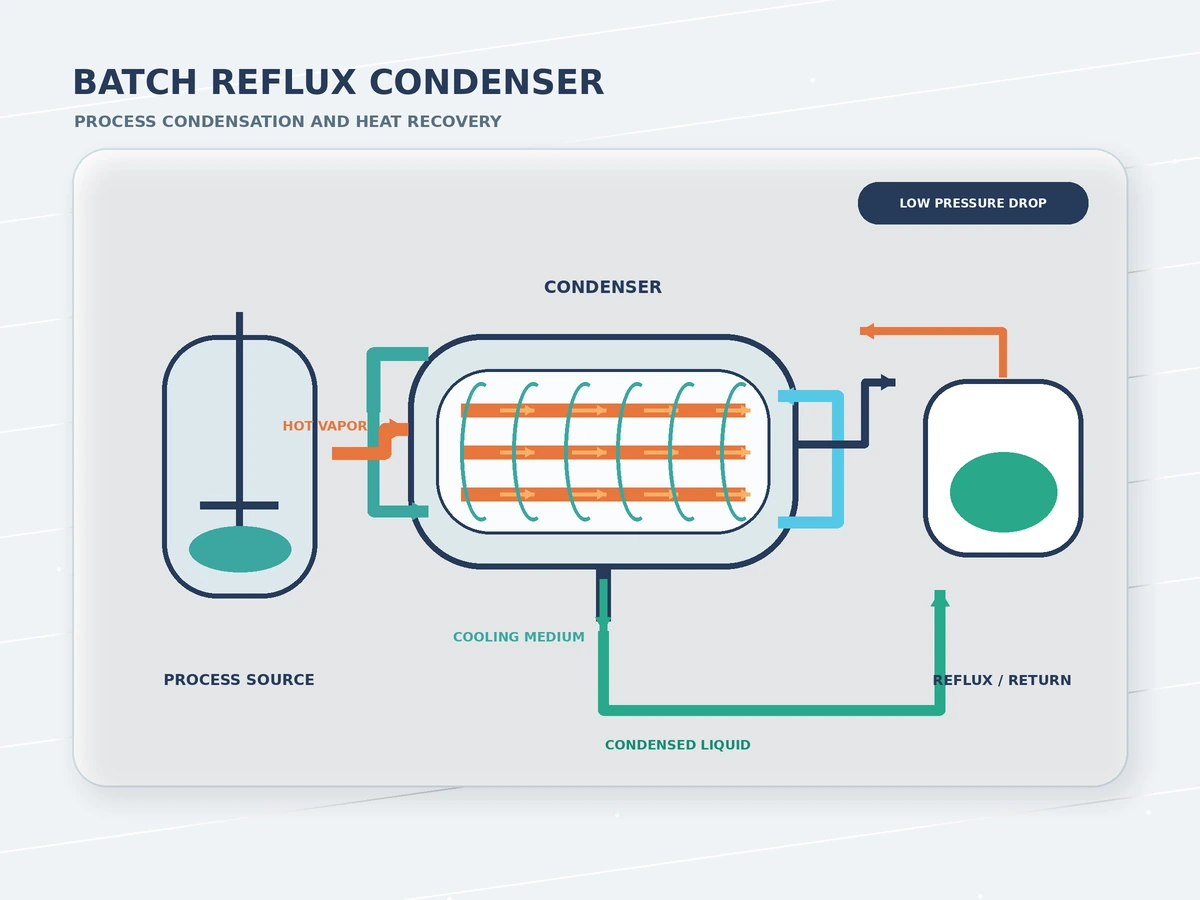
SEPARATION • REFLUX
Reflux Condensers
Column-mounted reflux duty that removes vapor pipework, the reflux drum and its structural steel.
+ Learn More