
1-805-484-2992
Quotes - Engineering - SalesHeat Exchangers For
Condensing Vapors You Cannot Afford to Release
Hazardous vapor recovery covers any stream where the governing concern is what happens if the vapor or its condensate gets out. The heat transfer may be routine, a solvent condensing against cooling water, yet containment, leak path and failure mode set the design. Specialty chemical, pharmaceutical, semiconductor and petrochemical plants run these condensers on reactor vents, transfer lines, storage breathing and scrubber feeds, and their process safety reviews usually ask more about the condenser than its thermal rating does.
The four pages under this topic split the family by hazard. Corrosive vapor recovery is a metallurgy problem first: acid gases and halides that condense into a liquid far more aggressive than the vapor was. Flammable vapor recovery turns on ignition sources, static, inerting and keeping the vapor space out of the flammable range. Regulated vapor recovery is driven by a permit limit on what leaves the vent, so outlet temperature becomes the specification. Toxic vapor recovery puts leak tightness and the consequence of a tube failure ahead of everything else.
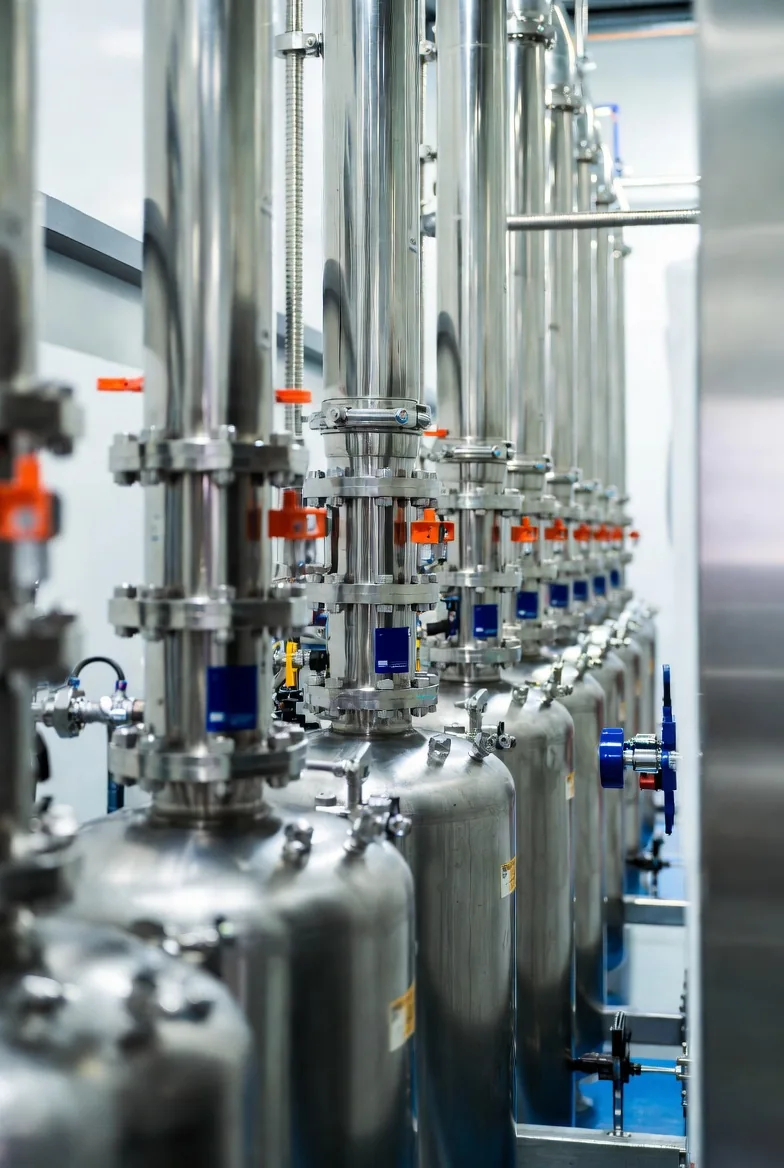
Many streams belong to more than one group. A chlorinated solvent vent can be toxic, regulated and, once wet, corrosive, and its condenser has to satisfy all three at once.
Request a Quote



Four Hazards, Four Design Drivers
In corrosive service the first dew point matters more than the bulk condensing temperature. Hydrogen chloride, sulfur trioxide or acetic acid condense with the first water and leave a concentrated acid film on the coldest surface; keeping that zone in an alloy that tolerates it, or holding the wall above the acid dew point, is the design. Flammable service changes the questions: electrical classification of any fan or instrument, bonding and grounding of the vessel, nitrogen blanketing, and whether a tube leak could push coolant or air into the vapor space.
Regulated recovery is set by a number on a permit, often a mass rate or concentration at the vent, so the condenser is sized backward from that outlet. Vapor pressure at the outlet temperature decides what escapes, which is why these units frequently finish on chilled glycol or brine. Toxic recovery is set by consequence. The questions are how many joints face the process, whether coolant pressure sits above or below process pressure so a leak travels in a known direction, and how the unit is drained and purged before anyone opens it.
How an Engineer Sorts a Hazardous Vent
Rank the hazards, then let the top one pick the construction. If corrosion governs, choose the alloy first and the geometry second. If toxicity governs, minimize gasketed joints and choose a pressure arrangement that makes a leak detectable. If flammability governs, settle inerting and grounding before sizing. If the permit governs, work from outlet vapor pressure and stage the cooling so the coldest stage carries the least load. The common error is to rate the duty thermally and bolt hazard features on afterward, which is how a gasketed header ends up on a phosgene vent or a carbon steel channel on wet HCl.
Fixed Tubesheet and Welded Plate Compared
A Fixed Tubesheet shell and tube unit is the conservative choice for most hazardous vents: welded tube-to-tubesheet joints, an all-welded shell, and a construction every inspector knows under ASME Section VIII and TEMA. Double tubesheets are available where a tube-joint leak must never cross between fluids. A Welded Plate exchanger removes process gaskets entirely and packs a high heat transfer coefficient into a small hold-up volume, which helps when the toxic inventory inside the exchanger is itself a risk. Its narrow channels are less forgiving of solids or polymerizing vapors and harder to inspect, so it fits clean streams best.
What Containment-First Design Delivers
Lower inventory and fewer leak paths shrink what a process hazard analysis has to assume. A condenser designed to the hazard simplifies the permit report instead of complicating it.
Recovered condensate can often return to the process or go to a single collection point, rather than ending up as contaminated scrubber liquor or spent carbon that must be manifested as hazardous waste.
Alloys, Linings and Joint Design
For wet chlorides 316L is often not enough; duplex, alloy C-276 or titanium tubes are the usual step up, chosen on the acid concentration at the condensing surface rather than the bulk vapor analysis. Graphite and PTFE-lined components appear on the most aggressive streams. Joint design matters as much as alloy: strength-welded and expanded tube joints, a minimum flange count, and spiral-wound or metal gaskets where flanges remain. Put the cleaning and neutralization chemistry into the material review too, since a caustic wash can attack an alloy chosen for acid.
Shared Sizing Data for Every Hazard Class
Whichever hazard governs, the quote needs the full vapor analysis with trace components named, flow and pressure at normal and worst-case conditions, the outlet limit if a permit applies, coolant type and supply temperature, the electrical area classification, and any requirement for double containment, leak detection or inert purge. Flag components that polymerize, decompose or form solids when chilled, because those decide whether a tight welded passage is acceptable at all.