1-805-484-2992
Quotes - Engineering - SalesDephlegmators
Column-Mounted Partial Condensers for Internal Reflux Generation
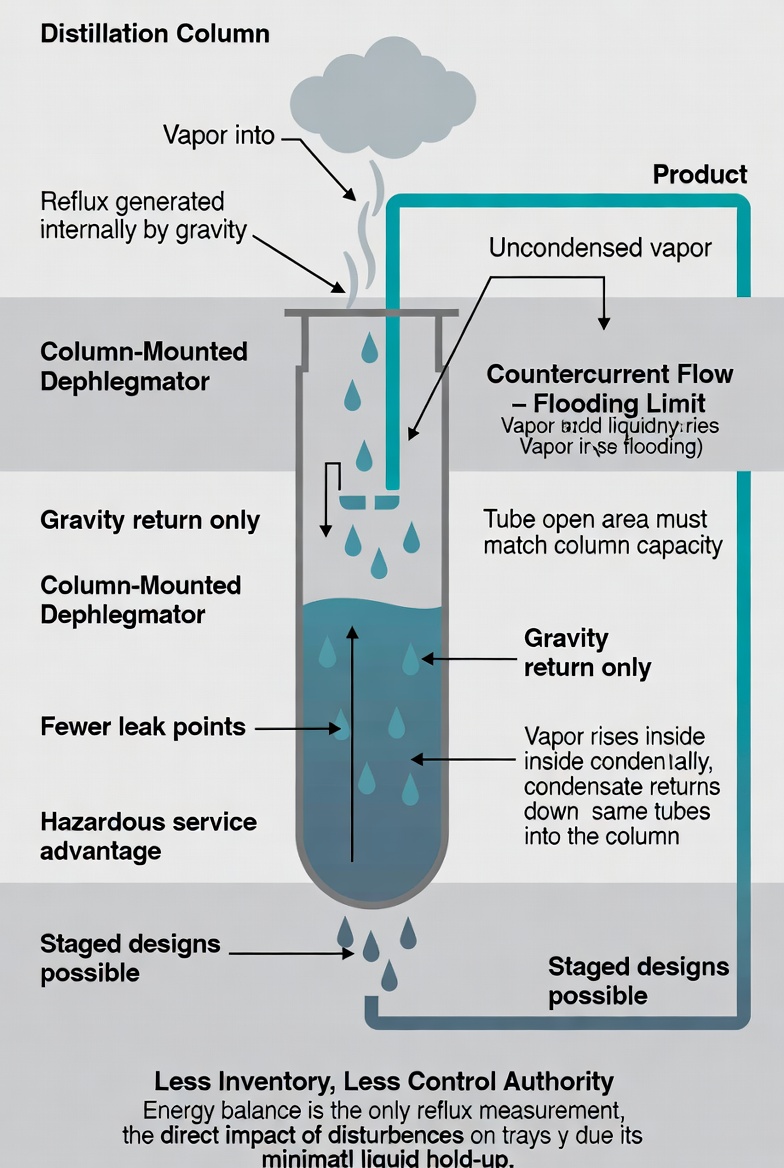
A dephlegmator is a partial condenser mounted directly on top of a distillation column. Vapor from the column passes up into the tubes, coolant flows on the shell side, part of the vapor condenses, and the condensate falls straight back down into the column as reflux. Uncondensed vapor continues out the top as product. The essential characteristic is that reflux is generated inside the unit and returned by gravity — there is no reflux drum and no reflux pump anywhere in the arrangement.
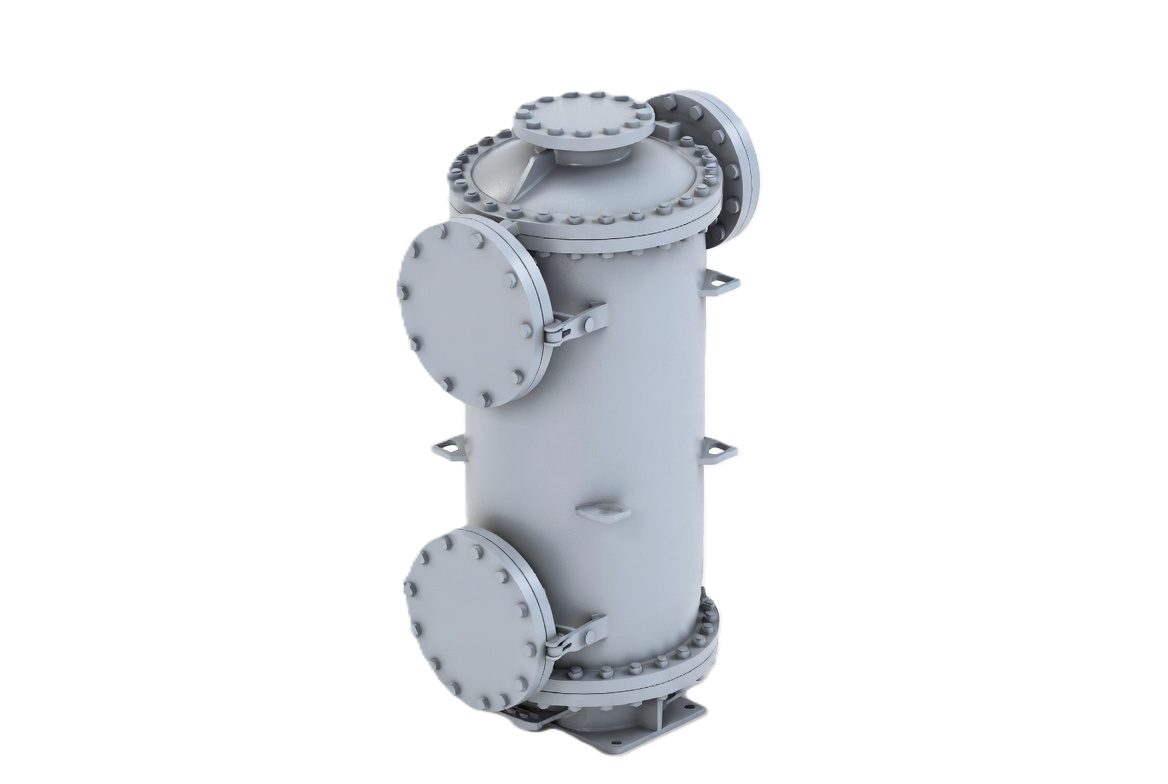
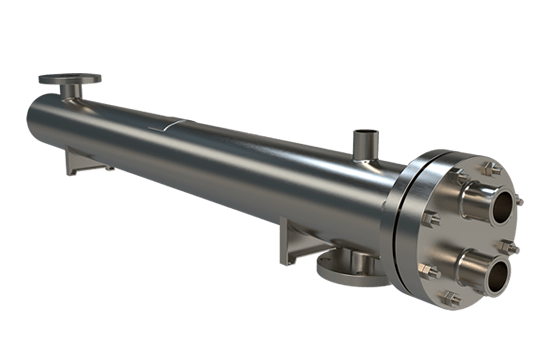
It is a familiar piece of equipment in more places than people expect. Vertical shell-and-tube arrangements with coolant on the shell side and feed vapor in the tube bores are the common industrial form; vertical brazed aluminum plate-fin dephlegmators are used in cryogenic distillation for gas separation in refineries and petrochemical plants. In craft distilling the same device sits at the top of a column still, where varying the coolant flow changes the reflux ratio and therefore the proof and character of the spirit.
What a dephlegmator gives you. Considerably less infrastructure — no reflux drum, no pump, no return piping, less structural steel and no plot space for any of it. A much smaller inventory of material at the top of the column. Fewer flanged joints and rotating seals, so fewer potential leak points. No need to convey liquid reflux back up to the column at all. On processes handling hazardous, toxic or corrosive substances, those last points are a genuine safety advantage rather than merely a cost saving.
What it costs you. Control authority, primarily. An external condenser with a reflux drum lets you measure and manipulate reflux flow directly, and the drum's inventory buffers the column against disturbances in inert loading, vapor rate, coolant flow or coolant temperature before they reach the trays. A dephlegmator has essentially no liquid holdup, so reflux can only be inferred from an energy balance, and any disturbance in condensing rate propagates into the column immediately. On columns with tight product specifications or frequent rate changes, that sensitivity can be a serious operating problem — and it is the reason dephlegmators are not simply the default choice despite their cost advantage.
Mechanical realities. The unit has to be mounted and structurally supported at the top of the column. Coolant must be piped up to that elevation and supplied there. Maintenance means physically removing the unit, and cleaning is more awkward than on an exchanger at grade. Where fouling is expected, this matters a great deal.
Countercurrent flow and flooding. vapor rises while condensate drains down the same tubes, so the tubes must be designed for countercurrent flow, and flooding imposes a firm limit on vapor velocity. Most vertical units in this service are designed for downflow condensation with a deliberate margin against that limit. A useful practical guide is that the dephlegmator's tube bundle should have roughly enough open area to approximate the column's own cross-section — a badly undersized bundle chokes the column regardless of how much surface area it contains.
Staged designs. Some arrangements combine sections: a shell-and-tube or plate-fin upper section where external coolant does the work, over a packed lower section where heat exchanges directly between rising vapor and falling condensate. Because only the vapor condensing at the very top must be chilled to the lowest temperature, and the condensate itself performs part of the cooling duty on its way down, this can use noticeably less refrigeration than simple partial condensation.
Related pages: reflux condensers, distillation condensers, overhead condensers, and distilled spirits condensers.