
1-805-484-2992
Quotes - Engineering - SalesHeat Exchangers For
VOC Capture by Condensation
A VOC recovery condenser is judged at the stack. The goal is a measured reduction in volatile organic compounds leaving the site, usually stated in pounds per hour or ppm at the outlet, and the recovered liquid is a welcome byproduct rather than the reason for the project. The streams are mixtures, often poorly characterized, and they arrive diluted in air from converting, printing, coating, resin and chemical plants.
Six duties make up this topic. Coating line and dryer recovery handle hot, lean air carrying a solvent blend that shifts with each product. Emission control system recovery places a condenser inside a larger abatement train, typically ahead of carbon or after a concentrator. Process vent recovery takes reactor, tank and transfer vents gathered in a common header. Reactor recovery deals with a batch vent that peaks hard. Vacuum pump recovery condenses VOCs at the suction or discharge of the pump that pulled them.
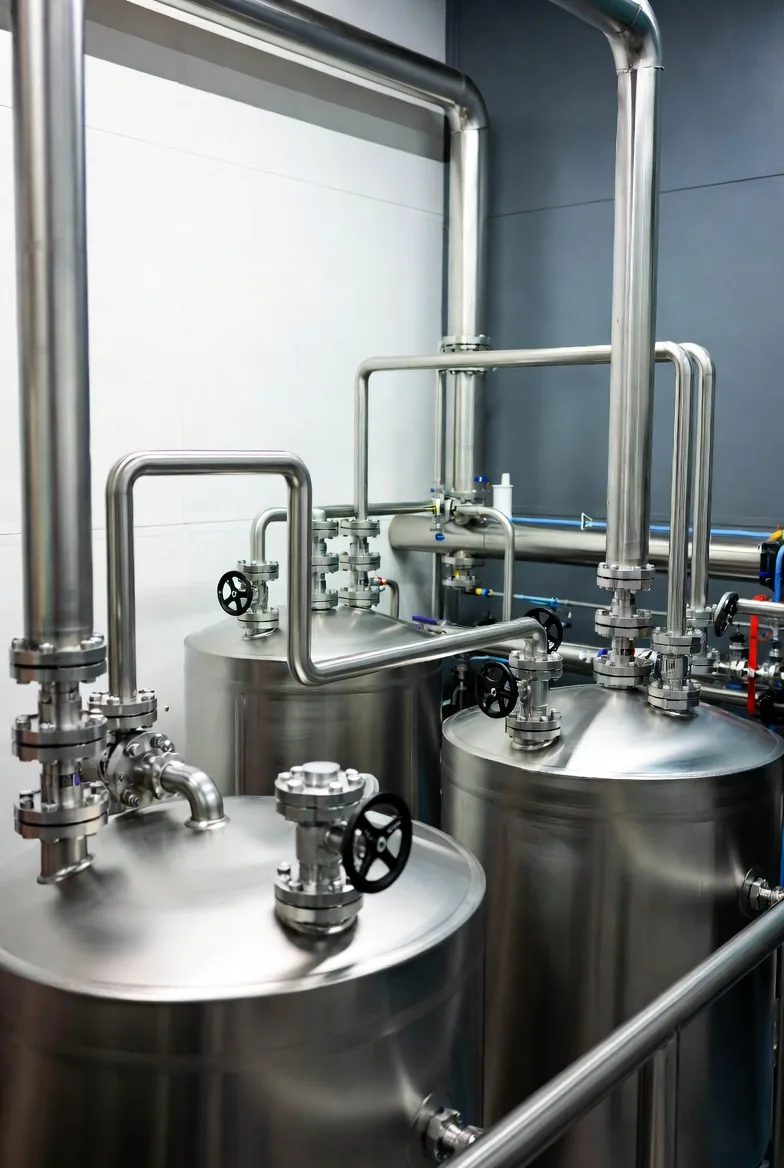
What links all six is that outlet temperature sets outlet concentration through vapor pressure, so the coldest available coolant decides how far a condenser can go on its own.
Request a Quote



Coating Lines, Vents and Vacuum Pumps
Coating and dryer streams are the leanest of the group and the most variable, because the solvent package changes with the product on the line and airflow is set by the oven's LEL limit rather than by the condenser. These streams usually need staged cooling: an ambient or tower water stage to shed heat and heavy ends, then a chilled glycol or refrigerated stage to reach the outlet target. Process vent and reactor streams are richer and more intermittent, so turndown and peak capacity count for more than the deep-cooling stage.
Vacuum pump VOC recovery is the most compact of the six. Condensing at the pump discharge, after compression, raises the dew point and lets plain cooling water do work that would need chilled glycol at the suction. Condensing at the suction protects the pump fluid instead. Emission control system condensers are defined by the equipment around them: a concentrator wheel or carbon desorption step delivers a small, rich stream that is ideal for condensation.
Matching the Condenser to the Emission Limit
Work backward from the permit. Convert the allowed outlet mass rate into a concentration at the condenser outlet, find the temperature at which the controlling compound's vapor pressure meets it, and add margin for the most volatile component in the mix. If that temperature falls below the freezing point of water or of a heavy component, plan for staged cooling with defrost or alternating banks. The mistake seen most often is sizing to the average solvent blend when the permit is set by the lightest one, so the condenser fills drums with liquid and still fails the stack test.
Shell and Tube Stages with an Air-Cooled Lead
A Fixed Tubesheet shell and tube unit is the workhorse for the cold stages, with vapor on the shell side, glycol or brine in the tubes, and baffling that keeps gas velocity high enough to hold the gas-side coefficient up at low concentration. A Horizontal Fin Fan is useful as the first stage on hot coating and dryer exhaust, removing sensible heat and the heaviest components with no water draw, but on it's own it stops well above the outlet temperatures most VOC limits demand. Pairing the two keeps refrigeration load where it belongs.
Results at the Stack and in the Drum
A correctly staged condenser brings the outlet down to a predictable concentration across the product mix, which turns the compliance report into a calculation rather than a hope.
Downstream carbon or oxidizer equipment then handles only the residual, so it can be smaller or run longer between service, and the recovered VOC liquid can often be reused or blended as fuel.
Frost, Resins and Material Choice
Deep-cooling stages collect frost from moisture in the air and can collect resins or monomers that freeze out alongside it. Wider tube pitch, a removable channel cover and a defrost path matter more here than an exotic alloy. Most VOC mixtures are fine with carbon steel shells and stainless tubes; 316L or duplex is warranted where chlorinated or acidic components are present. Copper alloys are avoided where amines, ammonia or acetylenic compounds may appear in the stream.
What Every VOC Quote Starts With
Provide the air or nitrogen flow and its range, the VOC components with concentrations for the worst product and the lightest compound, inlet temperature, moisture content, the outlet limit from the permit, and the coolants available at each temperature level. Note whether the source runs continuously or in batches, and whether the system can tolerate a short outage for defrost or needs parallel banks.