
1-805-484-2992
Quotes - Engineering - SalesReactor Knock-Back Condenser Heat Exchangers
In knock-back condensers service, the condenser must track changing vapor load while maintaining the outlet temperature needed for separation. Proper thermal design limits pressure drop, avoids noncondensable blanketing, and supports reflux control, product retention, and batch consistency.
- Thermal Duty: Surface area and coolant flow are sized for peak vapor load, latent heat, subcooling target, and seasonal utility conditions.
- Pressure Control: Low vapor-side pressure drop protects vacuum or compressor performance and keeps the upstream process stable.
- Fluid Compatibility: Pressure and corrosion ratings matched to the reactor vapor composition protects product quality and equipment life.
- Condensate Handling: Drainable geometry and proper nozzle orientation prevent liquid backup, flooding, and loss of active surface.
- Load Flexibility: Control valves, coolant bypass, or fan-speed control maintain duty as batch rate and vapor composition change.
- Maintainability: Accessible surfaces, inspection provisions, and cleanable flow paths reduce downtime and preserve heat-transfer performance.
Fixed Tubesheet:
Shell & Tube
- High pressure capability
- Broad alloy selection
- Serviceable tube bundle
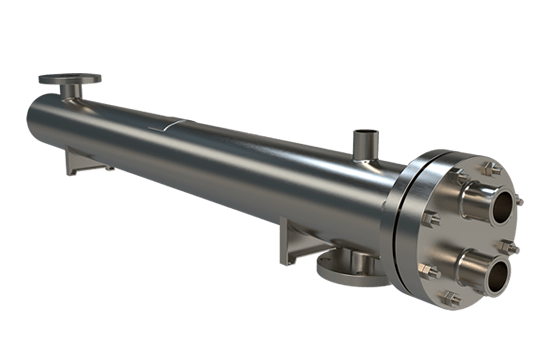
U-Tube:
Shell & Tube
- Handles thermal cycling
- Removable tube bundle
- High temperature duty
Knock-back condensers Condensers
Heat Exchanger
A condenser for knock-back condensers is selected from the vapor composition, flow profile, condensing curve, operating pressure, coolant availability, and allowable pressure drop. The exchanger must remove both sensible heat above the dew point and latent heat released as the target component changes phase.
The Fixed Tubesheet configuration is commonly favored because it provides high pressure capability, broad alloy selection, and a practical path for inspection or cleaning. The U-Tube option is useful where its compactness, pressure capability, utility arrangement, or fouling behavior better matches the installation.
Reliable operation also depends on condensate drainage, venting of noncondensables, stable coolant control, and metallurgy compatible with every expected component. These details help the condenser maintain capacity, reduce recovered-product losses, and protect downstream vacuum pumps, compressors, scrubbers, filters, or emissions equipment.
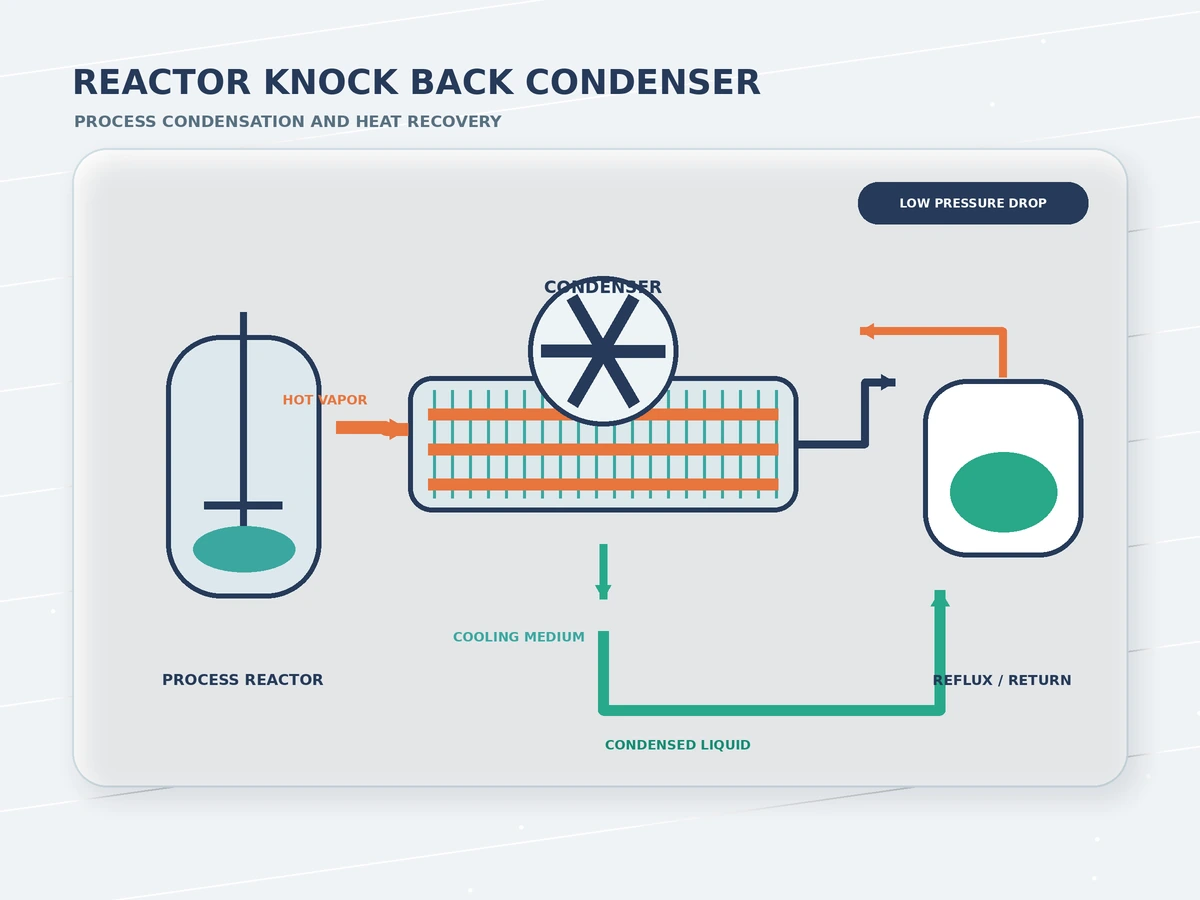
Thermal Design for Knock-back condensers
The exchanger is rated for the complete operating envelope, including startup, peak vapor generation, turndown, and upset conditions. Condensing temperature, coolant approach, pressure drop, and noncondensable content are evaluated together.
Advantages of a Process-Specific Condenser
Reliable Vapor Control
Stable heat removal supports pressure control, consistent separation, and predictable operation as vapor rate and composition change.
Materials and Cleanability
Pressure and corrosion ratings matched to the reactor vapor composition helps control corrosion, cross-contamination, fouling, and maintenance risk.
Efficient Product Recovery
Correct surface allocation and condensate drainage increase liquid recovery, reduce utility demand, and lower the vapor load sent to downstream controls.