1-805-484-2992
Quotes - Engineering - SalesHeat Exchangers
Exchanger Types
for Condensing Duty
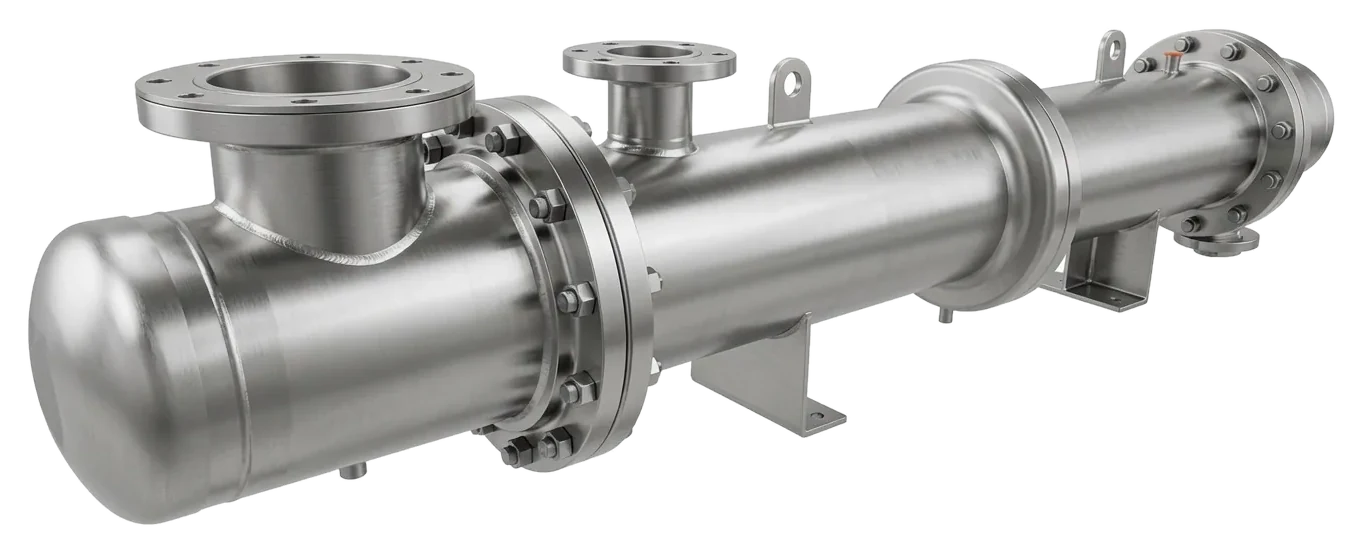
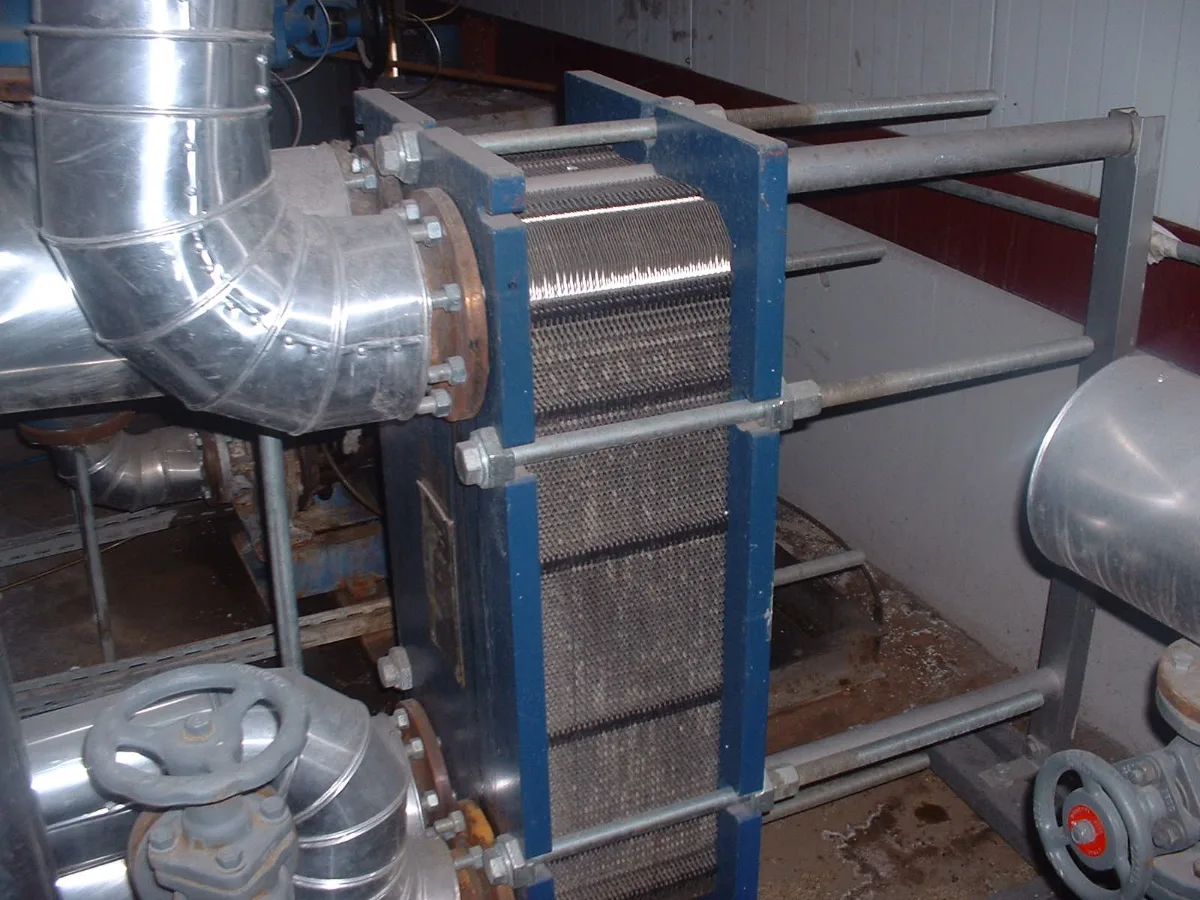
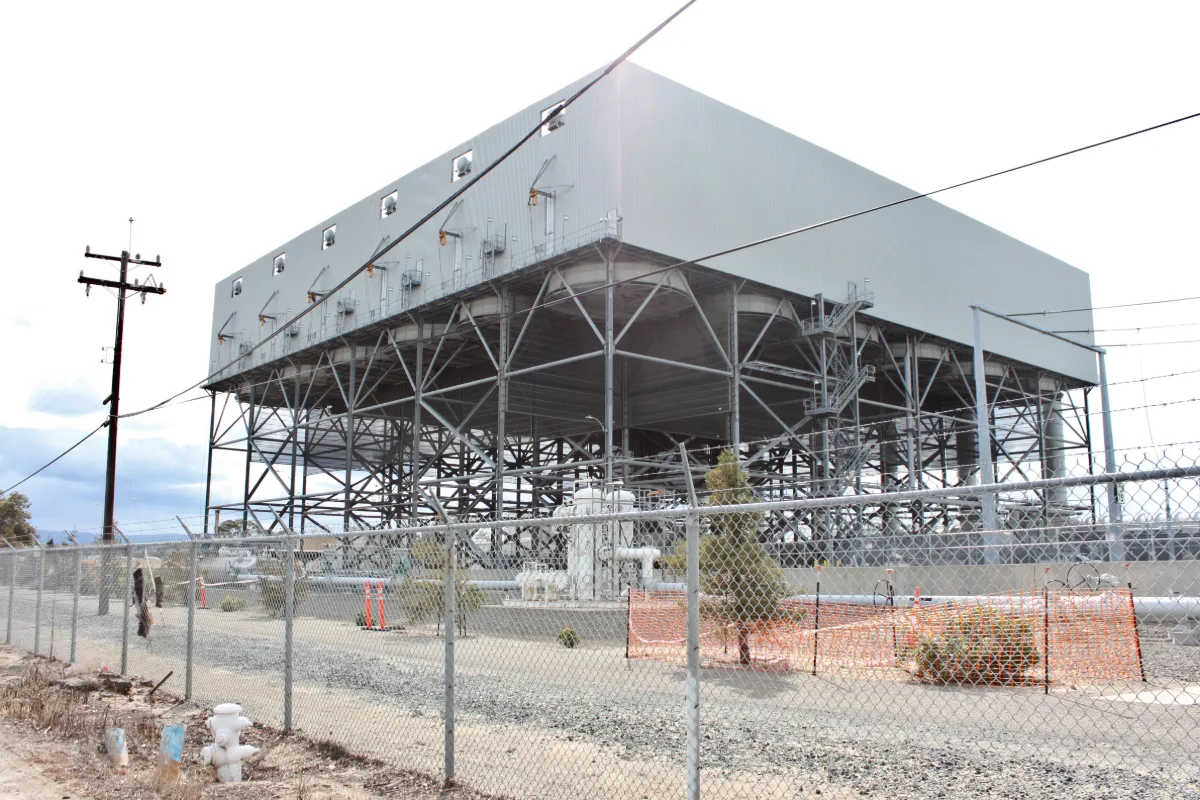
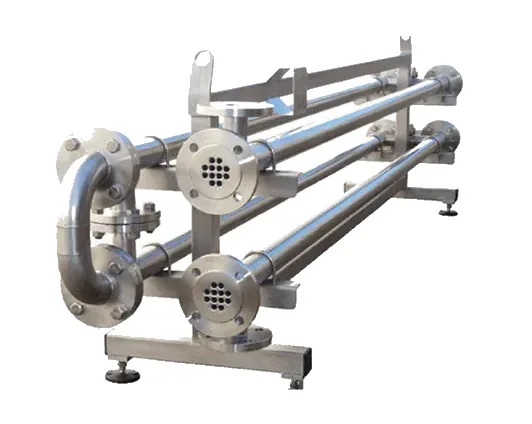
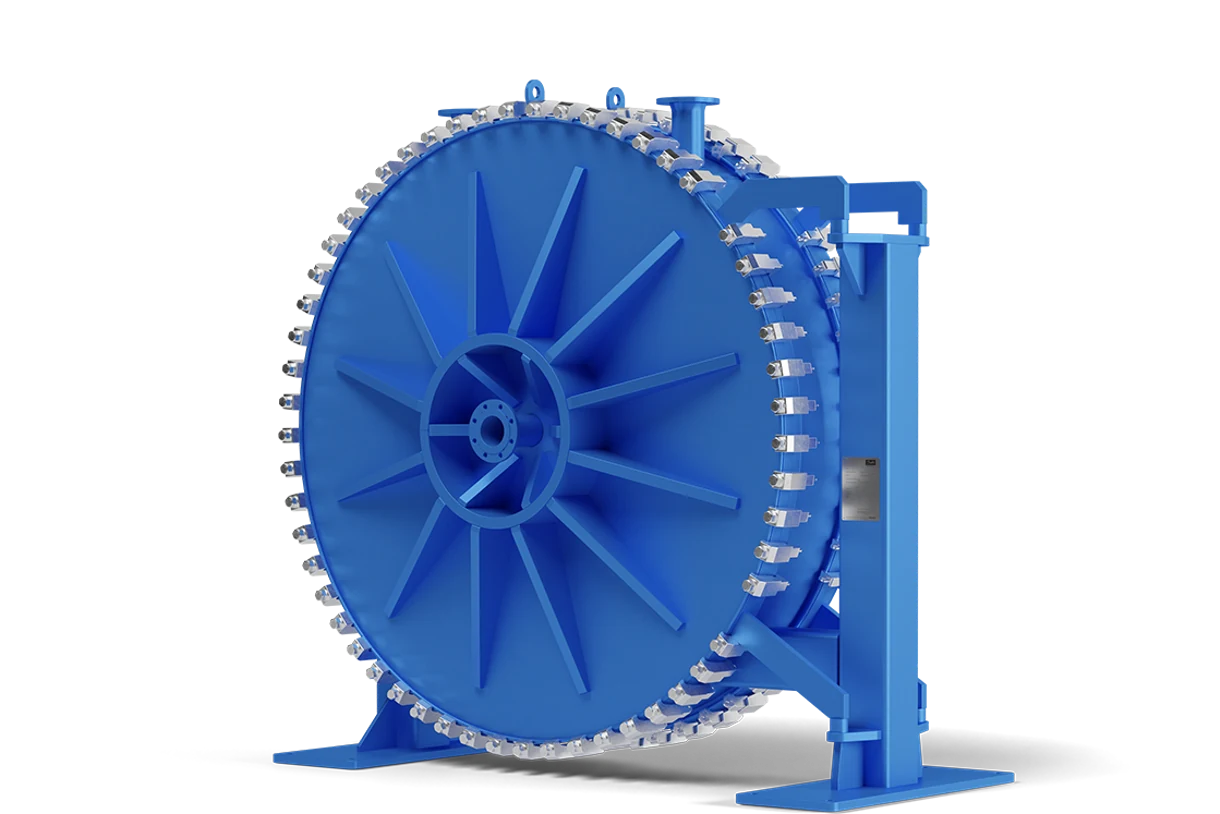
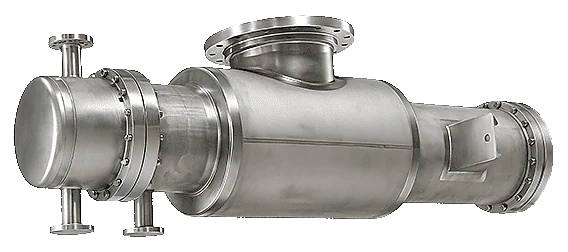
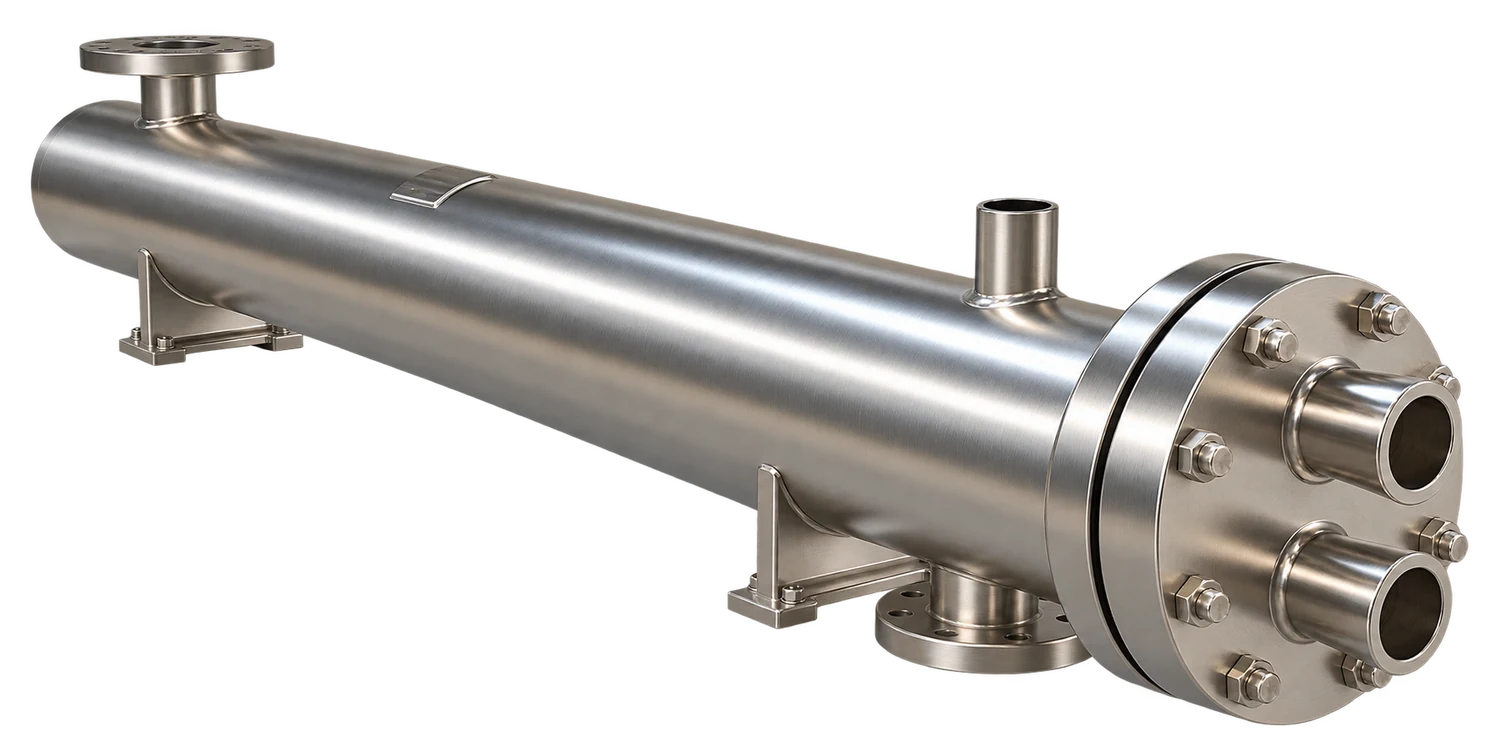
Five constructions cover almost every condensing duty: shell and tube, plate, air cooled, double pipe and spiral. Which one fits is decided by the vapor, the pressure, the coolant you have and how the unit will be cleaned.
Condensing is a phase change, and the exchanger has to do three things at once: carry the latent load, drain the condensate away from the surface, and get rid of whatever noncondensable gas arrives with the vapor. Every construction on this site does those three things differently, which is why the choice of type comes before the choice of size.
Shell and tube handles pressure, vacuum and almost any alloy, and is the default for most of the duties on this site. Plate exchangers give the closest approach in the smallest footprint but have a narrower envelope. Air cooled units reject heat to ambient where there is no water to spare. Double pipe suits small, high-pressure or countercurrent duty, and spiral units are the answer where fouling or deep vacuum defeats everything else.
Tell us the vapor, the rate, the pressure and the coolant, and we will tell you which construction fits and why. If two fit, you get both with the trade-off written out.
Request a Quote



Start With the Vapor, Not the Catalog
The condensing curve decides more than the duty does. A pure saturated vapor condenses at one temperature and almost any construction will carry it. A mixture condenses over a range, the noncondensable fraction blankets surface as the condensables leave, and the exchanger has to be arranged so gas is swept to a vent rather than trapped in a dead corner. That is a geometry question before it is a surface-area question.
Pressure is the second sort. Under vacuum the specific volume is enormous and vapor-side pressure drop becomes the design constraint, which favors crossflow shells, spirals and short vapor paths. At pressure the constraint moves to containment, which favors tubes and small shells.
Cleaning, Coolant and Footprint
How the unit will be cleaned rules constructions in or out. A fouling vapor wants a removable bundle, a spiral channel or a gasketed plate pack it can be opened up to; a clean vapor can go in a fixed tubesheet unit at the lowest cost per square foot. Sanitary and pharmaceutical duty adds drainability, surface finish and double tubesheets to the list.
Then the coolant. Tower water, chilled water and glycol each set a different approach and a different fouling allowance; no water at all points at an air cooled unit and a design case built around the hottest afternoon of the year. Footprint and headroom come last, and they are the constraint most often discovered on site rather than on the drawing.