
1-805-484-2992
Quotes - Engineering - SalesPreheating Cold Makeup Water With Steam
Makeup water replaces the condensate a steam plant never gets back: process steam injected into product, losses at vents and traps, and boiler blowdown. It usually arrives cold from the city main, a well, a softener or an RO unit, and on its way to the deaerator or feed tank it mixes with returning condensate. Preheating it with low-pressure or flash steam takes advantage of a large temperature difference, so modest surface does a lot of work. The complications are water chemistry, scaling or aggressive RO permeate, and a flow that rises and falls with how much condensate comes home.
- Cold Inlet: Makeup can arrive at ground or winter temperature, giving a wide temperature difference that makes the exchanger small for the duty.
- Scaling Tendency: Unsoftened water deposits calcium carbonate faster as it warms; limit the wall temperature or soften before heating to keep surfaces clear.
- RO Permeate: Reverse-osmosis water is low in minerals and often carries carbon dioxide; it corrodes carbon steel and copper, so stainless is the safer choice.
- Variable Flow: Makeup rate follows condensate losses and can swing from a trickle to full boiler output, so the control valve and surface must handle both.
- Mixing Point: Makeup preheated too hot can flash when it meets returning condensate or overload the condensate tank vent; set the outlet below that point.
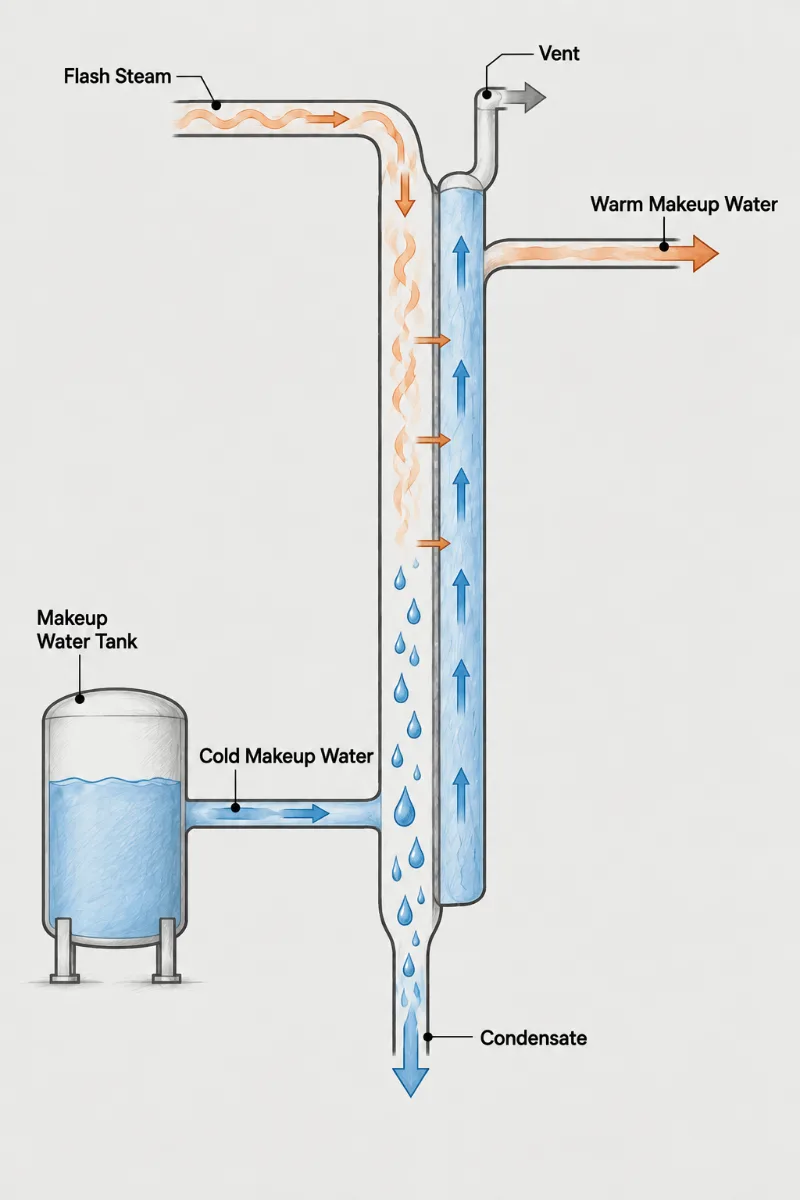
- Low-Grade Steam: Flash and exhaust steam that would otherwise vent can heat makeup, giving the preheater nearly free heat.
Using Waste Steam on the Coldest Water in the Plant
Makeup water is the coldest stream in most boiler houses and often the largest heat sink available for low-grade steam. Warming it before it reaches the deaerator means the deaerator uses less live steam, and if the heating steam is flash or exhaust that would otherwise be vented, the saving is close to all profit. The design is straightforward thermally; most problems come from the water.
Hard water heated without softening lays down carbonate scale on the hottest surfaces, which are the tube walls where steam condenses. Within months the preheater loses capacity and the outlet temperature drops. Soften first, or limit steam pressure so the wall stays cool enough to slow precipitation, and choose a design that can be cleaned. RO permeate is the opposite: it scales little but is aggressive, so use stainless wetted parts.
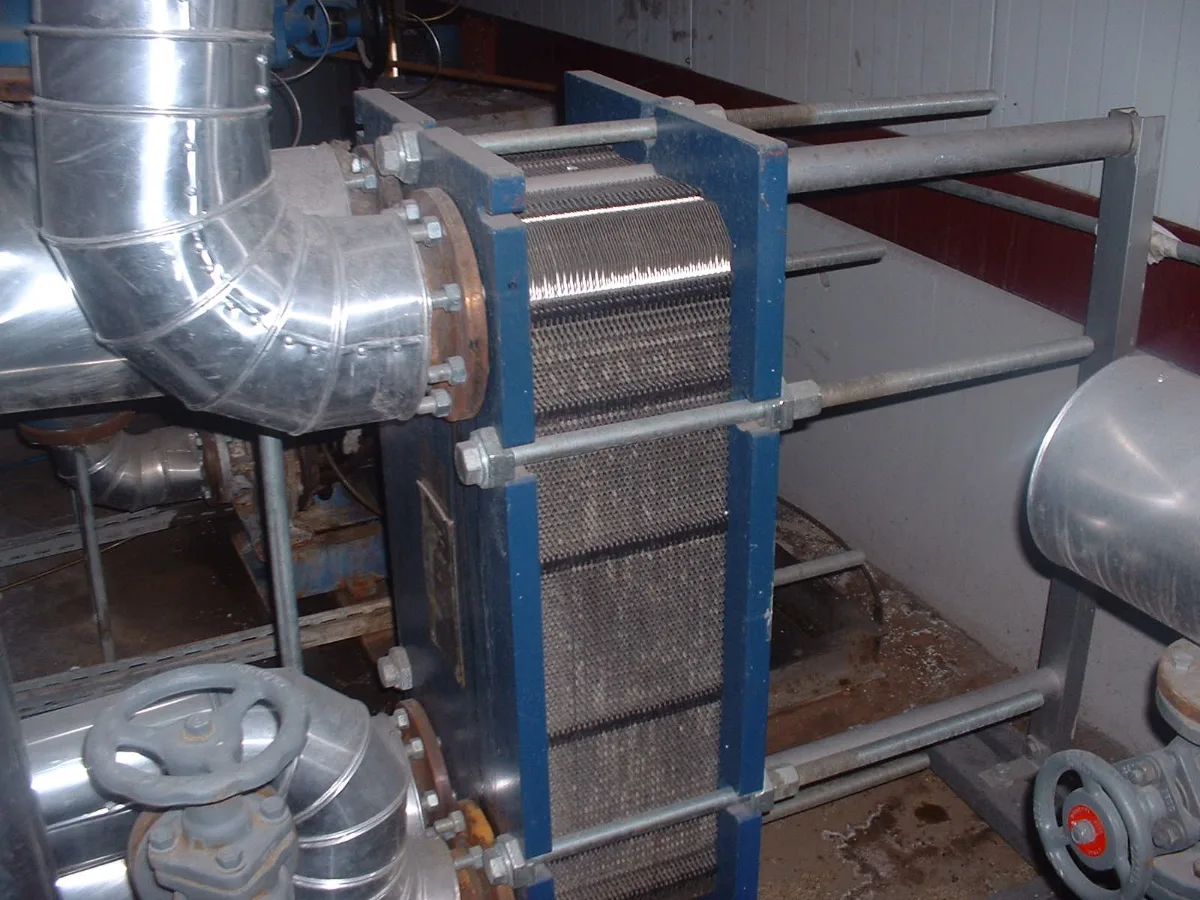
A Gasketed Plate & Frame exchanger is often the best fit. Makeup heating runs at low pressure on both sides, plates achieve a close approach between low-pressure steam and outlet water, and the pack can be opened and cleaned if scale forms. Plates also handle the wide flow range with a single unit.
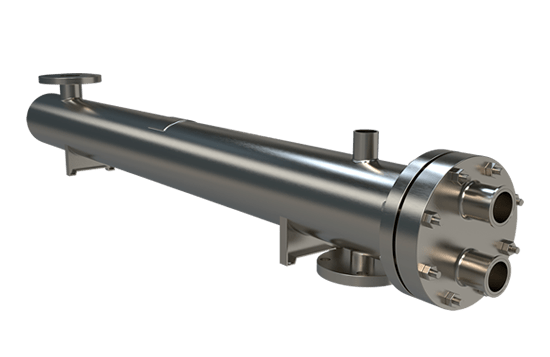
A U-Tube shell-and-tube preheater is preferred when the heating steam is at higher pressure, when water hammer from intermittent flash is a concern, or when the water side is dirty enough to plug plate channels. Put water in the tubes and size a vacuum breaker for when makeup stops. For a quote, provide the makeup flow range and source, water analysis or treatment type, inlet temperature in winter, steam source and pressure, target outlet temperature and the mixing arrangement with condensate return.
Water source
City, well, softened or reverse osmosis supply
Flow range
Smallest and largest makeup flow during operation
Steam available
Flash, exhaust or header steam and its pressure
Mixing target
Temperature limit where makeup meets condensate return
Cold Makeup
Warmed by Steam You Would Vent
1.
Less Deaerator Steam
Every degree added to makeup with flash or exhaust steam is a degree the deaerator no longer supplies with live steam, a direct reduction in boiler fuel.
2.
Scale Kept Manageable
Softened supply, controlled wall temperture and an openable plate pack or cleanable tubes keep carbonate deposits from steadily shrinking capacity and outlet temperature over a heating season.
3.
Handles Wide Flow Swings
A properly sized control valve and surface keep outlet temperature steady wether makeup is a trickle on high-return days or a full flow when condensate is lost.
Makeup heating questions
Yes, unsoftened water will lay carbonate scale on the water side of the steam-heated wall within a few months, and the rate climbs sharply once the wall passes about 140 F. City water at 150 ppm hardness heated from 50 F to 180 F drops a meaningful share of that hardness on the hottest surface. Softening ahead of the preheater removes the problem; where that is not possible, keep steam pressure near atmospheric so the wall stays below 220 F, and choose a plate pack or straight tubes you can open and clean on a schedule. Watch outlet temperature weekly; a steady drop is scale.
Use 304 or 316 stainless for every wetted part on the water side, including the channel, the tubesheet or the plate frame ports. RO permeate often leaves the membrane with carbon dioxide that drops its pH toward 5.5, and with almost no hardness to form a protective film it corrodes carbon steel fast enough to color the feedwater with iron within weeks. Copper alloys fare no better and add copper to the boiler. Stainless costs more on a shell-and-tube unit, but a plate exchanger is already stainless, which is one reason plates suit RO makeup heating.
Heat it to within about 10 F of the feed tank's saturation temperature and no closer, so it cannot flash when it meets returning condensate or overload the tank vent. For an atmospheric feed tank that means a makeup outlet near 200 F; for a deaerator at 5 psig, 215 F is the ceiling. Below that limit every degree is worth having: 10,000 lb/hr of makeup raised from 55 F to 190 F with flash steam saves about 1.35 million Btu/hr of live steam at the deaerator. Control the steam valve from the outlet temperature, not from makeup flow.