
1-805-484-2992
Quotes - Engineering - SalesCondensing Before Thermal Oxidation
A thermal or regenerative oxidizer is sized on airflow and heat release. When a process vent carries enough solvent to push the inlet toward the lower explosive limit, the plant either adds dilution air, which enlarges the oxidizer and burns more fuel, or takes the solvent out first. A precondenser does the second. It also strips water vapor and high-boiling organics that add flue-gas volume or foul ceramic media. The balance is how much organic to remove: enough to stay below the LEL limit and recover product, not so much that the oxidizer loses the fuel value it was running on.
- LEL Margin: Many permits and insurers hold oxidizer inlets below a quarter of the LEL, higher with continuous analyzers; condensing the solvent peak meets that without dilution air.
- Fuel Balance: A self-sustaining regenerative unit relies on the vent's organic heat content; over-condensing a rich stream turns it into a natural gas consumer.
- Water Knockout: Saturated vapor adds volume the oxidizer must heat to combustion temperature; condensing water out frees capacity.
- High Boilers: Heavy organics and aerosols that reach a regenerative unit coke on ceramic media and raise its pressure drop.
- Halogen Load: Chlorinated organics become HCl in the combustion chamber; condensing them as liquid shrinks the quench and scrubber duty.
- Arrestor Path: Condenser drop adds to the flame arrestor and duct losses; the blower must still deliver design airflow when the condenser is fouled.
Where a Precondenser Pays Ahead of an Oxidizer
Is the oxidizer short of capacity because of airflow, or because the vent swings toward the LEL during batch charging? That answer decides whether a precondenser belongs in front of it. Where the trouble is concentration spikes, removing the condensable peak flattens the inlet and stops the LEL analyzer from tripping the system to dilution or bypass.
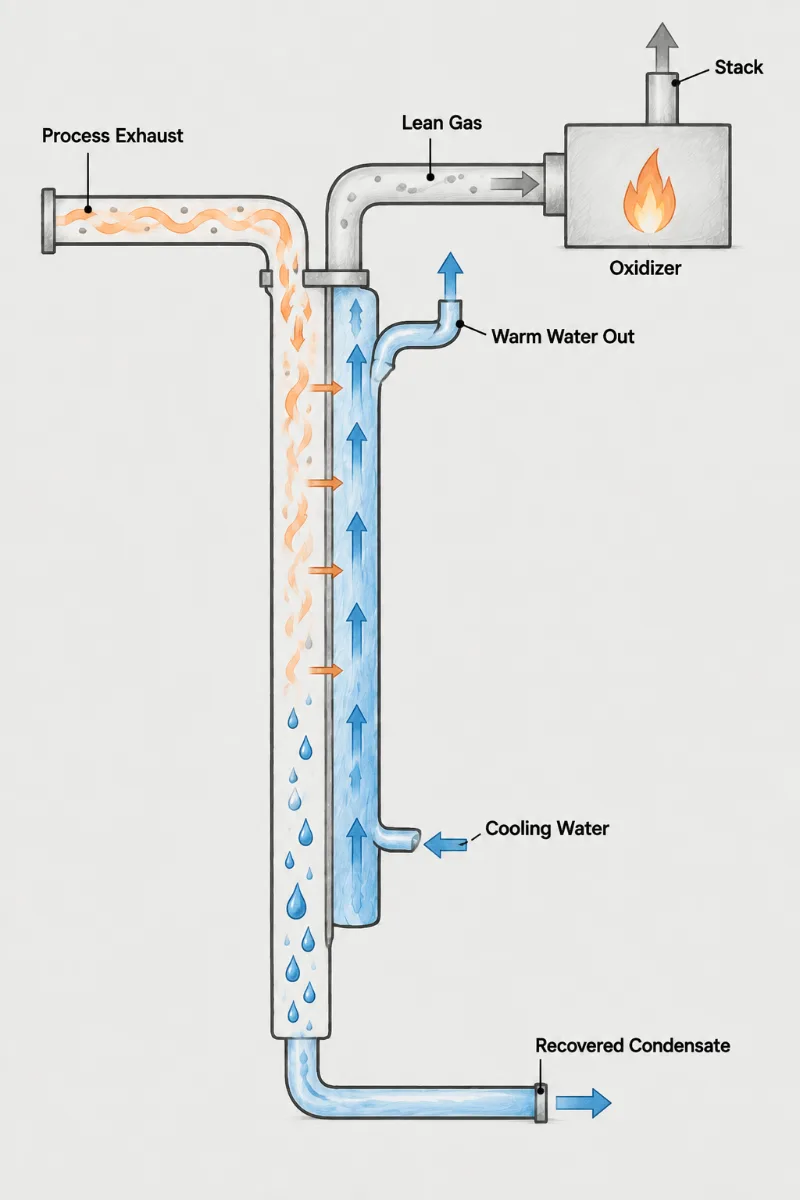
The duty is gas-film controlled. Air or nitrogen makes up most of the flow, so solvent must diffuse through a stagnant gas layer at the tube wall and the coefficient sits nearer a gas cooler than a steam condenser. Exit temperature sets the residual organic load, which means the remaining fuel value can be tuned with the coolant setpoint rather than by oversizing the surface.
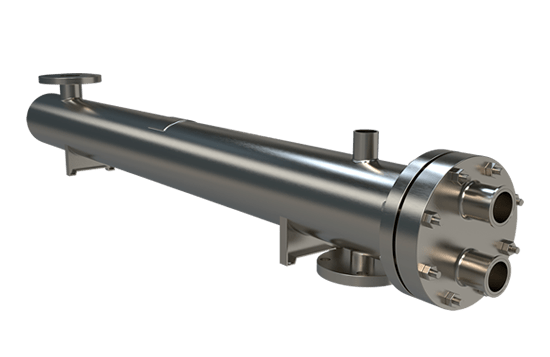
A Fixed Tubesheet unit on cooling water or chilled glycol is the usual choice: gas runs down the tubes, condensate drains with it, and straight tubes can be rodded if resins or polymers build up. A Horizontal Fin Fan suits a hot, wet stream such as a dryer exhaust above 200 F where the job is mostly water removal and ambient air can do it without drawing cooling water. In summer it will not take a light solvent down far enough to change the LEL picture.
To size it, bring the oxidizer's design airflow and heat release, the LEL limit you operate to, vent composition across a full batch, and whether the condensate is to be recovered or sent to waste.
Vent profile
Flow and solvent concentration across a complete batch cycle
Oxidizer basis
Design airflow, heat release and the enforced LEL limit
Recovery intent
Whether condensate returns to process or goes to disposal
Utility options
Cooling water, chilled glycol or ambient air near the unit
Smaller Swings
at the Oxidizer Inlet
1.
No Dilution Air
Taking the solvent peak out as liquid keeps the inlet under its LEL limit without bleeding in fresh air, so the oxidizer treats the process flow it was sized for rather than a diluted multiple of it.
2.
Adjustable Fuel Value
Because exit temperature fixes the residual organic concentration, the coolant setpoint can leave enough fuel in the gas for self-sustaining operation while still recovering most of the solvent.
3.
Cleaner Ceramic Media
Condensing oils, plasticizers and aerosols before the oxidizer slows plugging of ceramic saddles and structured media, which otherwise shows up as rising pressure drop and more frequent bakeouts.
LEL and fuel questions
It will if the oxidizer was running self-sustaining on the vent's organic content, so the condenser is set to a controlled outlet temperature that leaves a baseline of organics for combustion. Toluene at 1 percent by volume carries roughly 50 BTU per standard cubic foot; condensing most of it on a rich peak and leaving a lean baseline recovers the product while keeping the burner near idle. A temperature control valve on the glycol makes that baseline adjustable in operation, so when solvent prices or gas prices move the plant can shift the balance. A precondenser pays fastest on batch vents with sharp peaks, where the oxidizer never used the peak fuel anyway.
Compounds boiling well above the coolant temperature and worth money as liquid, such as toluene, xylenes, alcohols and most ketones, are the first candidates. A second group earns a precondenser even when the liquid is worthless: chlorinated solvents become hydrochloric acid in the combustion chamber, so every pound condensed is acid gas the quench and scrubber no longer neutralize and caustic the plant no longer buys. Light compounds such as methanol or methylene chloride barely condense on cooling water and are better left to the oxidizer. Run the vapor pressure of each species at your coolant temperature; anything still above 10 percent of its inlet concentration at the outlet is not worth chasing.
The LEL analyzer should move downstream of the condenser so it reads what the oxidizer actually receives, and the condenser's coolant must be interlocked into the oxidizer's diversion logic. On loss of coolant, the vent arrives at full concentration and the margin the condenser provided disappears within a minute. A flow switch or temperature switch on the glycol, tied to the same bypass damper the analyzer trips, covers that case. Sample conditioning also changes: gas leaving the condenser is saturated and cold, so the sample line to the analyzer needs heat tracing or solvent condenses in the line and the reading drifts low.
Resins, monomers that polymerize on cold metal, plasticizers from coating lines, and solids that sublime, such as phthalic or maleic anhydride, are the usual foulants. Each deposits exactly where the metal first drops below its condensing temperature, so the first foot of tube takes the load. A straight-tube bundle with removable channel covers and the gas in the tubes lets that section be rodded in a shift; finned or plate surfaces plug and cannot be cleaned without removal. Where anhydride is present, keep coolant above the sublimation point in the first pass and let a second, colder pass finish the job.
On dryer and kiln exhausts that are mostly air and steam, often yes, because the water vapor is a large share of the flow the oxidizer has to heat. Air saturated at 160 F is about one-third water vapor by volume; cooling it to 100 F condenses roughly 90 percent of that water and cuts the flow to the oxidizer by nearly 30 percent. That is capacity for an added line without a bigger oxidizer, and lower fuel per pound of product. A fin-fan first stage can take a 200 F exhaust most of the way with ambient air. The condensate is clean enough for many plants to drain without treatment.