
1-805-484-2992
Quotes - Engineering - SalesCondensers That Meet a Permit Limit
When a vapor is regulated, the condenser is more than a recovery device: it is a control device named in an air permit, and its performance has to be demonstrated. Hazardous air pollutant rules, VOC limits in a state permit and MACT standards typically express compliance as percent reduction or an outlet concentration, and they often accept condenser exit temperature as the monitored parameter. That changes the brief. The plant needs a unit with margin at the worst operating case, an exit temperature that can be measured and recorded continuously, and rating calculations that hold up in an inspector's review.
- Compliance Basis: Confirm whether the permit sets percent reduction, outlet concentration or a mass rate, since each puts the design point somewhere else.
- Exit Temperature: Many rules accept continuous condenser exit gas temperature as the monitored parameter; the sensor must read true gas temperature.
- Worst Episode: Size for the highest emission step, such as charging, heat-up or purge, rather than average flow.
- Rating Records: Calculations showing vapor-liquid equilibrium at exit conditions form part of the compliance demonstration; keep them in the permit file.
- Coolant Assurance: A condenser complies only while coolant flows at temperature; supply-side alarms and logging protect the permit.
- Deviation Logging: Data recorders on exit temperature and coolant flow produce the records annual compliance reports require.
Designing for Demonstrated Recovery
The condenser that fails an audit has usually never failed mechanically. It was sized for average flow, its exit thermocouple sits in a drain pocket reading liquid temperature, and on the day of the test the batch heats up faster than the design basis assumed. The records then show a recovery figure nobody can reproduce.
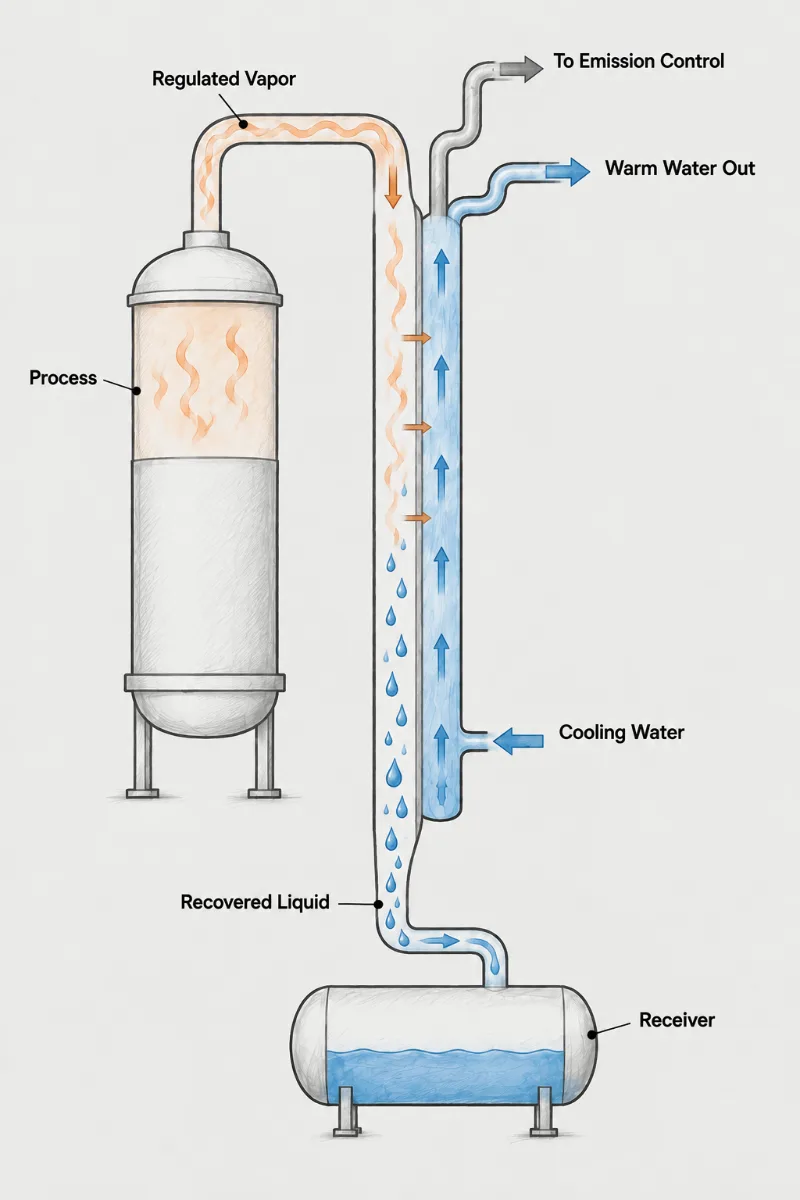
Recovery is a vapor-liquid equilibrium calculation. At the exit, each regulated compound's concentration in the gas is set by its partial pressure at that temperature divided by total pressure, adjusted for nonideal mixtures, and the mass leaving is that concentration times the noncondensable flow. More nitrogen sweep or air leakage means more emissions at the same temperature, which is why the carrier gas rate belongs in the design basis alongside the solvent load.
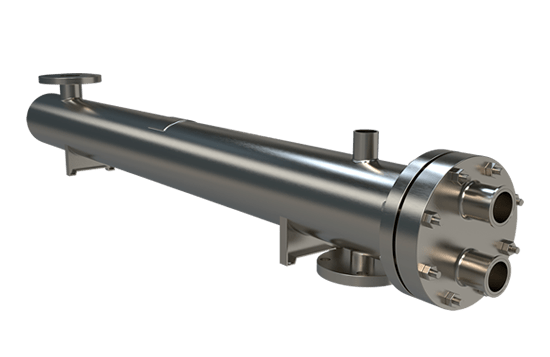
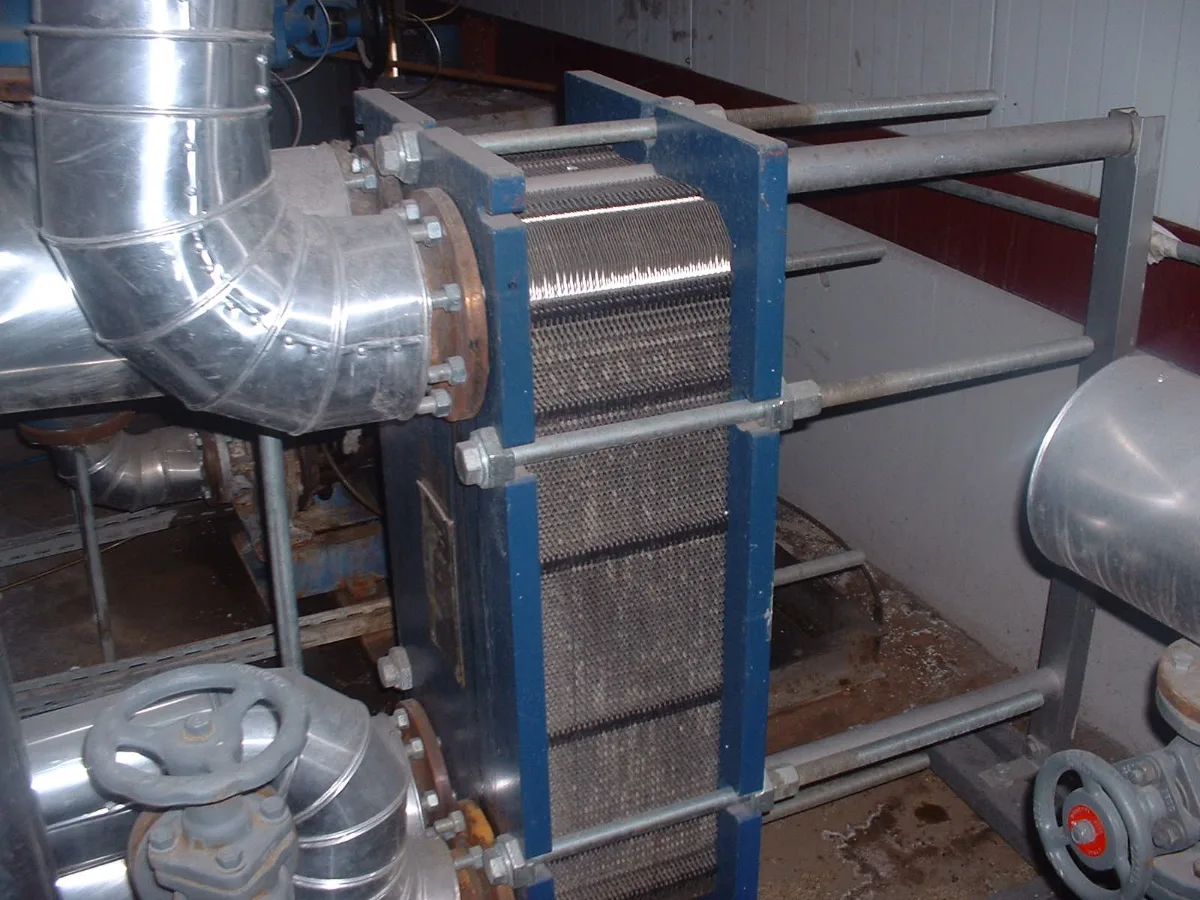
A Fixed Tubesheet exchanger rated to TEMA and built to ASME gives a well-documented design, with gas down the tubes and a thermowell in the outlet nozzle after the last cooling surface. A Welded Plate exchanger can approach within a few degrees of the coolant, so a given glycol supply reaches a lower exit temperature, which can be the difference in meeting a concentration limit; check its gas-side pressure drop at the peak episode.
For a quote, bring the permit language and averaging period, an emission estimate for each batch step, the monitoring plan, and your coolant supply and backup arrangements.
Permit language
The exact limit, its units and averaging period
Emission episodes
Charging, heat-up, purge and drying flows step by step
Monitoring plan
Which parameter is recorded and where it is measured
Coolant backup
Supply temperature, standby source and alarm arrangement
Compliance
You Can Measure and Defend
1.
Margin at Peak
Rating at the highest-emission step leaves headroom when a batch runs hot or nitrogen flow creeps up, so recorded exit temperature stays inside the permitted range instead of logging deviations.
2.
Clear Monitoring Point
A dedicated thermowell in the gas outlet nozzle, ahead of any heat gain, gives a defensible reading of the parameter the rule cites, which simplifies the monitoring plan and the inspection.
3.
Documented Rating
Full calculations, including equilibrium at exit temperature for each regulated compound, give the environmental team the engineering basis they need for permit applications, renewals and audits.
Permit and monitoring questions
Yes for a rich, heavy solvent on a modest carrier gas flow; no, in most cases, for a dilute stream of a volatile compound without refrigeration or a second device. The arithmetic decides. Take a vent at 14.7 psia with 100 scfm of nitrogen carrying toluene. At a 40 F outlet the toluene vapor pressure is about 0.2 psia, so the gas still holds roughly 1.4 percent toluene by volume.
Whether that is 98 percent recovery depends entirely on how much toluene came in: at 1,000 lb/hr it is, at 50 lb/hr it is nowhere close. Methylene chloride at the same outlet carries more than ten times that loading. Run the number before the permit is written, because an application that promises 98 percent on a dilute vent commits the plant to a chiller or a carbon polisher it has not budgeted for.
In a thermowell in the gas outlet nozzle itself, immediately downstream of the last cooling surface, with the tip centered in the gas flow and the nozzle insulated back to the shell. Three details decide whether the reading survives an audit. The well should enter from the top or side so condensate cannot pool around it. The run between condenser and sensor must be short and insulated, since bare pipe in a warm building adds heat and makes the record read high, the safe direction for compliance but still a defect an inspector will note.
The sensor itself should be an RTD or thermocouple with a calibration record and a recorder channel, logged at the interval the permit names. Mark the location on the P&ID and in the monitoring plan so nobody relocates it during a later piping change.
Each regulated compound is rated separately at the outlet temperature, and the permit is met only when every one of them clears its own limit. The most volatile component usually governs: in a vent of 80 percent toluene and 20 percent methanol by mass, the methanol can account for most of the mass leaving at a 35 F outlet even though toluene dominated the inlet.
Polar mixtures add a second wrinkle, since methanol or acetone in water does not obey Raoult's law and the activity coefficient can raise the effective vapor pressure well above the ideal value. The rating should use coefficients from a recognized method, and the calculation sheet should list each compound, its vapor pressure source and the resulting outlet concentration, because that table is what the environmental reviewer asks for first.
Control is lost within minutes, and every minute afterward is a logged deviation unless the process stops or the vent diverts. A condenser built for a 20 F glycol supply typically holds the outlet within a few degrees of that, and once glycol warms toward tower water temperature the outlet climbs with it and the vapor pressure of the regulated compound rises several-fold.
The protective layer belongs on the coolant side: a low-flow switch and a high-temperature alarm on the glycol supply, interlocked to stop charging and heat-up, and where the permit allows, a diversion valve to a backup carbon canister. The recorder should capture glycol temperature alongside the outlet temperature, so the deviation report shows the cause and the response time rather than an unexplained excursion.
Not directly; the limit is written on what leaves the vent, and the recovered liquid only proves the balance. During a performance test, though, that balance is the strongest evidence you can offer. Weigh the condensate drum before and after a batch, correct for water, and compare it with the solvent charged minus what stayed in product and what the outlet calculation says went to the stack.
If the three numbers close within a few percent, the outlet calculation is credible and the inspector has little left to challenge. If the drum comes up short, something is wrong: a leaking drain, entrainment past the separator, or a sensor reading colder than the gas. Keep a totalizer or load cell on the receiver permanently, since annual compliance reports read better with measured recovery than with calculated recovery alone.