
1-805-484-2992
Quotes - Engineering - SalesCondensers for Corrosive Vapor Recovery
A corrosive vapor is often fairly harmless while it stays hot and dry. The damage begins where it condenses. HCl, SO2, acetic and formic acid, chlorinated solvents that hydrolyze, and wet chlorine all concentrate in the first liquid that forms at the dew point, and that film sits on the coldest metal in the system. Recovering these vapors as liquid is frequently the right emissions answer, but the condenser has to be chosen around the condensate chemistry, including what happens during shutdowns, rather than around the inlet gas analysis.
- Dew-Point Zone: The first wetted surface sees the strongest acid, and that region sets the alloy, not the average operating condition.
- Alloy Choice: 316L covers many organic acids; chlorides and HCl point to duplex, titanium or Hastelloy, while hot sulfuric condensate rules titanium out.
- Chloride Pitting: Trace chlorides concentrate as films evaporate at shutdown; crevices under deposits and at tube joints pit first.
- Metal Temperature: Coolant temperature, not gas temperature, decides where condensing starts; tempered water can move it off vulnerable surfaces.
- Full Drainage: Acid pooled in a low spot or channel corner corrodes fastest, so sloped, self-draining layouts matter as much as alloy.
- Shutdown Rinse: Flush connections and a dry-out routine stop salts and acid residues attacking the surface while the unit sits idle.
Choosing Materials Around the Condensate
Materials for a corrosive vapor condenser are chosen for the liquid that forms inside it, at its worst concentration and temperature. Gas analyses list parts per million; condensate analyses list percent, because a small volume of water strips soluble acid out of a large volume of gas.
Where SO3 or HCl travels with water, an acid solution condenses at a temperature above the plain water dew point. Metal running between those two temperatures collects strong, hot acid, the worst combination for most alloys, and corrosion rates there can be many times the rate a few inches downstream where the condensate is diluted by more water. The design either keeps metal out of that window with tempered coolant or puts the right alloy exactly where it will be.
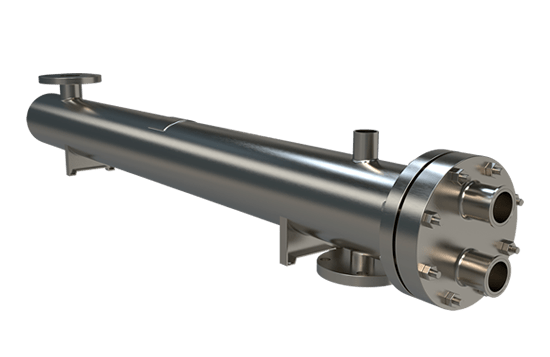
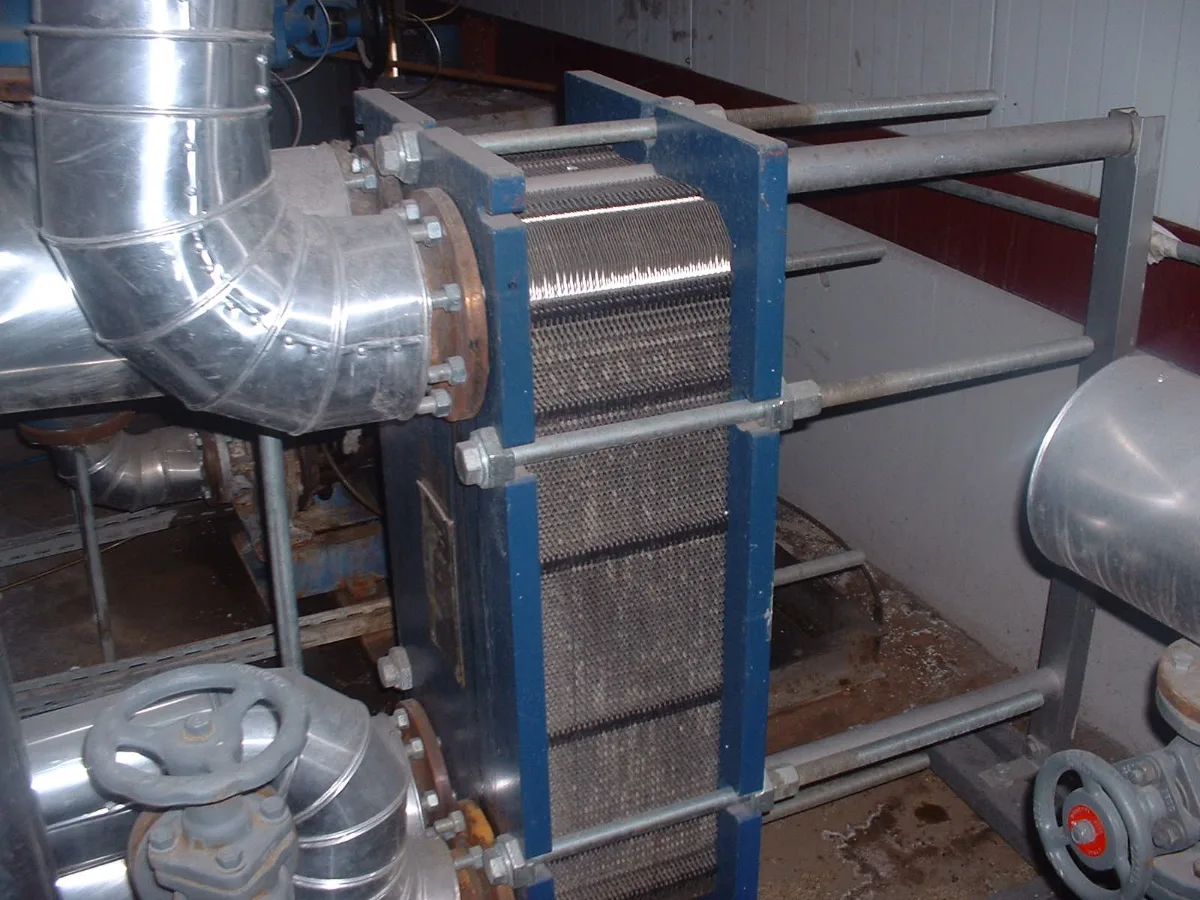
In a Fixed Tubesheet exchanger the corrosive stream belongs in the tubes. Only tubes and tubesheets then need the expensive metal, welded tube joints close the crevice, individual tubes can be plugged, and the shell carries cooling water in carbon steel. A Welded Plate exchanger is often the economical route to titanium or nickel alloy surface, since thin plates use little metal per square foot, and it has no gaskets for acids or chlorinated solvents to attack. It suits clean vapor; narrow channels do not tolerate solids, and many welded packs cannot be opened for mechanical cleaning.
Bring the full composition including trace chlorides, fluorides and sulfur compounds, water content, the coolant temperature, any failure history, and how often the unit will be idle.
Trace contaminants
Chlorides, fluorides and sulfur compounds with their levels
Water content
Moisture in the vapor and expected condensate pH
Failure history
What corroded before, where it failed and how quickly
Idle periods
Shutdown frequency and planned washing or drying practice
Built Around
the Chemistry of the Condensate
1.
Alloy Where Needed
Placing the corrosive stream in the tubes or plate channels confines high alloy to the wetted side. The shell, frame or coolant side stays in carbon steel or standard stainless, which keeps a high-alloy condenser affordable.
2.
Controlled Dew Point
Tempered coolant and staged cooling put the onset of condensation on surfaces designed for it, avoiding the scattered pitting that appears when condensing starts in nozzles, ductwork or unplanned cold spots.
3.
No Gaskets to Fail
Welded construction removes elastomers that acids and chlorinated solvents swell or embrittle. Fewer seals mean less leak paths for a fluid that will attack whatever it reaches outside the unit.
Alloy selection questions
Traces in the gas become percent-level concentrations in the condensate, because the first water to condense strips chloride out of thousands of times its own volume of gas. A vent at 50 ppm chloride with 5 percent water can produce a first-film condensate above 1,000 ppm, and at a 150 F metal temperature that is enough to pit 304 or 316 within weeks. Shutdowns make it worse: the film evaporates, salts crystallize under deposits and at tube joints, and the next start-up redissolves them into a far stronger solution. Duplex resists pitting better; titanium is the usual answer where chlorides are the only problem.
Titanium is not a universal answer; it excels against chlorides, wet chlorine and oxidizing acids, and fails against fluorides, dry chlorine and hot reducing acids such as concentrated hydrochloric or sulfuric. A hot sulfuric condensate that would attack titanium is handled by a nickel-molybdenum alloy, and even trace fluoride, a few ppm from an etching step, can take out titanium tubes. Dry chlorine ignites titanium at elevated temperature. Have the condensate analyzed, including trace species, and rank the candidate alloys against that analysis at the warmest metal temperature in the dew-point zone. The ranking changes from one stream to the next.
Acid dew point is the temperature at which an acid solution begins to condense from a gas, and it lies above the plain water dew point whenever SO3 or HCl travels with water. Flue gas with 10 ppm SO3 and 10 percent water, for example, condenses sulfuric acid near 270 F while water alone would not condense until about 115 F. Any metal running between those two temperatures collects strong, hot acid at its most corrosive. HCl behaves differently from SO3: its dew point sits only a few degrees above the water dew point, so the window is narrow and the whole wetted length usually gets the alloy.
A Welded Plate exchanger handles corrosive vapor well and is often the least expensive route to titanium or nickel alloy surface, because plates 1 to 2 mm thick use a fraction of the metal a tube bundle does. It needs clean vapor: channels a few millimeters wide trap solids, and most welded packs cannot be opened for mechanical cleaning. Gasketed Plate and Frame units are a poor fit, since the gaskets themselves swell or embrittle in acids and chlorinated solvents. If the vapor carries catalyst fines, polymer or salt, choose tubes in alloy instead and accept the higher metal cost.
The corrosive stream belongs in the tubes in nearly every case, because then only the tubes and tubesheets need high alloy and a failed tube can be plugged without taking the unit out of service. Shell-side condensing of a corrosive vapor means an alloy shell, baffles, tie rods and spacers, which can double the metal cost and adds crevices at every baffle hole. Tube-side condensing also keeps the condensate moving in a single direction so no acid pools. Ask for the tube ends to be lightly expanded after welding as well, so no gap is left behind the weld where condensate can wick in and sit.
Drain the vapor side completely, flush it with clean water or a mild neutralizing rinse, and dry it with warm air or nitrogen before the unit stands idle. A film of condensate left on the tubes concentrates as it evaporates, and much of the pitting in this service happens during those idle hours rather than in operation. Give the design the connections that make this routine practical: a flush inlet at the top, a drain at the lowest point, and a dry-gas purge connection. Log each rinse and dry-out; an unexplained failure often traces to a weekend when the routine was skipped.