
1-805-484-2992
Quotes - Engineering - SalesExhaust Steam Condensing Duty
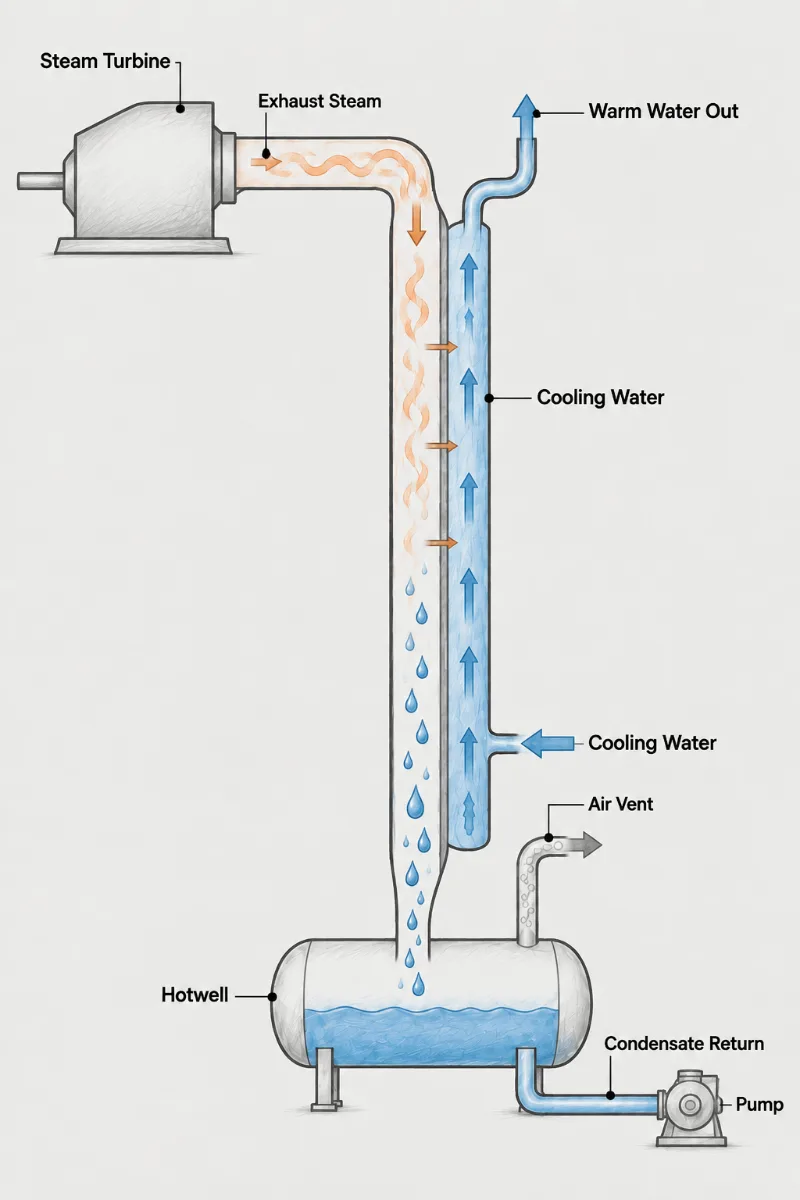
Exhaust steam leaves a back-pressure turbine, a steam engine, a steam-driven pump or a compressor drive after it has done mechanical work. It arrives at low pressure, often just above atmospheric and sometimes under vacuum, and that is what defines the duty. A pound of steam at atmospheric pressure fills roughly twenty-seven cubic feet, and far more under vacuum, so the condenser handles an enormous vapor volume with very little pressure available to push it through. Any back pressure the condenser adds comes straight off the driver's power output.
- Vapor Volume: Low-pressure exhaust occupies a huge volume per pound, so inlet nozzles, shell entrance area and bundle spacing are set by velocity rather than heat load.
- Back Pressure: Every psi of condenser pressure drop raises turbine or engine exhaust pressure and costs shaft power; the budget is often a fraction of a psi.
- Oil Carryover: Reciprocating engines and some drives carry lubricating oil in the exhaust, which coats tubes and makes the condensate unfit for boiler return without treatment.
- Air Leakage: Exhaust systems below atmospheric pressure draw air through glands and flanges; it must be removed continuously or it blankets the coldest tubes.
- Air-Cooled Option: Where water is scarce or costly, a Horizontal Fin Fan or V-Bank air-cooled condenser rejects the heat directly to ambient air.
- Load Swings: Exhaust flow follows the driver's load, so the condenser must hold back pressure steady from minimum to maximum steam rate.
Back Pressure Is the Real Design Constraint
A condenser on turbine or engine exhaust is judged by the back pressure it holds, not just by whether it condenses the steam. Run it short of surface or restrict the vapor path and exhaust pressure climbs; the driver produces less power for the same throttle steam, or the turbine trips on high exhaust pressure on a hot afternoon. The usual cause is an inlet nozzle or shell sized like a process condenser, which works at higher pressure but chokes on low-pressure exhaust volume.
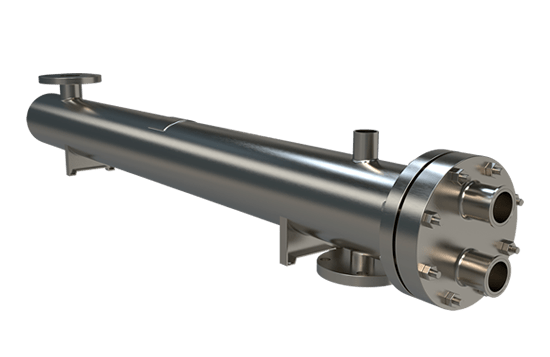
A Fixed Tubesheet shell-and-tube condenser with exhaust on the shell side is the standard water-cooled answer. The shell provides a large open entrance with an impingement plate to protect the first tube rows, cooling water runs through straight tubes that can be cleaned, and an air-removal zone at the cold end feeds a vacuum pump or ejector. Ask for the shell-side pressure drop as a stated figure, not just the heat duty.
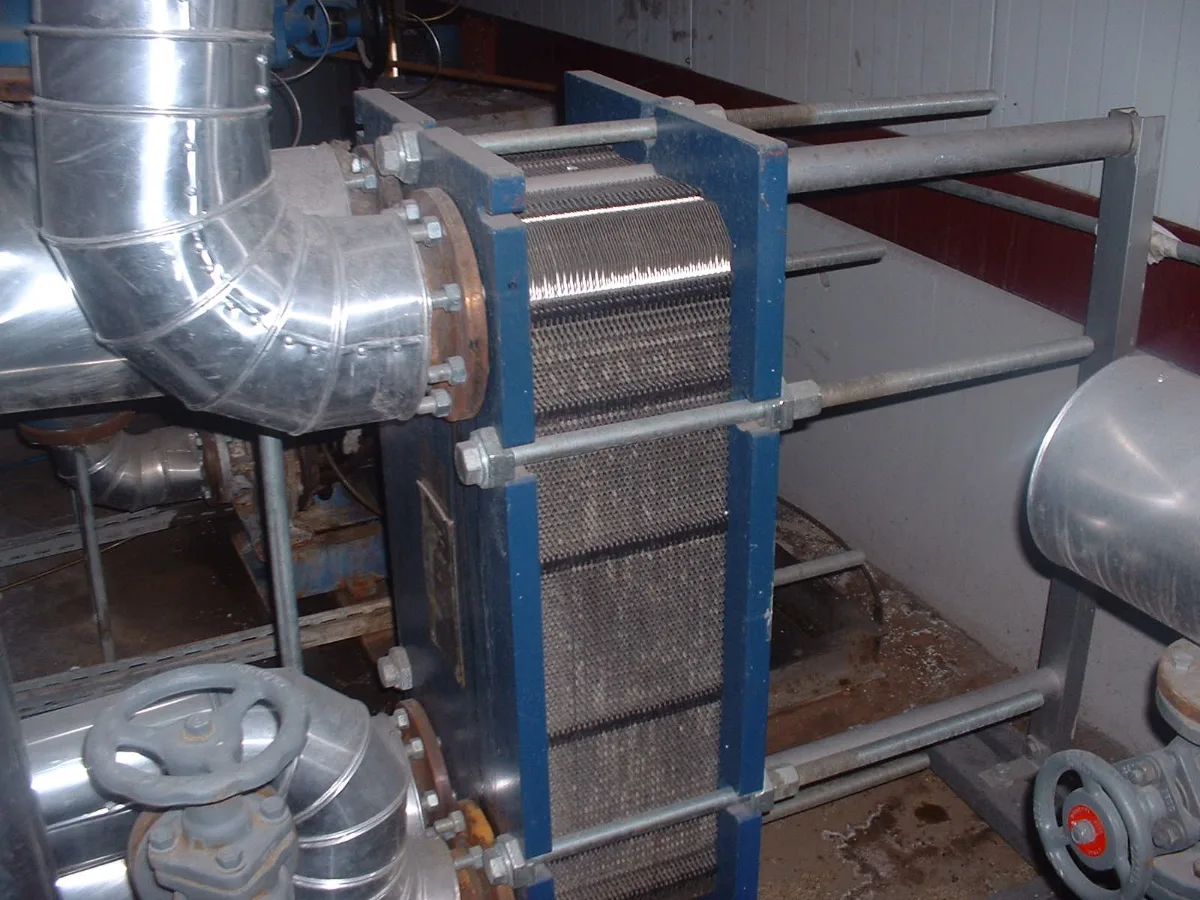
A Gasketed Plate & Frame unit is rarely a good fit for exhaust steam. Its ports and narrow channels suit dense fluids; low-pressure steam would need impractically large ports or would suffer high pressure drop. Plates are better used to cool the cooling-water loop or recover condensate heat downstream.
Where cooling water is limited, an air-cooled condenser in a Horizontal Fin Fan or V-Bank arrangement removes the water supply entirely, at the cost of a higher condensing temperature on hot days and a larger footprint. Bring the exhaust steam rate at minimum and maximum load, exhaust pressure and allowable back pressure, oil content if an engine is involved, coolant or design ambient temperature, and whether condensate will return to the boiler.
Driver data
Turbine or engine type and its exhaust steam rate
Back pressure
Normal exhaust pressure and the highest the driver tolerates
Cooling source
Water supply conditions or design ambient for air cooling
Condensate fate
Return to boiler, treatment for oil, or discharge
More Power
From the Same Steam
1.
Low Back Pressure
Generous entrance area and shell-side flow paths keep pressure drop small, so the turbine or engine exhausts at the pressure it was designed for and delivers its rated shaft power.
2.
Air Kept Moving
A dedicated cold-end air-removal zone collects leaked air and sends it to the vaccum pump or ejector, preventing it from blanketing tubes and raising exhaust pressure over time.
3.
Water or Air
Water-cooled shell-and-tube and air-cooled fin fan arrangements both suit exhaust steam, letting the site choose by water availability, ambient temperature and plot space rather than accept one design.
Back pressure questions
Usually a quarter to half a psi across the condenser, because every psi of exhaust pressure above design takes a measurable bite out of turbine performence. A back-pressure turbine running at 5 psig exhaust loses several percent of shaft output if the condenser adds 1 psi, and a condensing turbine suffers more because its exhaust pressure sets the available enthalpy drop. Get the allowable figure from the turbine performance curve at the exhaust pressure you intend to run, then split it between the condenser shell, the inlet piping and the air removal section. State the shell-side drop as a hard number in the request so the nozzle and bundle are sized to meet it.
Choose air cooling when water is the scarce or expensive utility, and only when the driver tolerates a condensing temperature that follows the summer dry bulb. A design ambient of 95 F plus a 30 F approach puts condensing near 125 F, which is about 4 in Hg absolute, so a turbine built to exhaust at 2 in Hg will lose output every hot afternoon. For a back-pressure turbine discharging at a few psig the ambient dependence is harmless, since condensing at 220 F is far above any summer air temperature. Fin fan and V-bank units also need plot space and fan power, roughly 3 to 5 hp per 1,000 lb/hr of exhaust at a 30 F approach.
Not until the lubricating oil has been removed, because oil in boiler feedwater foams, coats tubes and bakes onto the hottest surfaces. A reciprocating steam engine can carry 10 to 50 ppm of cylinder oil into its exhaust, which collects in the condenser hotwell as a visible sheen. Route the condensate through a coalescing separator and an absorbent filter before the deaerator, and test for oil below about 1 ppm before trusting it. Inside the condenser, put the exhaust on the shell side so the oily film forms on the tube exteriors where it can be chemically cleaned rather than on the water side.