
1-805-484-2992
Quotes - Engineering - SalesRecovering Heat From Flash Steam
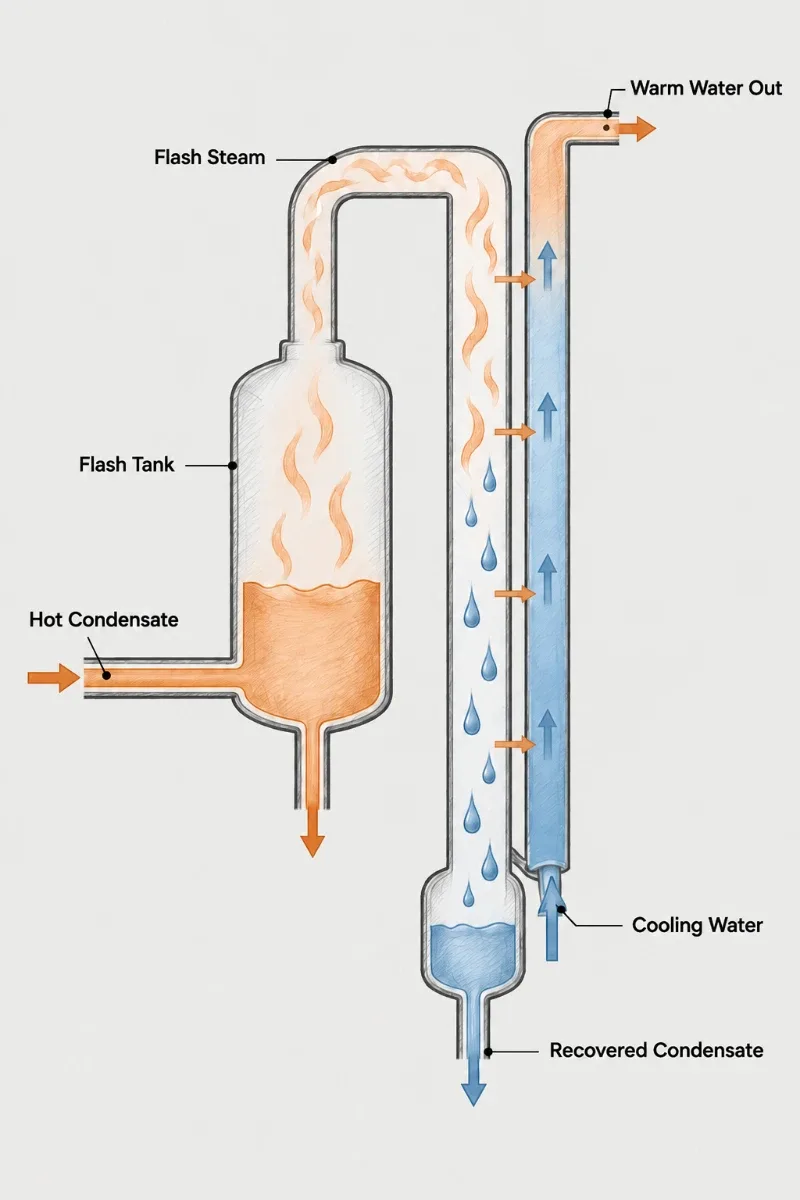
When hot condensate from high-pressure traps drops into a lower-pressure receiver or flash tank, part of it boils off instantly as flash steam. From 150 psig to atmospheric, roughly a sixth of the condensate flashes. That steam often leaves through a vent as a visible plume, carrying latent heat and clean water out of the plant. A flash steam condenser captures it against cold water, usually boiler makeup, process wash water or domestic hot water, and puts both the heat and the condensate back to work. The flow is low pressure and follows the trap discharges, so it is rarely steady.
- Flash Fraction: Calculate flash from the sensible-heat difference between high and low pressure; trap pressure and receiver pressure set how much condensate turns to vapor.
- Vent Plume: A steady plume from a receiver vent is the simplest sign of recoverable heat; its size hints at the condensing load at a glance.
- Intermittent Flow: Trap discharges and batch heating loads make flash rates rise and fall, so the cold side must absorb surges without blowing steam through.
- Heat Sink: The recovery only works when there is cold water to heat at the same time; match the condenser to a load that runs alongside the flash.
- Water Hammer: Subcooled condensate meeting live flash steam can collapse pockets violently; drainage and inlet arrangement must keep liquid and vapor from slugging.
- Receiver Pressure: Adding a condenser on the vent must not raise receiver pressure enough to back up the traps discharging into it.
Turning a Vent Plume Into Hot Water
Flash steam is the most visible energy loss in many steam plants, and the easiest to quantify. Measure condensate flow into a receiver, look up enthalpy at trap pressure and at receiver pressure, and the flash fraction follows. Each pound of flash steam carries close to a thousand Btu of latent heat. The design question is what to heat with it and whether that demand coincides with the flash. Boiler makeup water is the classic sink because it flows whenever condensate is being lost.
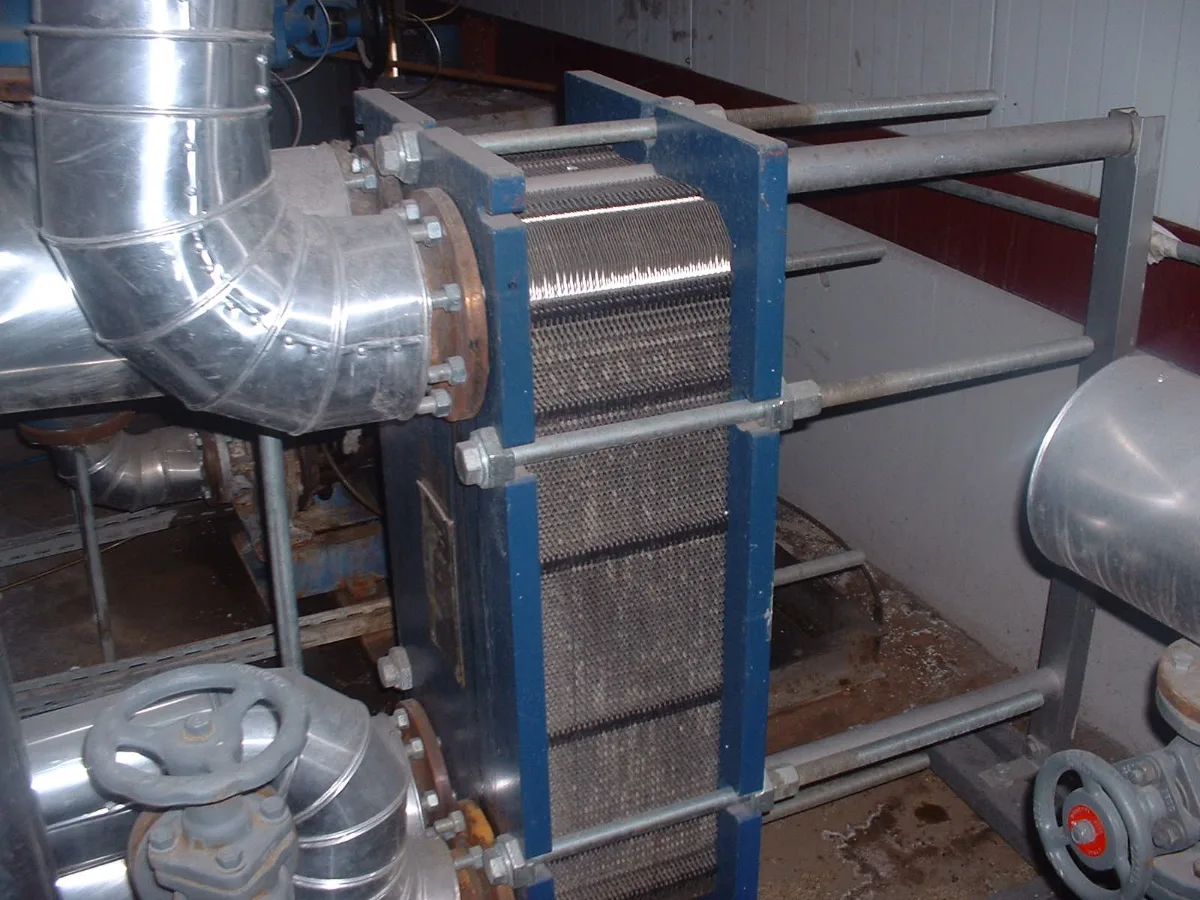
A Gasketed Plate & Frame exchanger suits flash recovery when the cold water is clean and the flash pressure is a few psig: plates reach a close approach, so the water leaves within a few degrees of the steam temperature, and the frame can be extended later. Its weakness here is shock, since the thin plates and gaskets dislike water hammer and the narrow steam ports limit vapor volume at near-atmospheric pressure.
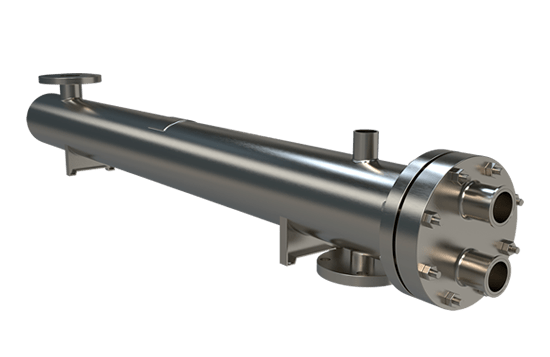
A Fixed Tubesheet shell-and-tube condenser with flash steam on the shell side tolerates slugging and pressure surges better and accepts a large vapor inlet directly from the flash tank vent. Put water in the tubes, size the shell drain generously so condensate never backs up over the bundle, and include a vacuum breaker so the shell cannot pull condensate back when flash stops.
The common mistake is a condenser that throttles the vent: receiver pressure rises, low-pressure traps stop discharging and equipment upstream floods. Before requesting a quote, have the condensate flow and trap pressures feeding the tank, receiver or flash tank pressure, the water to be heated with its flow and temperature, and how steady both sides are over a shift.
Condensate source
Flow and trap pressures discharging into the flash tank
Tank pressure
Normal operating pressure of the receiver or flash vessel
Water to heat
Flow, inlet temperature and use of the cold stream
Load timing
How the flash and the water demand vary together
Vent Losses
Returned as Usable Heat
1.
Recovers Latent Heat
Condensing flash steam returns roughly a thousand Btu per pound to makeup or process water, heat that otherwise disappears from a receiver vent as a white plume.
2.
Saves Treated Water
The condensed flash is distilled-quality water that returns to the condensate system, reducing makeup volume along with the softening and chemical treatment that new water requires.
3.
Traps Keep Draining
A condenser sized with a free vapor path holds receiver pressure where it was, so upstream traps continue to discharge and equipment does not back up with condensate.
Flash recovery questions
Divide the enthalpy drop of the condensate between trap pressure and receiver pressure by the latent heat at receiver pressure. Condensate at 100 psig holds about 309 Btu/lb and at 0 psig about 180 Btu/lb, with 970 Btu/lb of latent heat at atmospheric pressure, so 129 divided by 970 gives 13 percent. A 5,000 lb/hr condensate return therefore vents about 665 lb/hr of flash steam, carrying 645,000 Btu/hr. You can check it in the field: a plume that stays visible for several feet past the vent in mild weather generally represents at least a few hundred pounds an hour.
Boiler makeup water, because it runs whenever condensate is being lost and that is exactly when flash is highest. Each 100 lb/hr of flash steam warms about 970 lb/hr of water by 100 F, so even a modest plume heats a useful makeup flow from 55 F to 155 F. Process wash water and domestic hot water also qualify when their demand overlaps the flash. The trap is a heat sink that runs on a different schedule: a washdown system used for one hour a shift recovers almost nothing from flash that occurs all day. Match the timing before the temperatures.
Shell-and-tube wins when trap discharges are intermittent or the receiver vents at near-atmospheric pressure, and a plate unit wins when the flash is steady, a few psig and the water is clean. The deciding numbers are vapor velocity through the plate ports and the number of slugs per hour the piping produces. At 2 psig flash, a 4 inch plate port runs out of velocity margin somewhere above 1,000 to 1,500 pounds per hour, while a 10 inch shell nozzle passes several times that. Many plants with older condensate systems and several trap stations feeding one receiver land on shell-and-tube for that reason alone.
It will if condensate can collect in the inlet line or the shell and then meet a surge of flash steam. The piping from the flash tank vent should rise to the condenser or fall continuously to it with no pockets, and the shell drain should run by gravity to a trap or vented receiver below the shell bottom. When flash stops at a shift change, the shell cools, vapor collapses and the shell pulls a vacuum; a vacuum breaker on the shell keeps it from sucking condensate back up the drain line into the bundle, where the next surge would collapse it violently.