
1-805-484-2992
Quotes - Engineering - SalesUtility Steam Condensers for Clean Condensate Return
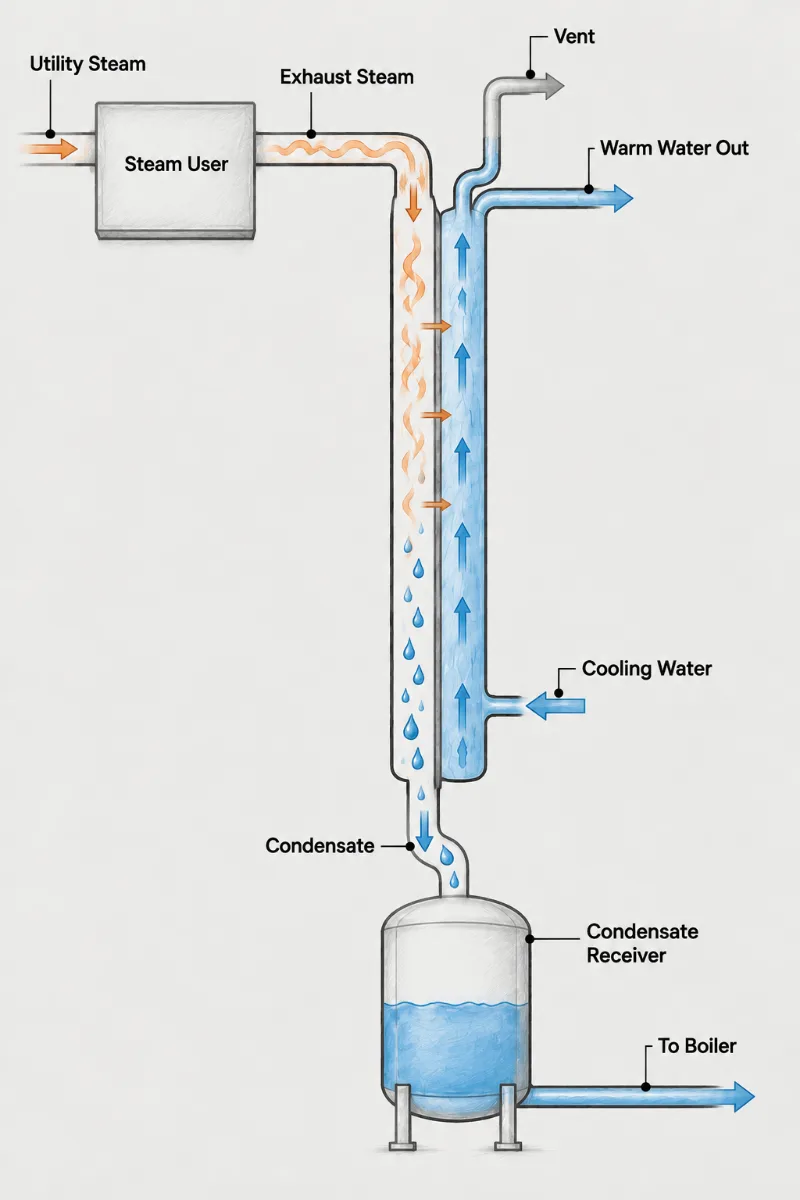
Utility steam is ordinary plant steam doing ordinary jobs: heating coils, tracing, jacketed vessels, building heat. Its condensate is the most valuable water in the plant, already treated, hot and nearly free of dissolved solids. A utility steam condenser typically condenses surplus low-pressure steam, from a back-pressure turbine, a pressure-reducing station or trap discharges, and sends that clean condensate back to the deaerator. The design goal differs from flash heat recovery: keep the condensate hot and keep it clean, since a single leak of cooling water spoils the entire return.
- Return Quality: Condensate goes straight to the deaerator, so any cooling-water leak brings hardness and silica into the boiler; leak protection matters more than approach.
- Hot Return: Return condensate hot; subcooling it to the cooling-water temperature only means the deaerator spends steam reheating it.
- Header Control: A surplus-steam condenser often holds the low-pressure header at setpoint, so its duty must modulate quickly as plant steam demand changes.
- Conductivity Watch: A conductivity probe on the condensate outlet detects a tube leak before contaminated water reaches the deaerator and the boiler.
- Trap Discharge: Condensers receiving trap discharges see a mix of flash and liquid; the inlet arrangement must separate them so surface is not flooded.
- Pressure Balance: Hold cooling water below steam-side pressure where practical, so a tube leak pushes condensate out instead of drawing raw water in.
Keeping Clean Condensate Clean
Utility steam condensate is worth recovering for three reasons: it is hot, it has already been treated and it carries almost no dissolved solids. A condenser that lets cooling water in through a leaking tube erases all three. Hardness and silica in feedwater scale boiler tubes, and the plant often discovers the leak only when boiler blowdown conductivity climbs or a tube fails. The designer's priority, then, is leak protection and detection, followed by delivering condensate at a temperature the deaerator can use.
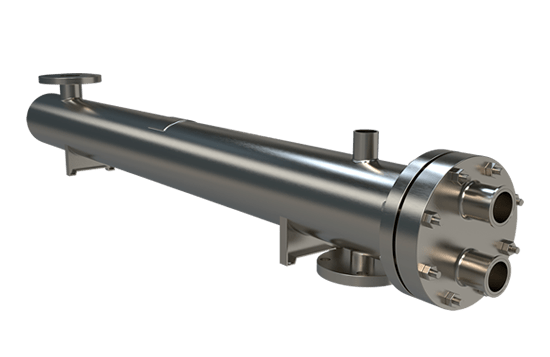
A Fixed Tubesheet shell-and-tube condenser, steam on the shell side and cooling water in the tubes, is the usual arrangement. Welded tube joints and straight cleanable tubes resist leaks and fouling, and the shell's volume tolerates mixed flash and liquid from traps. Add a conductivity monitor on the condensate outlet tied to an automatic dump valve, and the boiler is protected even if a tube eventually fails.
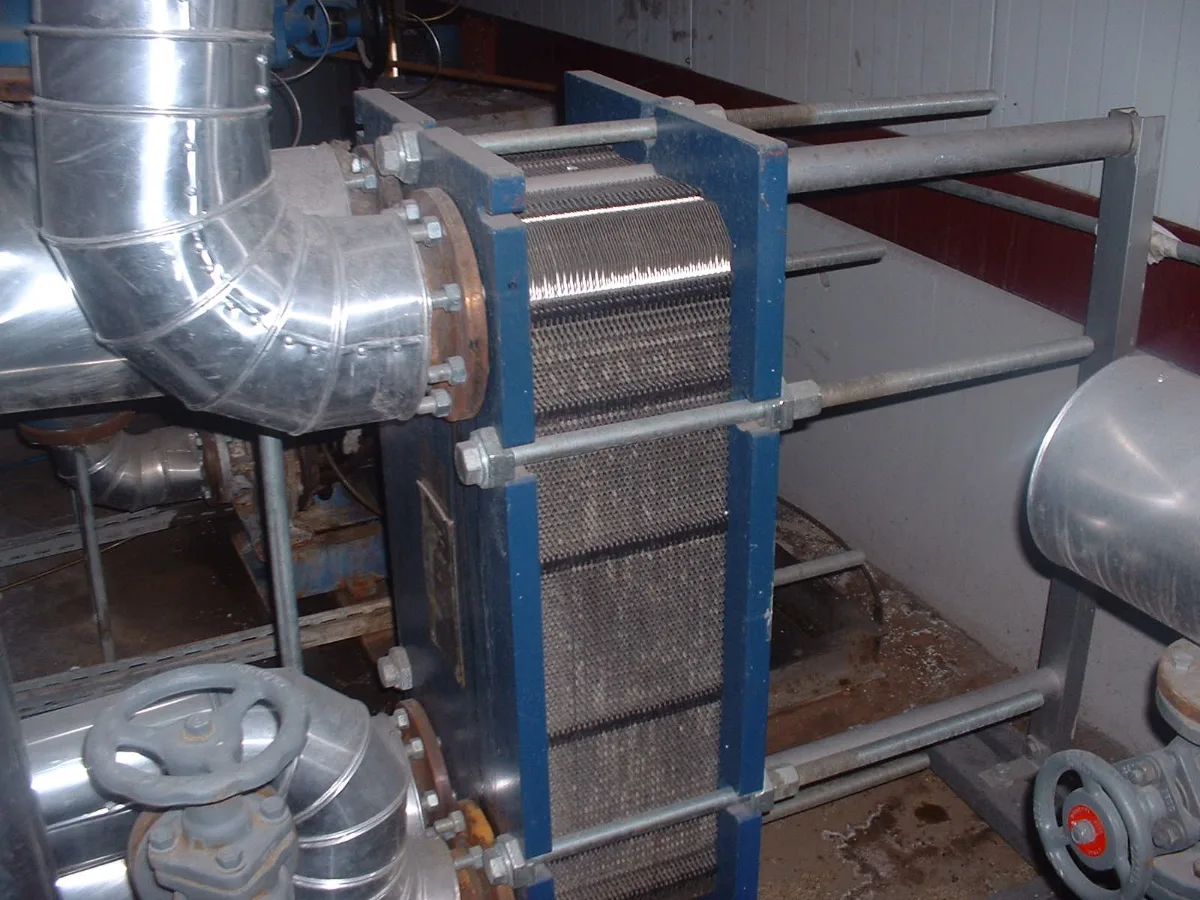
A Gasketed Plate & Frame exchanger offers compact size and close approach for steady, low-pressure surplus steam with clean water on the other side. Its risk is the many gasketed seals: a gasket leak or plate crack mixes fluids with no outside sign, so conductivity monitoring is essential on a plate unit, and pressure must favor the steam side.
When a surplus-steam condenser is undersized, the low-pressure header rises and relief valves lift or steam vents to atmosphere. To size it, provide the surplus steam rate range, low-pressure header pressure and setpoint, desired condensate return temperature, cooling medium and conditions, deaerator operating pressure, and whether trap discharges also enter the unit.
Surplus steam
Range of excess low-pressure steam to condense
Header setpoint
Low-pressure header pressure the condenser must hold
Return target
Condensate temperature wanted at the deaerator
Leak protection
Monitoring and dump arrangement for contaminated condensate
Condensate Returned
Hot, Clean and Ready to Reuse
1.
Protects the Boiler
Welded construction, favorable pressure balance and outlet conductivity monitoring keep cooling-water hardness out of the condensate, preventing boiler tube scaling from a leak nobody noticed.
2.
Less Deaerator Steam
Returning condensate near its saturation temperture instead of subcooling it means the deaerator needs far less steam to bring feedwater to temperature, saving fuel on every pound returned.
3.
Steady Low-Pressure Header
A condenser that modulates with surplus steam holds the header at setpoint, ending the relief valve lifts and atmospheric venting that waste treated water and heat.
Clean return questions
Because every pound vented takes treated water and about 1,150 Btu with it, so a 2,000 lb/hr vent throws away roughly 5,800 gallons of makeup and 55 million Btu every day. Condensing returns that water hot to the deaerator, where it displaces live steam, and the plant also keeps the softener and chemical costs that new makeup carries. Beyond the economics, a surplus-steam condenser gives the low-pressure header something to modulate against, so relief valves stop lifting at low plant load and their seats stay tight for the day they are needed.
Return it within 5 to 10 F of saturation at the return pressure, which is just enough margin to keep the condensate pump from cavitating. Condensate at 0 psig saturates at 212 F; delivering it at 200 F to a deaerator running at 5 psig means the deaerator adds only the small difference with steam. Chilling it to 120 F instead costs about 80 Btu per pound that the deaerator must supply again, roughly 7 percent of the latent heat you just recovered. Hold coolant flow back with a temperature controller on the condensate outlet rather than running the water wide open.
Install a conductivity cell on the condensate outlet and wire it to an alarm and an automatic dump valve, since clean condensate reads below 10 microsiemens and cooling water reads 300 or more. A leak admitting 1 percent cooling water raises the reading to roughly 13 microsiemens, which the cell catches hours before boiler blowdown conductivity moves. Set the alarm a little above the normal reading rather than at a general limit, and route the dump to drain or to the condensate tank for retesting. A weekly check of the probe against a hand meter keeps the protection honest.
Yes, provided the inlet lets the liquid fall to the drain before the flash reaches the bundle, since liquid carried onto the tubes floods surface and the steam blows through unseen. A side inlet above a liquid well, or a small flash tank just ahead of the condenser, separates the two phases. Steam-side pressure must stay below the lowest trap's discharge pressure by a margin, or the traps stop. A header holding 5 psig with the lowest trap at 10 psig leaves enough; traps on 3 psig tracing cannot discharge into it and need their own receiver.
Steam-side pressure climbs to the header setpoint and beyond within a minute or two, and the surplus that was being condensed either lifts the relief valves or vents to atmosphere. A flow switch on the cooling water, with a low-flow alarm and a trip of the steam control valve, keeps the event short. Size the relief for the full surplus steam rate, not the condenser rating, since the header can deliver more than the condenser was taking. On a cooling tower loop, add a high-temperature alarm on the water outlet, which catches a partial loss that a flow switch misses.
A gasketed plate unit is acceptable when the surplus steam is steady, the pressure is a few psig, the cooling water is clean, and conductivity monitoring guards the outlet. It gives a close approach, so the cooling water leaves within a few degrees of the steam temperature, and it fits beside a deaerator on a mezzanine where a shell will not. What it dislikes is trap discharge slugging and the pressure swings of a header that is controlled by the condenser itself, which fatigue gaskets. Keep the steam side above the water-side pressure, so a gasket failure pushes condensate out instead of drawing water in.