
1-805-484-2992
Quotes - Engineering - SalesRecovering Product From Fractionator Vapor
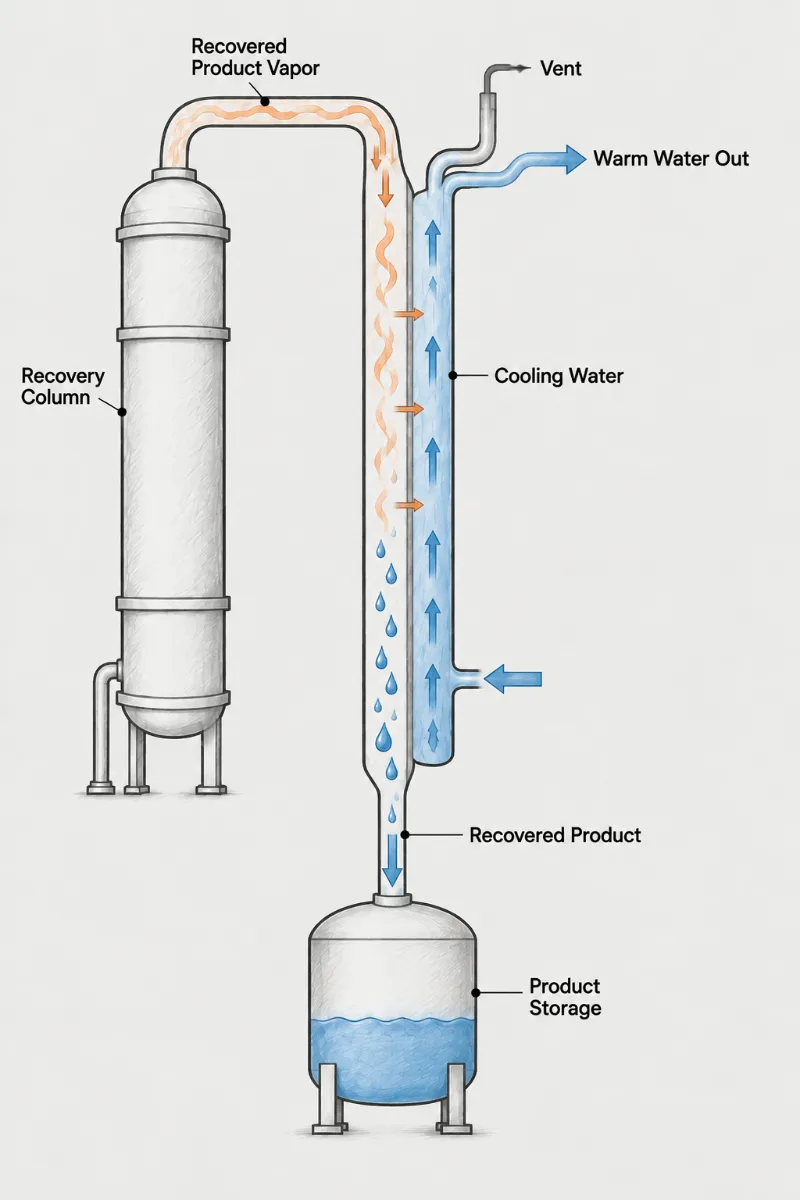
Some vapor leaving a fractionation train is not destined for reflux or a primary distillate at all. It is product that would otherwise be lost: the light fraction carried out with a vent, vapor flashed from a hot receiver, or material stripped in a recovery column. Condensing it back to liquid is a yield decision as much as a heat-transfer one, and it often runs into emission limits too. The vapor is usually lean, mixed with gas and cold to condense, so recovery depends on how low the coolant can take it.
- Yield Value: The annual value of recovered liquid usually justifies a colder or larger condenser; quantify it before deciding how far to push recovery.
- Staged Cooling: Cooling water removes the bulk load first, then a chilled water or glycol stage takes the lean vapor down to the temperature that meets recovery targets.
- Chilled Coolant: Glycol or chilled water lowers the outlet temperature and the vapor pressure of product left in the gas, which is where most extra recovered liquid comes from.
- Gas Fraction: Recovered product vapors often travel with nitrogen or another inert carrier that dominates the volume and controls heat transfer at the cold end.
- Emission Limits: Air permits may cap volatile organic content in the vent, setting a maximum outlet temperature independent of product value.
- Freeze Risk: Water or high-melting components can freeze on glycol-cooled tubes; check every component's freezing point against the coolant supply temperature.
How Cold Is Cold Enough for Recovery?
How much product leaves in the gas after the condenser? The answer is set almost entirely by outlet temperature, because the gas leaving is saturated and its product content follows the vapor pressure of each component at that temperature. Taking the outlet from cooling-water temperature down to a chilled level can cut losses by a large factor for volatile solvents and light hydrocarbons. The engineering task is to find the outlet temperature where the value of extra liquid stops paying for the extra surface and refrigeration.
A two-stage arrangement usually wins. The first exchanger, on cooling water, condenses the bulk of the product where the driving force is large and coolant is cheap. A second, smaller exchanger on chilled water or glycol works on what remains. Splitting the duty keeps the chilled load small and stops the cold stage from being swamped by heat that tower water could have removed.
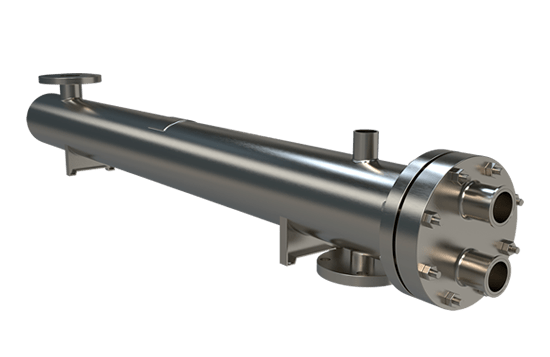
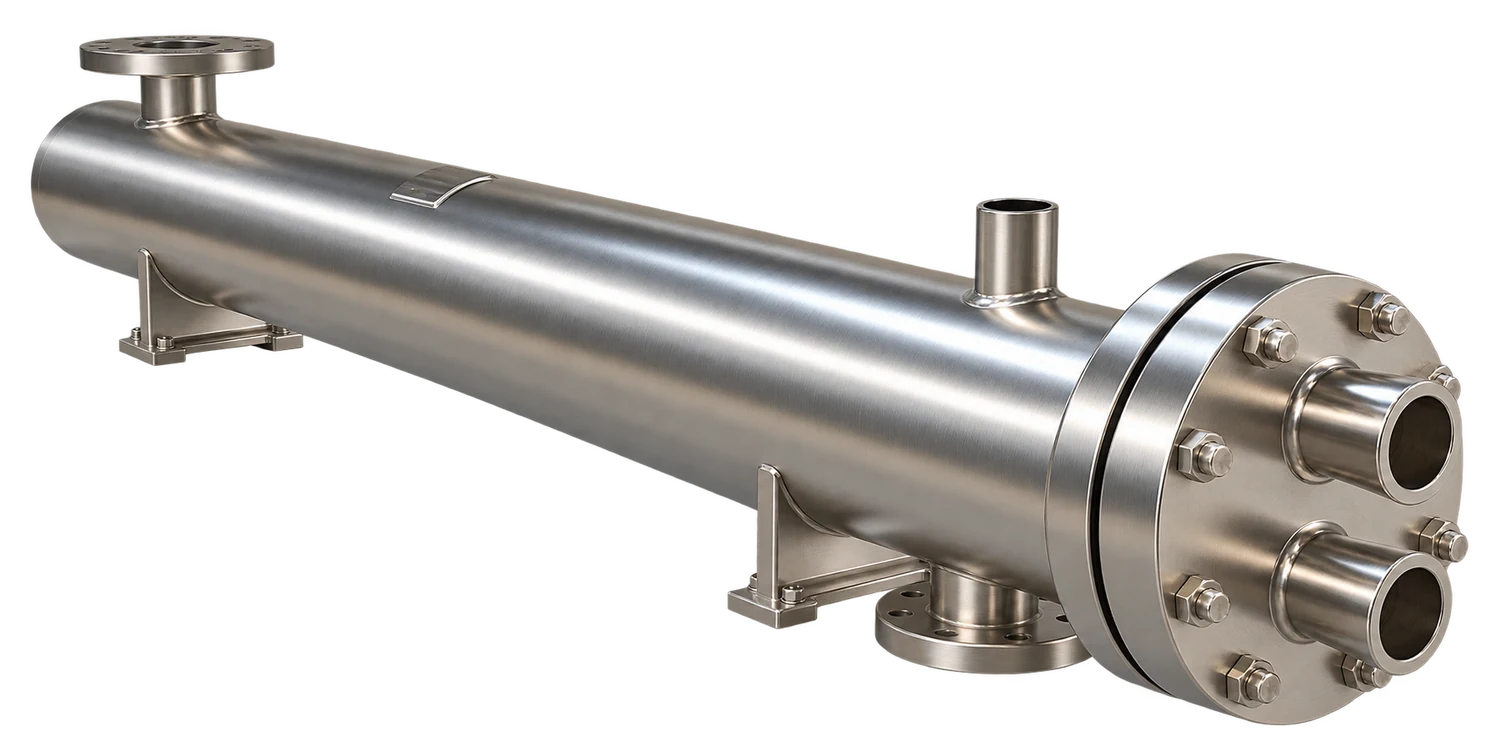
Both stages are commonly shell and tube. A Fixed Tubesheet exchanger with vapor on the shell side, baffled to keep inert gas moving toward the outlet, suits the bulk stage. For the cold stage, a U-Tube bundle accommodates the larger temperature difference between glycol and warm incoming gas and can be pulled to clear ice or hydrate if water is present. Freezing is the failure to plan for: a stream carrying moisture into a sub-freezing glycol stage will gradually plug tubes and lose recovery.
To size recovery properly, provide the vapor rate with full composition including inerts and water, the recovery target or allowable vent content, the coolants available and their temperatures, and the product value or permit limit driving the project.
Gas makeup
Full composition including inert carrier and moisture
Recovery goal
Target yield or the permitted vent concentration
Coolant options
Tower water, chilled water or glycol available on site
Freezing points
Melting points of water and heavy components present
More Liquid,
Less Product Up the Vent
1.
Staged for Economy
Bulk condensing on cooling water followed by a compact chilled stage puts refrigeration only where it earns its keep, keeping chiller size and operating cost proportional to the recovered value.
2.
Outlet Set by Value
The final outlet temperature is chosen from recovered-product economics and the vent permit together, so the condenser is neither undersized for compliance nor oversized past payback.
3.
Planned for Ice and Hydrate
Cold-stage designs account for moisture and high-melting components with removable bundles, defrost provisions or a warmer coolant, keeping recovery from fading week by week as ice or solids narrow the tubes.
Recovery and yield questions
Multiply the inert gas flow by the ratio of the product's vapor pressure to the gas pressure at each outlet temperature, and the difference between the two results is the extra liquid the colder condenser recovers. A nitrogen-carried acetone stream is a good example. Acetone vapor pressure is about 5.5 psia at 90 F and roughly 1.3 psia at 40 F, so a vent at atmospheric pressure leaves the condenser 37 percent acetone by volume in the first case and 9 percent in the second.
On 1,000 lb/hr of nitrogen that is about 1,200 lb/hr of acetone lost at 90 F against 200 lb/hr at 40 F, or roughly 1,000 lb/hr recovered, which at any realistic solvent price pays for a glycol stage within the year. Hold the inert flow constant in the comparison, because the recovery scales with it directly.
Two stages, nearly every time, because the warm stage removes most of the heat on coolant that costs almost nothing and the chilled stage then only has to finish the job. Take a lean vapor stream entering at 180 F that must leave at 40 F. Tower water takes it to 95 F and removes the bulk of the condensable load; the glycol stage carries the remaining sensible load and the last of the condensing. Feed everything to the chiller and the refrigeration load is often three to five times larger, with a compressor running year-round to do what tower water does for free. The single-stage exception is a small stream, say under 500 lb/hr of gas, where the second shell, piping and controls cost more than the extra chiller tonnage they save.
Something is freezing on the tubes, and over several days it builds a layer that both insulates the surface and narrows the gas path, so the outlet temperature creeps up and more product leaves with the gas. Water is the usual culprit even in a nominally dry solvent stream: 1 percent moisture in a 2,000 lb/hr gas flow is 20 lb/hr of water heading for a glycol surface at 20 F, and that is a thick ice layer by the end of a week. Benzene, which freezes at 42 F, and some waxy heavies do the same. The test is simple: warm the glycol to 40 F for an hour and watch recovery come back. The permanent fix is a moisture knock-out ahead of the cold stage, a coolant setpoint above the highest freezing point, or two bundles that alternate with a defrost cycle.
It matters more than the product rate does, because the gas leaves saturated and the inert flow decides how much saturated gas there is to carry product away. Doubling a nitrogen purge from 500 to 1,000 lb/hr doubles the product lost at any outlet temperature, while a condenser twice as large changes nothing if it cannot reach a lower outlet temperature. The gas also controls the heat transfer at the cold end, where the coefficient can fall below 20 BTU/hr-ft2-F as the condensables thin out. Before sizing, look at the sources of inert gas: vessel purges that could run at a lower rate, vacuum pumps pulling in air at leaking seals, and blanketing set higher than the oxygen limit needs. Cutting the gas is often cheaper than chilling it.
Yes, when the recovered liquid matches a feed point in composition and any water or dissolved gas it carries is acceptible to the column; otherwise it goes to a holding tank and is reprocessed in batches. The pitfall is water from the condenser itself. A glycol stage that condenses moisture along with product sends a wet stream back, and on a column with a high-purity bottoms specification that water either leaves in the product or forms a second liquid phase on a tray. Check the recovered liquid against the column's water tolerance, and if it fails, add a decanter or a drying step rather than warming the condenser and losing product. Routing also sets the pressure the recovery condenser must deliver into, which changes the pump or the elevation it needs.