1-805-484-2992
Quotes - Engineering - SalesKnock-Back Condensing Above an Evaporator
An evaporator is built to boil off solvent or water and keep the product behind, yet the vapor leaving it always carries a mist of concentrate. A knock-back condenser on the vapor outlet condenses a share of that vapor and sends it back down the same nozzle, washing entrained droplets into the body. The aim is not reflux for separation, as it is on a column; it is keeping product out of the condensate, the vacuum system and the drain. Carryover, foaming and the low vapor density of a vacuum evaporator are what shape this design.
- Entrainment Load: Droplet carryover rises with boil-up rate and liquid level; the knock-back fraction is set by how much wash liquid it takes to scrub it back.
- Product Loss: Sugars, proteins, salts or actives that escape into the condensate are lost yield and an added treatment load at the drain.
- Vacuum Volume: At deep vacuum each pound of vapor takes up a large volume, so the inlet nozzle and tube count are sized for velocity before duty.
- Foam Events: A foam-over sends liquid up the vapor line; tubes and bottom bonnet must drain it back without trapping concentrate in dead corners.
- Fouling Side: Concentrate reaching the tubes dries and deposits as the film thins, so the vapor side should be the side that can be reached and cleaned.
- Separator Pairing: A mesh pad or cyclone ahead of the knock-back removes coarse droplets, leaving the condenser to catch the fine mist the separator passes.
Keeping Concentrate in the Evaporator Body
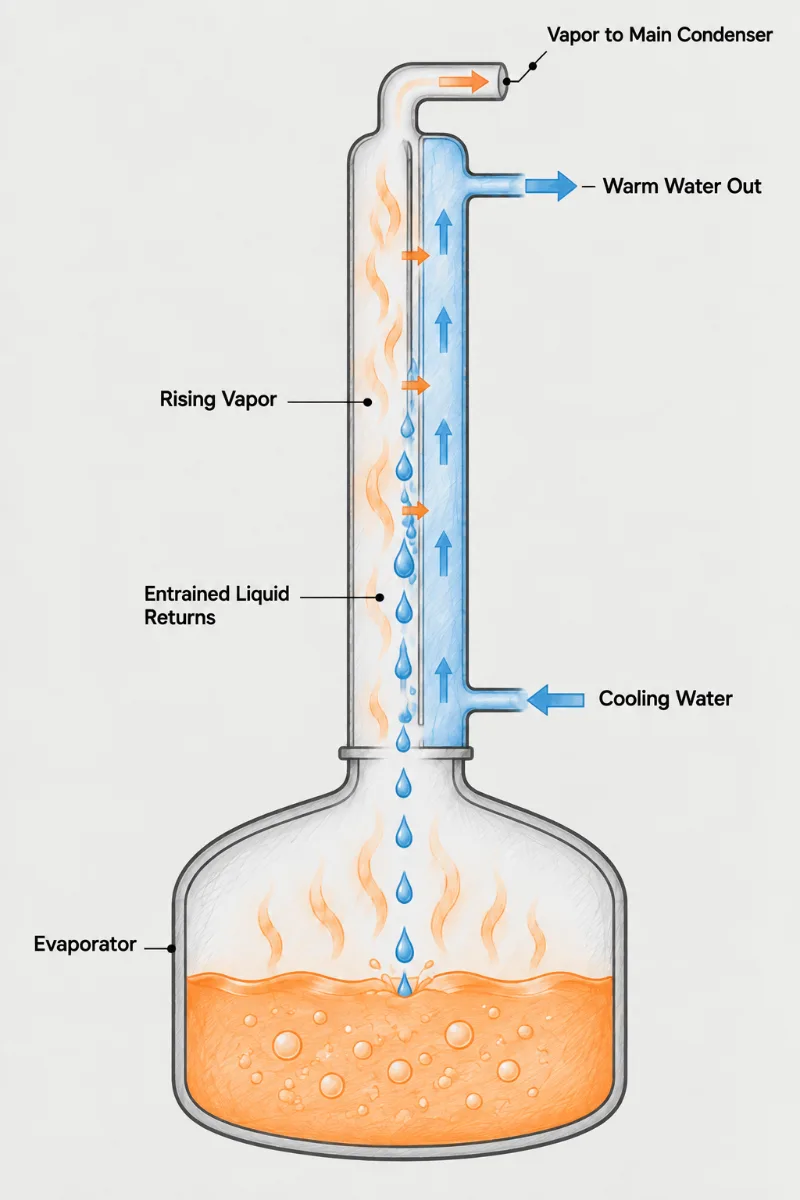
The usual complaint is condensate that tests sweet, salty or colored: product is leaving with the vapor. On a single-effect or batch evaporator this happens most at the start of a run, when the body is full and boiling hard, and again whenever the product foams. A knock-back condenser on the vapor outlet deals with it by condensing part of the vapor right at the outlet and letting that clean liquid fall back through the rising stream, so fine droplets are captured and returned before they reach the main condenser.
How much to condense is the first decision. Returning condensate to the body costs evaporation capacity, since every pound knocked back has to be boiled again, so the knock-back fraction is usually a modest share of total vapor, set by the carryover the downstream condensate can accept. Overdo it and evaporator rate falls; underdo it and the separator is left doing all the work. Under vacuum, low vapor density makes velocity in the tubes the limiting variable, and a unit sized for duty alone will often flood in the first minutes of a run.
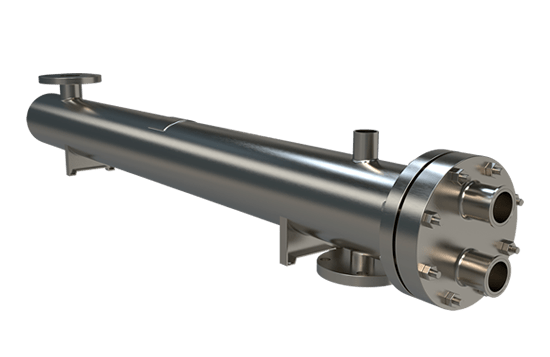
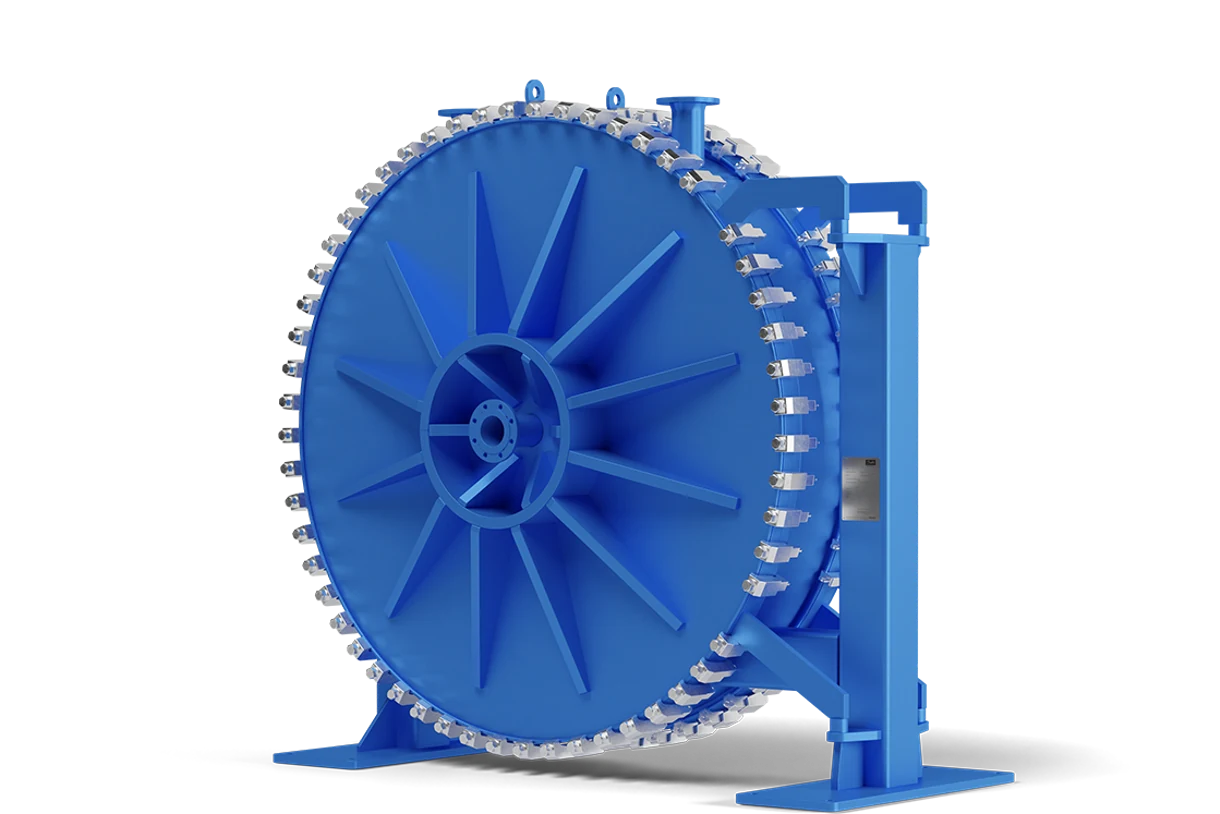
A vertical Fixed Tubesheet condenser with vapor in the tubes is the usual choice. Tubes can be brushed or flushed from the top bonnet, and for food and dairy service the product-side surfaces can be 316L with sanitary finishes. A Counterflow Spiral is a poor fit as the knock-back itself, since condensate cannot fall back against the vapor through its channels. It is worth considering as the main condenser after the knock-back on dirty or fibrous duties, where its single channel scours itself and resists plugging.
Before requesting a quote, gather the evaporation rate at the start and end of a batch, the operating vacuum, the product and how it foams, the allowable solids or concentration in the condensate, and whether a separator already sits on the vapor line.
Boil-off rate
Evaporation rate at the start and finish of the run
Carryover limit
Allowable product content in the recovered condensate
Foaming behavior
How the product foams and any antifoam already dosed
Body vacuum
Operating vacuum, vapor nozzle size and existing separator
Less Product
Lost to the Condensate Drain
1.
Droplet Washback
Condensate formed at the vapor outlet runs back through the rising stream and collects the fine mist a mesh pad lets through, returning concentrate to the body instead of sending it to the main condenser and drain.
2.
Cleaner Recovered Water
With less product carried over, evaporator condensate can often be reused as boiler makeup, CIP rinse or process water rather then treated as wastewater, which shortens the payback on the knock-back unit.
3.
Cleanable Vapor Side
Keeping the product-laden vapor inside straight tubes means deposits can be reached from the top bonnet with a brush or spray lance, so capacity is restored during routine washdown.
Carryover questions
It takes a share of capacity equal to the vapor it returns, since every pound knocked back must be boiled again. On an evaporator boiling 5,000 lb/hr with a 10 percent knock-back fraction, the heating surface has to supply 500 lb/hr of extra evaporation, about 10 percent more steam. Weigh that against the product the condensate would otherwise carry: at 0.5 percent solids in 4,500 lb/hr of condensate, you are losing 22 lb/hr of product plus the treatment cost. A tempered coolant loop lets operators pull back the knock-back during the cleaner middle of a batch, so the penalty applies mainly at start-up and during foam events.
A knock-back condenser can pass a foam surge back to the body if the tubes and bottom bonnet are built for it, but it does not stop foam from forming. Tubes of 1 inch or larger drain collapsed foam more reliably than 3/4-inch tubes, and the bottom bonnet must slope back toward the nozzle with no ledge where concentrate can dry. After a foam event, duty often falls because product has coated the tube walls; a top-bonnet rinse during the next CIP brings it back. Treat antifoam dosing, level control and vapor-space height as the first line of defense and the condenser as the backstop for the fine mist that remains.
316L on every product-contact surface, finished to the plant's 3-A or ASME BPE standard, with 304 acceptable on the coolant side. Dairy and juice condensate is mildly acidic, and the concentrate that dries on a tube during a foam event is far more concentrated than the feed, so pitting under those deposits is the failure to design against. Whey permeate, brines and some fruit concentrates carry enough chloride to justify duplex tubes. Ask for a surface finish of 32 Ra or better on the vapor side, orbital-welded tube-to-tubesheet joints, and a removable top bonnet so the tubes can be inspected after each season's washdown.