
1-805-484-2992
Quotes - Engineering - SalesVent Condensers on Tanks and Process Vessels
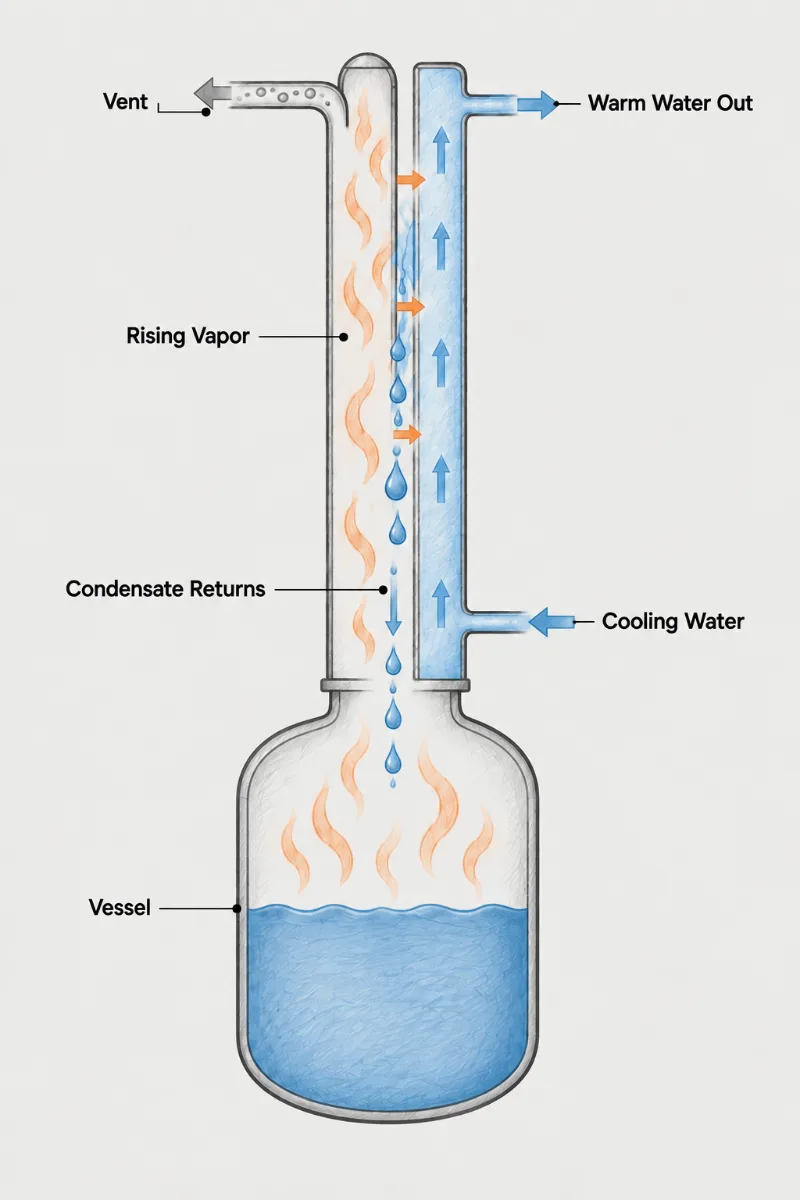
Storage tanks, mix tanks, receivers and hold vessels all breathe. Filling pushes out a headspace saturated with solvent vapor, heating raises its vapor pressure, and nitrogen blanketing sweeps vapor out each time the regulator opens. A knock-back condenser on the vent nozzle condenses that vapor and lets it fall back into the vessel, so the loss to atmosphere or to the abatement system shrinks. The duty is small and intermittent, but the solvent is diluted in nitrogen or air, which makes it a very different condensing problem from a reactor or still.
- Breathing Cycles: Vent flow peaks during filling and heating, then drops to almost nothing; size for fill rate and the warmest headspace the vessel reaches.
- Dilute Vapor: Solvent is a small fraction of the vent gas, so recovery depends on cooling that gas well below the solvent's dew point.
- Blanket Gas: Nitrogen padding adds inert flow whenever the regulator opens, and the condenser must not create backpressure that upsets the pad setpoint.
- Low Coolant: Useful recovery often needs glycol or brine, because a warm coolant leaves the outlet gas saturated at a high solvent content.
- Freeze Risk: Water or high-melting solvents can freeze on sub-zero tubes; coolant temperature limits or defrost cycles keep the vent from plugging.
- Tank Protection: Conservation vents and emergency relief stay in the vent path, and the condenser's pressure drop must not compromise either one.
Cutting Vent Loss Without Pressurizing the Tank
Consider a solvent tank being filled from a truck. For each gallon pumped in, a gallon of headspace gas leaves the vent, close to saturated with solvent at tank temperature. On a warm afternoon with a volatile solvent such as acetone or methanol, that displaced gas can hold a large share of solvent by volume. Without a vent condenser it goes to atmosphere or loads a carbon bed or oxidizer. A knock-back condenser on the vent cools the gas, condenses most of the solvent and drains it straight back into the tank.
Recovery depends on how cold the outlet gas gets, not on how much area is installed. Gas leaves saturated at its outlet temperature, so the solvent that escapes is set by vapor pressure at that point: cool the gas another twenty degrees and the loss can fall by half or more. That is why vent duties often use glycol or brine rather than cooling water. The penalty is ice or frozen solvent on the tubes, and the classic failure is a vent condenser that plugs overnight and leaves the tank to pressure up against its conservation vent.
Pressure drop has to stay in inches of water column. Atmospheric tanks are typically rated for only a few ounces of pressure or vacuum, and a condenser that adds backpressure at fill rate will lift the conservation vent or upset the blanket regulator.
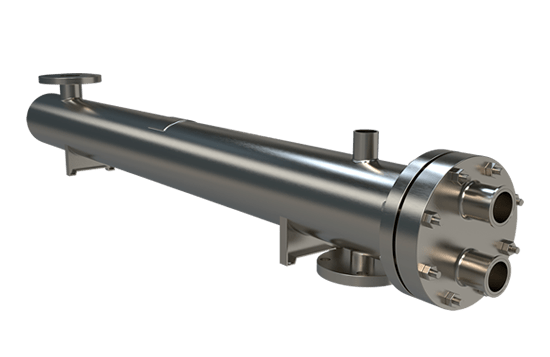
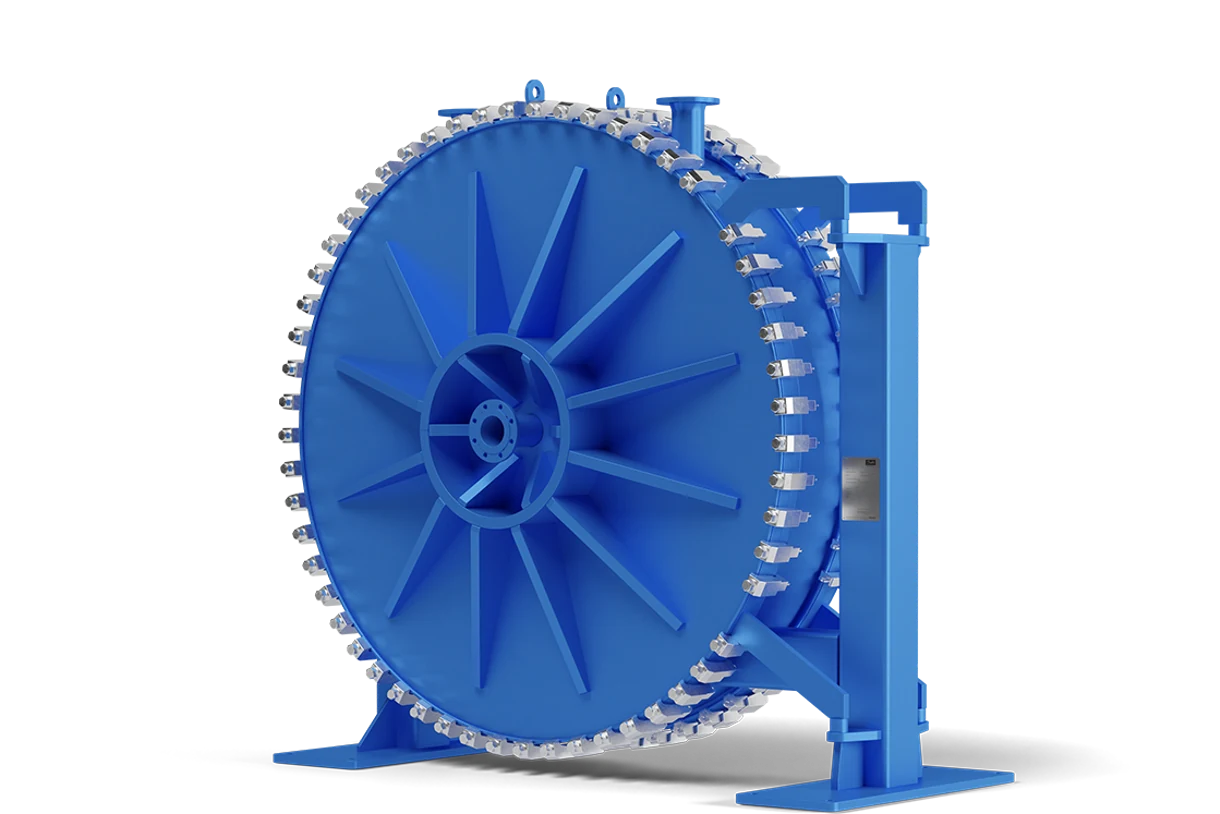
A vertical Fixed Tubesheet unit with gas in the tubes, generous inlet and outlet nozzles and a drainable bottom bonnet suits most tanks and receivers. A Counterflow Spiral fits where vent gas from many vessels is gathered to a header and condensate goes to a collection pot rather than back to one vessel; its long countercurrent path pulls outlet gas very close to coolant temperature.
For a quote, provide the vessel type and pressure rating, fill and draw rates, headspace temperature range, blanket gas pressure and flow, the solvent or mixture stored, the coolant available, and the vent loss or emission limit the condenser has to meet.
Tank limits
Pressure and vacuum rating, conservation vent and relief setpoints
Fill pattern
Fill and draw rates with the warmest headspace temperature
Blanket gas
Nitrogen pad pressure, regulator capacity and purge practice
Emission target
Permitted vent loss and the coolant temperature on hand
Vent Losses
Returned to the Vessel
1.
Lower Abatement Load
Condensing solvent before it reaches the vent header reduces the vapor sent to carbon beds, scrubbers or thermal oxidizers, which stretches carbon change-out intervals and trims fuel use at the oxidizer.
2.
Pad Pressure Undisturbed
Sized for inches of water column at fill rate, the condenser leaves the blanket regulator and conservation vent to work as designed, so nitrogen use and tank pressure stay where they were set.
3.
Product Kept in Inventory
Solvent that would have left with every fill and every warm afternoon drains back to the tank, closing the slow gap between deliveries and usage that many sites never trace to the vent.
Vent condenser questions
Set the outlet gas temperture from the vapor pressure that meets the allowed vent loss, then subtract a 10 to 15 F approach to get the coolant inlet temperature. Methanol stored at 95 F has a vapor pressure near 4 psia, so displaced gas can hold 27 percent methanol by volume. Cooling that gas to 40 F brings vapor pressure to about 0.8 psia, cutting the loss by roughly four-fifths. A vent condenser on 30 F glycol achieves that; chilled water at 45 F does not. Heavier solvents such as xylene reach a low loss on 60 F chilled water. Match the coolant to the solvent, not to what the plant has nearest the tank.
A vent condenser will ice if the coolant runs below 32 F and the vent gas carries moisture, whether from humid air drawn in on tank draw-down or from water in the solvent itself. Watch the pressure drop across the unit; it climbs for hours before the vent plugs, so a differential alarm catches ice before the tank does. Keep glycol at 35 to 38 F, or run a timed warm-up that melts the ice back into the tank before each fill. Never let the condenser be the only vent path; the conservation vent and emergency relief must bypass it. On a blanketed tank, moist air intake is much smaller and icing is rare.
A single condenser on a vent header is usually the better economic choice, as long as the solvents on the header are compatible when mixed and the header can carry the worst coincident fill events within the pressure budget. Size the unit for the largest fill rate that can happen at the same time as a heating or purge event on another tank. Condensate drains to a collection pot rather than back to any one tank, so plan its return. Watch for a header that combines a water-wet solvent with a chlorinated one: the mixed condensate can hydrolyze and attack the pot. Each tank still needs its own conservation vent.
Nitrogen padding lowers the solvent fraction of the vent gas, so the condenser must cool further to recover the same share of solvent. A tank breathing air may vent gas that is 20 percent acetone by volume; the same tank with the regulator purging may be 10 percent, and the condenser now has to drop to a lower outlet temperature to reach the same emission limit. Pad gas can still carry water if the nitrogen supply is wet, so check the supply dew point before trusting a sub-freezing coolant. Include the regulator's peak purge flow in the sizing, since a stuck regulator can push ten times the normal pad flow through the tubes.