
1-805-484-2992
Quotes - Engineering - SalesProtecting Vacuum Pumps With VOC Condensers
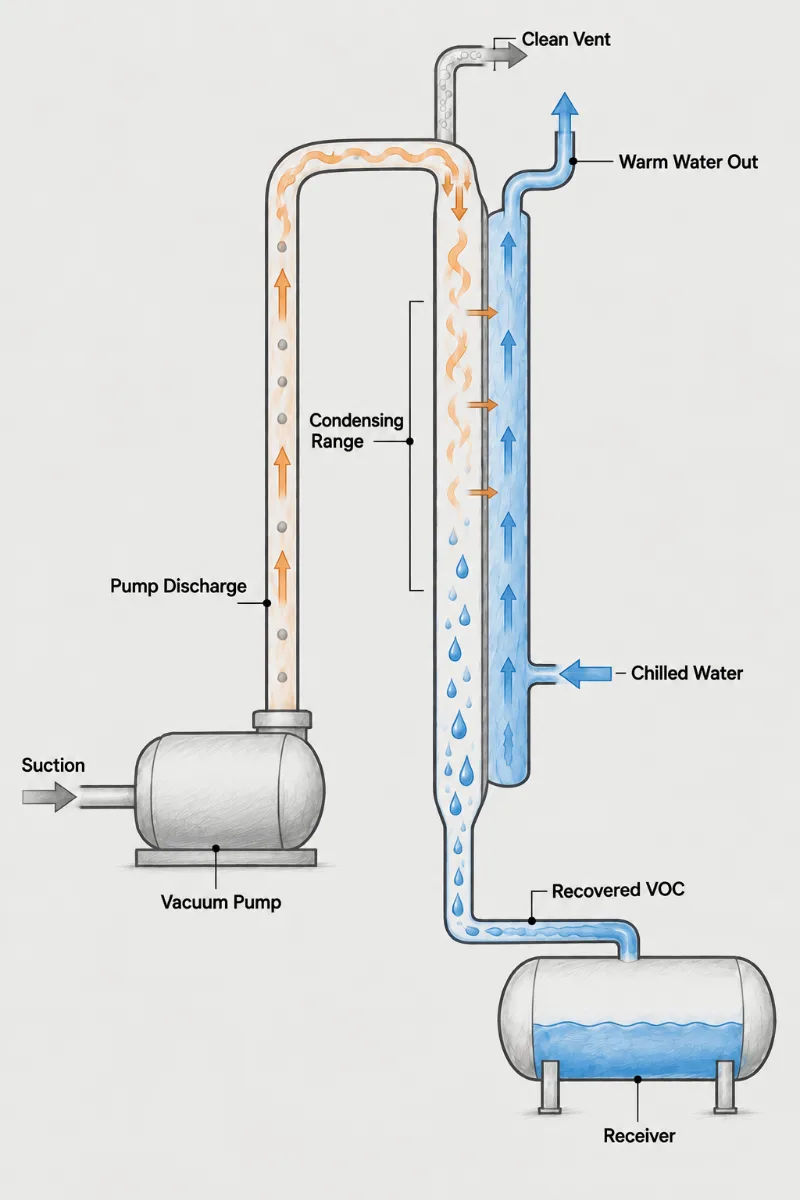
A vacuum pump on a solvent process is also an emission point. Dry screw pumps compress solvent vapor and can condense it inside the casing, causing corrosion or polymer deposits. Liquid-ring pumps absorb solvent into their seal liquid, which raises its vapor pressure and cuts capacity, then strip it back out at the exhaust. A suction condenser protects the pump; an exhaust condenser, working at atmospheric pressure where VOC partial pressure is far higher, captures what passes through.
- Suction Condenser: Removes condensables at process vacuum, protecting the pump, but it is limited by pressure drop and by low partial pressure.
- Exhaust Condenser: After compression the VOC partial pressure rises sharply, so the same coolant condenses a larger fraction at the pump discharge.
- Seal Liquid: In a liquid-ring pump, solvent dissolving in the seal water raises its vapor pressure and costs capacity; a seal-liquid cooler helps hold it.
- Dry Pump Heat: Dry screw pumps run hot, and gas that enters too close to saturation can still condense inside the casing as it is compressed.
- Gas Ballast: Ballast air added to prevent internal condensation dilutes the exhaust and lowers its dew point for the exhaust condenser.
- Discharge Pulsation: Pump discharge pulses and may carry oil or seal-liquid mist, and the condenser with its separator has to handle both.
Suction Side, Exhaust Side: Two Places to Condense
The pump exhaust is often the better place to recover VOC, and the suction is the better place to protect the pump. Compression is what makes that true. A stream at fifty torr carrying solvent at a given mole fraction has roughly fifteen times that solvent's partial pressure once it reaches the exhaust. Its dew point rises accordingly, and a chilled-water condenser that would catch little at suction catches a useful share at discharge.
The suction condenser's job is different. It removes enough vapor that a liquid-ring pump's seal liquid stays cool and lean, or that a dry pump's internal temperature stays above the dew point of what remains. When it is undersized, a liquid-ring pump loses capacity as its seal liquid warms with absorbed solvent, and a dry pump starts showing corrosion or deposits at the discharge end of the rotors.
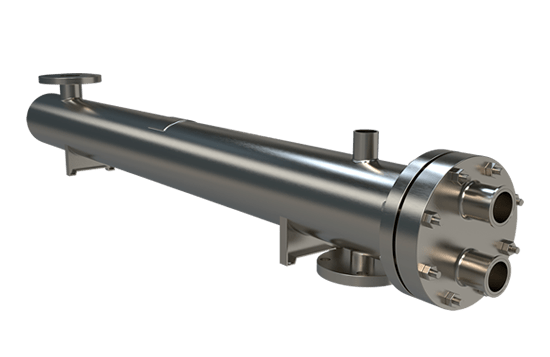
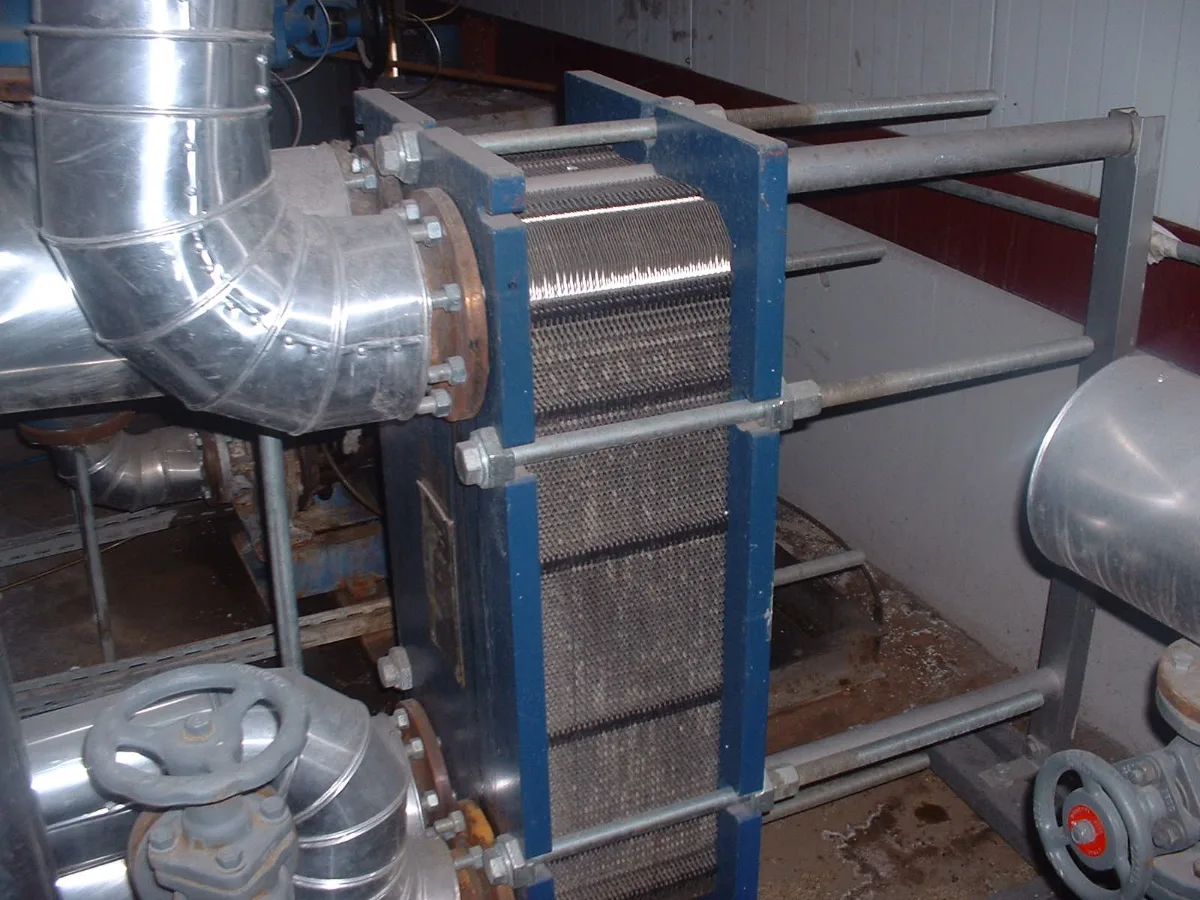
A Fixed Tubesheet shell-and-tube serves both positions. At suction it condenses on the shell side with a wide vapor path; at discharge it handles pulsing flow, with a mist separator in the outlet head. A Welded Plate exchanger is compact enough to mount on the pump skid as an exhaust condenser, or as the seal-liquid cooler on a liquid-ring pump where it gives a close approach to chilled water; it is less forgiving on the suction side, where every bit of pressure drop counts.
Send the pump type and capacity, suction pressure, solvent and inert flows, ballast or seal-liquid details, coolant conditions and the emission target at the exhaust.
Pump details
Pump type, rated capacity and seal liquid or ballast
Suction stream
Process vacuum with solvent and inert gas flow
Exhaust target
Allowed VOC leaving the pump discharge
Skid space
Room on the pump skid and coolant available there
Longer Pump Life,
Less VOC at the Stack
1.
Seal Liquid Stays Cold
Removing solvent ahead of a liquid-ring pump keeps its seal liquid near design temperature and composition, so the pump holds its rated capacity at process vacuum.
2.
Dry Pump Protected
Lowering the condensable load at suction keeps gas in a dry screw pump above its dew point through compression, avoiding liquid in the casing that leads to corrosion or deposits.
3.
Recovery at the Discharge
Condensing at the pump exhaust takes advantage of compression, capturing VOC at atmospheric pressure with ordinary chilled water instead of the deep cold a suction condenser would need.
Suction and discharge questions
Put the condenser at suction when the pump needs protecting, at the exhaust when solvent recovery is the goal, and consider both when the solvent load is heavy enough to hurt the pump and valuable enough to recover. Pressure is the deciding factor. At 50 torr a 40 F chilled-water condenser can only hold solvent whose vapor pressure at that temperature is below 50 torr, so it catches almost none of a light solvent; at the pump discharge the same coolant faces a stream fifteen times richer in partial pressure and recovers a large share.
A dry screw pump on a light, intermittent load may need only the exhaust unit. A liquid-ring pump on steady solvent vapor usually needs the suction condenser first, because seal-liquid contamination costs capacity faster than any recovery can pay it back.
Because the solvent is dissolving in the seal water and raising its vapor pressure, and a liquid-ring pump can not pull below the vapor pressure of its own seal liquid. The effect compounds. Compression heat warms the ring, the warmer liquid holds more solvent, and the attainable vacuum creeps up from 50 torr to 80, then 100, as the strip-off proceeds.
Three fixes exist: a suction condenser that removes most of the vapor before the pump, a seal-liquid cooler holding the ring below 70 F, or a seal liquid in which the solvent is nearly insoluble. For a strip-off lasting an hour, the cooler alone may be enough; for one lasting a shift, the suction condenser is the only option that keeps capacity steady.
Ballast lowers the exhaust dew point by diluting the VOC with air, so the exhaust condenser recovers a smaller fraction at the same outlet temperature, but it rarely changes the decision to use one. Quantify it. If ballast adds air equal to 10 percent of the pumped volume, the solvent partial pressure at the exhaust drops by about a tenth, which moves the dew point only a few degrees on most solvents.
The larger effect is the extra gas volume to be cooled, which adds sensible duty and raises pressure drop in the same condenser. Size the exhaust condenser on the ballasted flow at the maximum ballast setting operators use, and do not plan on turning ballast off, because that puts the condensation back inside the pump casing.
It will catch much of the oil along with the solvent, which is the problem: the recovered liquid becomes an oily mixture, and the oil film on the tubes cuts heat transfer over time. The fix depends on the pump. On an oil-sealed or oil-lubricated pump, a coalescing filter rated for submicron mist belongs between the pump discharge and the condenser, with a drain back to the oil reservoir.
On a dry screw pump there is no oil in the gas path and the issue disappears. Liquid-ring pumps carry seal-liquid mist instead, which a separator knocks out ahead of the condenser. Treat the condensate specification as a design input: if you need solvent clean enough to reuse, the mist removal must come first.
Most pumps tolerate a few psi of discharge back pressure, far more than the fraction of a torr allowed at suction, but the pump data sheet sets the limit and it is lower than you expect on dry screw machines. Back pressure raises the compression ratio, so discharge temperature and motor load climb with it. A dry screw pump already running 300 F at discharge may trip on temperature with 3 psi of added back pressure.
A liquid-ring pump is more forgiving, though back pressure reduces capacity slightly. Design the exhaust condenser for 1 psi or less at peak flow and keep that figure in the same budget as the mist separator and any arrestor between the pump and the stack.