
1-805-484-2992
Quotes - Engineering - SalesVent Condensers for Process Vent Headers
Process vents collect the small, continuous gas streams that leave columns, decanters, receivers, centrifuges and scrubbers: nitrogen sweeps, dissolved gases and leakage air, each saturated with whatever organic it passed over. Combined on a header, they form a low-flow, high-concentration stream whose composition shifts as units start and stop. A vent condenser on that header captures organics before the gas reaches the flare, oxidizer or carbon. Its outlet temperature sets the emission, and its coldest surface sets what may freeze.
- Header Pressure: Several vents share one header, so condenser loss raises back pressure on every connected vessel; budget it against the weakest vent.
- Shifting Mix: Composition changes as units start, stop and switch products, so rate the condenser across the range rather than on one snapshot.
- Freezing Organics: Benzene, p-xylene, acetic acid and DMSO freeze above many chilled-glycol temperatures and will plug a cold vent condenser.
- Flame Arrestors: Arrestors on the header add pressure drop and must stay dry; the condenser drain arrangement keeps liquid out of them.
- Inert Dominance: Nitrogen makes up most of the flow, so the gas-side film coefficient, not condensation, limits the heat transfer.
- Condensate Fate: Mixed condensate from many sources may be off-spec for any single unit, so decide where it goes before sizing the drum.
One Header, Many Sources, One Outlet Temperature
What sets emissions from a vent condenser? Mostly the outlet temperature. Nitrogen leaves saturated with each organic at its vapor pressure at that temperature, and for a typical solvent a rise of fifteen to twenty degrees F roughly doubles the loss. That makes the coldest coolant on site tempting, and that is where vent condensers get into trouble: benzene freezes at about forty-two F, p-xylene near fifty-six F and acetic acid near sixty-two F. A glycol-cooled vent condenser on a header carrying any of them can plug solid within a shift.
Because the flow is mostly inert gas at low velocity, the gas-side coefficient is low and area is driven by sensible cooling of nitrogen. Long gas paths with good velocity outperform large shells with slow gas. Pressure drop must fit the header budget, which is usually tight because conservation vents and relief devices on the connected vessels are set low.
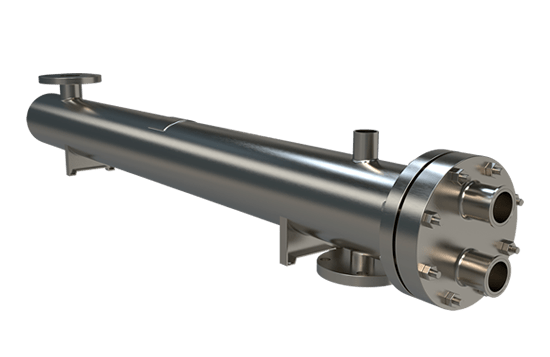
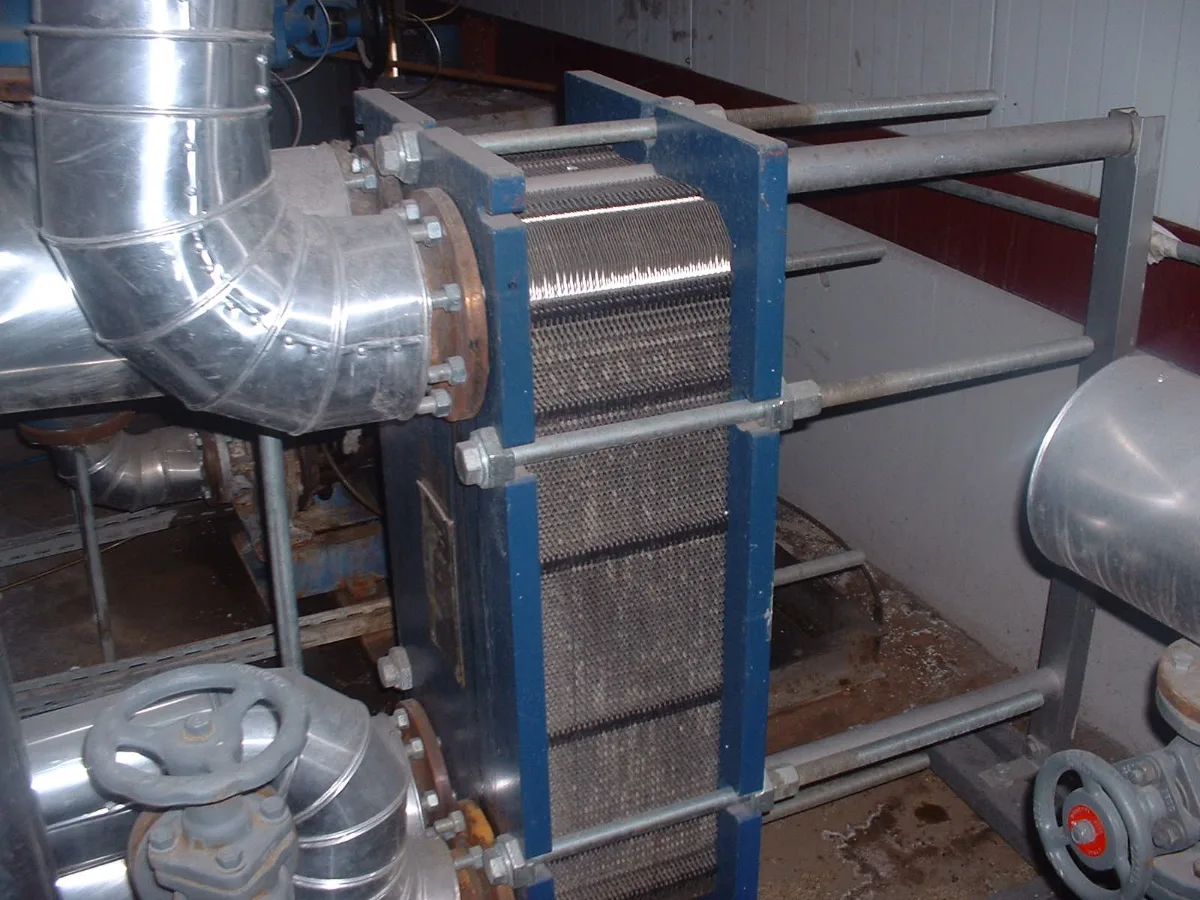
A Fixed Tubesheet shell-and-tube with gas in the tubes is the common arrangement. Tube velocity keeps the gas coefficient up, frozen deposits can be melted out with warm coolant, and straight tubes are easy to inspect. A Welded Plate exchanger gives a closer approach in less space on clean headers with no freezing components, and its all-welded pack resists the mixed solvents that attack gaskets.
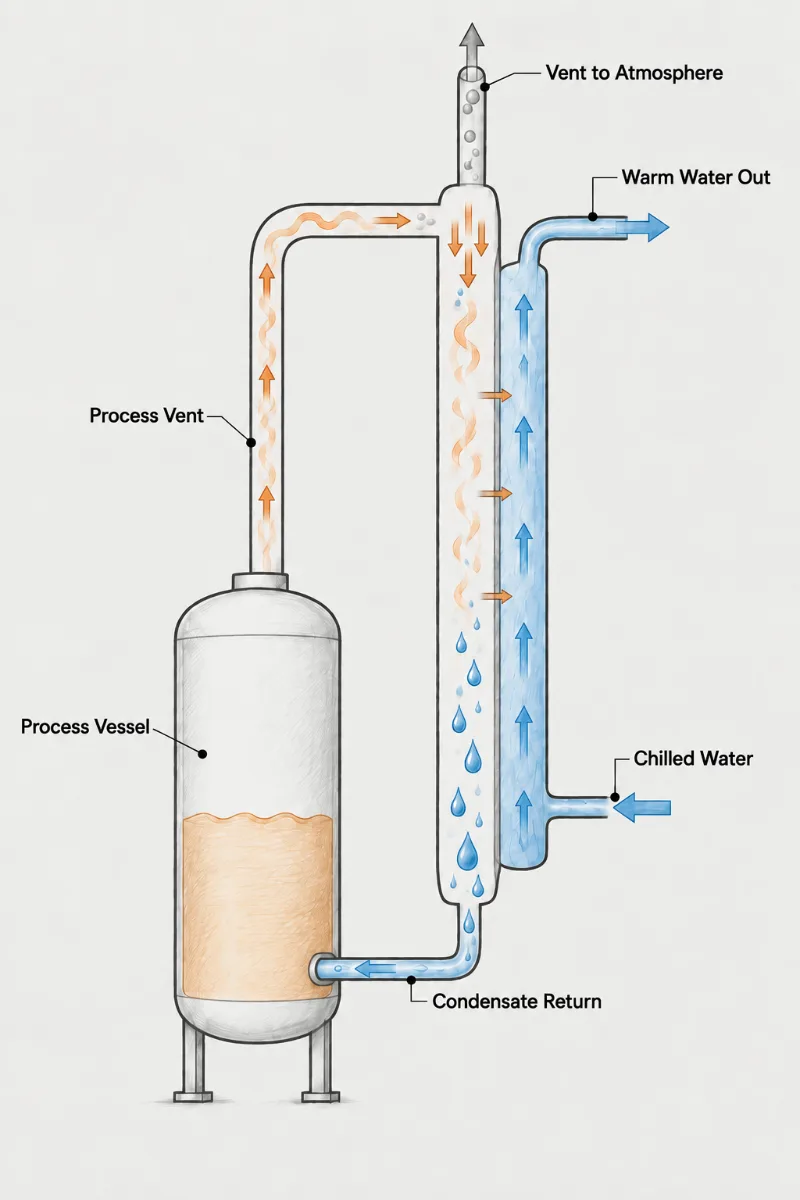
Send each vent source with its flow and composition range, header pressure and vent settings, freezing points of the components present, the emission target and available coolants.
Vent sources
Each contributing vessel with its flow and composition
Header limits
Header back pressure and lowest vent or relief setting
Freeze risks
Components that solidify above the planned coolant temperature
Emission target
Allowed outlet organics and where condensate is sent
Lower Emissions
From Every Connected Vent
1.
Outlet Set by Chemistry
Coolant temperature is chosen from the freezing points and vapor pressures actually on the header, giving the coldest outlet that will not plug and the lowest emission that can be sustained.
2.
Gas-Side Velocity
Routing nitrogen through tubes at useful velocity raises the film coefficient, so the condenser carries the sensible load in a compact unit without spending header pressure.
3.
Thaw Without Teardown
When a freezing component does deposit, a warm-coolant cycle melts it from the tube walls and drains it, instead of leaving a cold unit that must be opened and chipped out.
Vent header questions
Something on the header is solidifying on the coldest tubes, and the few-week interval is the time it takes for that deposit to bridge the gas path. Pull the inlet channel cover while it is still plugged and look at what is there. White crystals that melt in your hand point to a high-melting organic; ice points to water carried in with wet nitrogen or a steam-jacketed vessel vent.
Then check the coolant supply temperature against the freezing point of every component in the vent inventory, not just the main solvent. Plugging that returns in weeks rather than hours usually means a minor component, present at a fraction of a percent, slowly accumulating. A warm-coolant melt cycle clears it, but moving that component to a warmer upstream stage ends the problem for good.
Yes, provided the condenser was rated with margin on gas velocity and pressure drop, and the new source does not introduce a component that freezes at the existing coolant temperature or attacks the tube material. The subtle check is dilution. Because losses track outlet vapor pressure, adding 20 scfm of clean nitrogen to a 30 scfm header does not change the outlet concentration of each organic, but it raises the mass leaving by two thirds because more gas carries that saturated load.
Decide wether the permit is written in concentration or in pounds per hour before you tie in. Also confirm the added pressure drop still clears the lowest conservation-vent setting on the header, since one vessel lifting its vent defeats the whole condenser.
Because nitrogen dominates the flow, condensation happens only as fast as organic molecules can diffuse through the gas film to the cold wall, and that resistance changes continuously along the tube. At the inlet the gas is rich and the dew point is high, so the first tubes condense freely. Halfway down, most of the organic is gone, the dew point has dropped toward the coolant temperature, and the remaining tubes are mostly cooling nitrogen with a film coefficient closer to 10 Btu/hr-ft2-F than the hundreds a clean condensing surface delivers.
A rating that applies one condensing coefficient to the whole length overstates performence by a wide margin and the unit arrives undersized. We rate these in increments, tracking composition, dew point and the sensible load segment by segment.
Mixed header condensate goes to a slop or recovery system unless one source so dominates that the liquid is fit to return. Before piping it, measure what actually collects. A drum that fills with a two-phase mix, solvent over water, needs a decanter or a drain interlock so water does not go back to a dry process. Also watch the trap: the drain must seal against header pressure, which can be only a few inches of water column, so a liquid-leg seal or a pumped drum works where a steam-style trap will not.
That is a process-safety decision, and most headers tied to a flare or oxidizer carry an in-line arrestor downstream of the condenser. The condenser then has to make the arrestor's life easy. A cold, saturated gas leaving the tubes will condense again in the arrestor element, where the narrow passages hold liquid and pressure drop climbs. Give the gas a short run of heat-traced line, or place the arrestor above the condenser outlet with a drain pocket between them so droplets fall back. Keep the drop across the arrestor in the header budget; an element rated at 2 inches of water dry can read 6 inches wet, enough to lift a conservation vent set at 4.