
1-805-484-2992
Quotes - Engineering - SalesVOC Condensers for Once-Through Air Dryers
Belt, tray, flash and rotary dryers that draw ambient air once and exhaust it carry VOC at low concentration, held well below the flammable limit for safety. A condenser on that exhaust is rarely a complete control device. Its job is partial recovery: drop out heavier organics and a share of the solvent at a practical coolant temperature, knock out water, and reduce what a downstream oxidizer or carbon bed must treat. The engineering lies in knowing where diminishing returns begin.
- Dilution Penalty: Air dryers carry far more air per pound of VOC than an inert loop, so most refrigeration goes into cooling air, not condensing solvent.
- Humidity First: Water evaporated from the product often outweighs the VOC, condenses first and dominates the liquid collected.
- Partial Target: Set the recovery percentage from economics and downstream capacity, not from what a condenser could reach in theory.
- Dust Loading: Product fines escape cyclones on air dryers, and a first exchanger that tolerates particulate keeps the cold stage from plugging.
- Heat Reuse: Warm exhaust can preheat dryer makeup air through the first stage's coolant loop, recovering energy while cooling toward the dew point.
- Outlet Reheat: Gas leaving a cold condenser is saturated; warming it a few degrees prevents liquid forming in ducts and in a carbon bed.
Partial Recovery From Dilute Dryer Exhaust
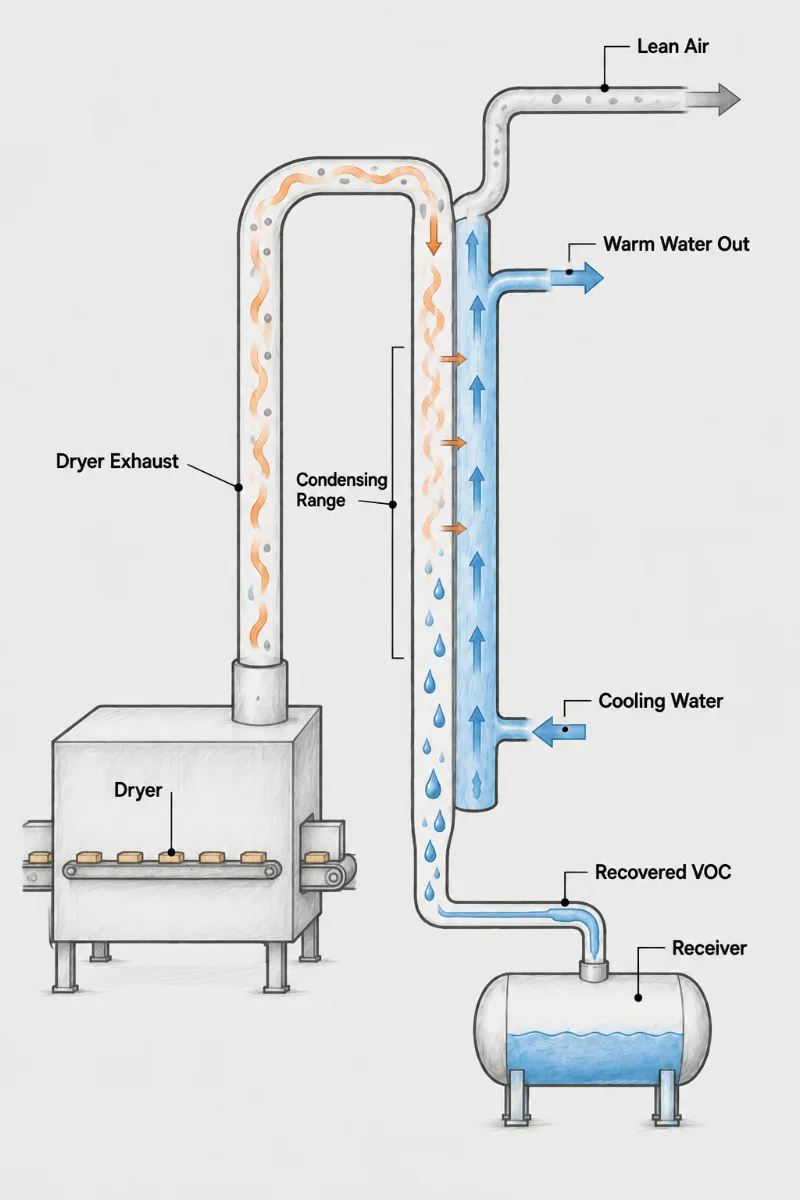
A common disappointment is a condenser added to dryer exhaust that collects mostly water. The plant expected solvent back; the drum fills with condensate holding a few percent organics. That is the physics of a dilute stream: water from a wet product often outweighs the VOC, condenses at a higher temperature and takes most of the cooling. The VOC fraction only comes down once the gas is cooled well below its own dew point.
Partial recovery is still worth doing when the downstream device is the constraint. Removing heavy organics and water ahead of a carbon bed lengthens bed life and reduces regeneration steam. Taking the bulk of a high-boiling solvent out ahead of an oxidizer does little for fuel use, but it can let an existing oxidizer absorb a production increase.
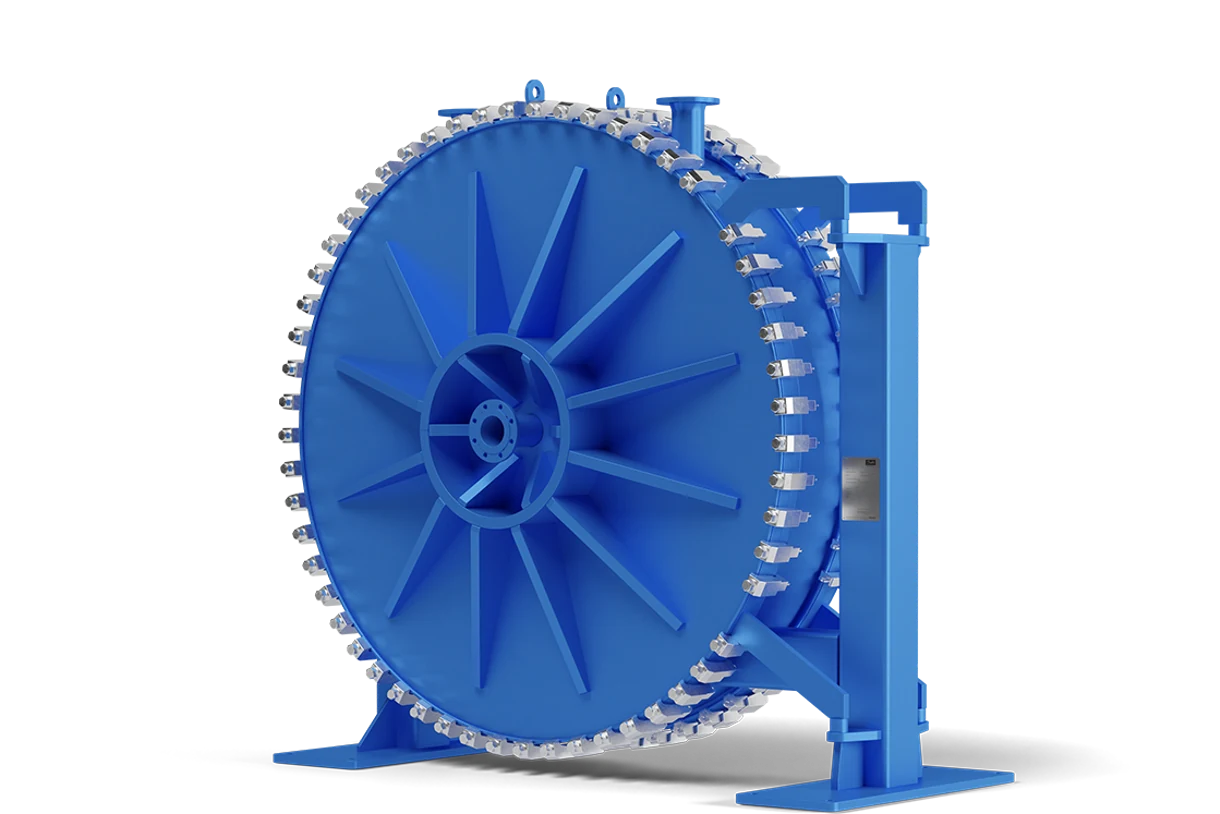
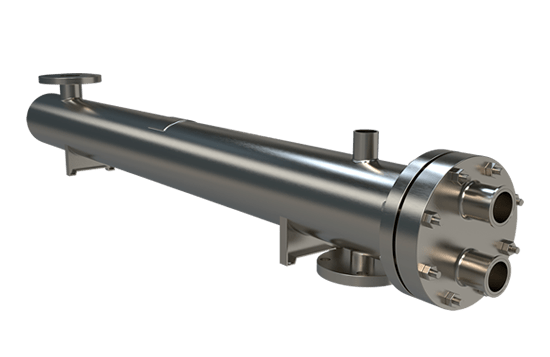
A Counterflow Spiral works well as the first stage, running on cooling water and taking the dust that escaped the cyclone without plugging. Its countercurrent path also makes it an effective heat recovery unit when its coolant loop preheats dryer makeup air. A Fixed Tubesheet shell-and-tube with exhaust in straight tubes follows for chilled-glycol cooling, and it is easy to wash down and inspect after a product change.
Bring the exhaust air rate, temperature and humidity, each VOC and its concentration, dust load after the cyclone or filter, the recovery percentage you need and the downstream control equipment.
Exhaust air
Airflow, temperature and humidity leaving the dryer
VOC profile
Each organic present and its concentration in the air
Dust after cleanup
Fines passing the cyclone or bag filter
Recovery goal
Share of VOC to capture before downstream treatment
Lighter Load
on the Downstream Control Device
1.
Water Out Early
Condensing moisture ahead of a carbon bed keeps the carbon from adsorbing water instead of VOC, which extends working capacity between regenerations and cuts steam per cycle.
2.
Energy Back to the Dryer
The first condenser stage can warm dryer makeup air through a closed coolant loop. Heat that would otherwise leave in the exhaust offsets part of the dryer's burner or steam load.
3.
Heavy Organics Captured
High-boiling solvents and odor compounds condense at moderate temperatures, so even a cooling-water stage removes a useful share of them and reduces plume odor at the stack.
Once-through dryer questions
Because the product gave up more water than solvent and water condenses at a much higher temperature, so at any practical outlet it dominates the drum. A rotary dryer removing 500 lb/hr of water and 50 lb/hr of acetone in 15,000 scfm of air gives the water a partial pressure near 9 torr, so it starts condensing below about 50 F, while the acetone sits under half a torr with a dew point far below any glycol supply.
Every pound of water condensed takes about 1,000 BTU of cooling before the acetone has even started. Analyze a sample of the drum contents; the ratio tells you how far below the solvent dew point the unit is running. Then decide if that cooling buys enough VOC removal, or if the condenser is better valued as a dehumidifier protecting the carbon bed.
For heavy organics, most of them at chilled-water temperatures; for a volatile solvent on dilute air, often less than half at 40 F and a steep climb only as the outlet nears 0 F. The shape of the curve is set by the solvent vapor pressure. Dropping the outlet from 40 F to 0 F lowers the vapor pressure of acetone by about four times and of toluene by roughly six times, so each step colder removes a similar fraction of what remains, while the air it cools, and the refrigeration it consumes, stay the same.
On a dilute exhaust that means the last 20 percent of recovery costs more than the first 60. We produce a recovery against outlet temperature curve for your solvents and airflow, so the glycol temperature and the chiller size are chosen where the curve flattens, not past it.
After it, with the first stage still chosen as if some dust will arrive anyway. A cyclone alone typically passes a noticeable fraction of fines below 10 microns, and those fines, once wet, build a mud on the inlet of a cold exchanger that reads as rising pressure drop within days. A bag filter ahead of the condenser cuts that to a trace, but it has to run above the exhaust dew point or the bags blind with condensate.
Place the spiral first stage on cooling water right after the filter: its single channel at scrubbing velocity tolerates what escapes, and its covers open for a wash. The glycol stage goes last, where the gas is cleanest and coldest. Add drains with sight glasses at the inlet of each stage so a slurry shows itself before it reaches the tubes.
Yes, and partial recirculation is often the cheapest way to make a condenser worthwhile, because it concentrates both VOC and water in the exhaust and raises the dew point toward a temperature cooling water can reach. Recirculating half of the exhaust roughly doubles the VOC concentration, which doubles the solvent each cubic foot of cooled air returns.
The limit is safety: with air as the carrier, concentration must stay below 25 percent of the lower explosive limit without continuous monitoring, or up to 50 percent with continuous LEL monitoring and a fast-acting interlock, so the gain has a ceiling. Humidity also rises, which lengthens drying unless the condenser brings the recycle stream dew point down first. Push recirculation far enough and the dryer becomes a closed inert loop, which uses nitrogen and a different condenser and is a separate project.
Ahead of a carbon bed, yes, by 10 to 20 F; ahead of an oxidizer, no, though the duct still needs drains. Gas leaving a 40 F condenser is at 100 percent relative humidity, and any heat loss in the duct or any pressure drop across a damper drops liquid. On carbon, that liquid fills pores and water displaces adsorbed solvent, and a bed at 90 percent relative humidity holds a fraction of the VOC capacity it has at 50 percent.
The cheapest reheat is a gas-to-gas exchange with the warm exhaust entering the condenser, which also precools the inlet; a small steam or electric coil is the alternative. An oxidizer burns the saturated gas without complaint, and its own preheat exchanger dries it, but a long cold duct between the two still collects liquid at every low point and needs a trap.
Glycol, at the temperature where your recovery curve flattens, which on most dryer exhaust streams means a supply between 20 F and 0 F rather than the coldest the chiller can produce. Below 32 F the moisture still in the gas frosts the surface, so the choice brings a defrost plan with it: a precooler on cooling water that drops most of the water first, a warm-glycol defrost on a timer, or a pair of units alternating.
Propylene glycol at 35 to 40 percent by volume protects to about 0 F and is the usual choice where product contact is a concern; ethylene glycol pumps more easily at the same temperature. Confirm chiller capacity at the supply temperature chosen, since a chiller rated at 45 F loses a large share of its tonnage at 0 F, and check that glycol velocity in the tubes stays high enough to keep the film coefficient up.