
1-805-484-2992
Quotes - Engineering - SalesSterilizer and Autoclave Exhaust Condensers
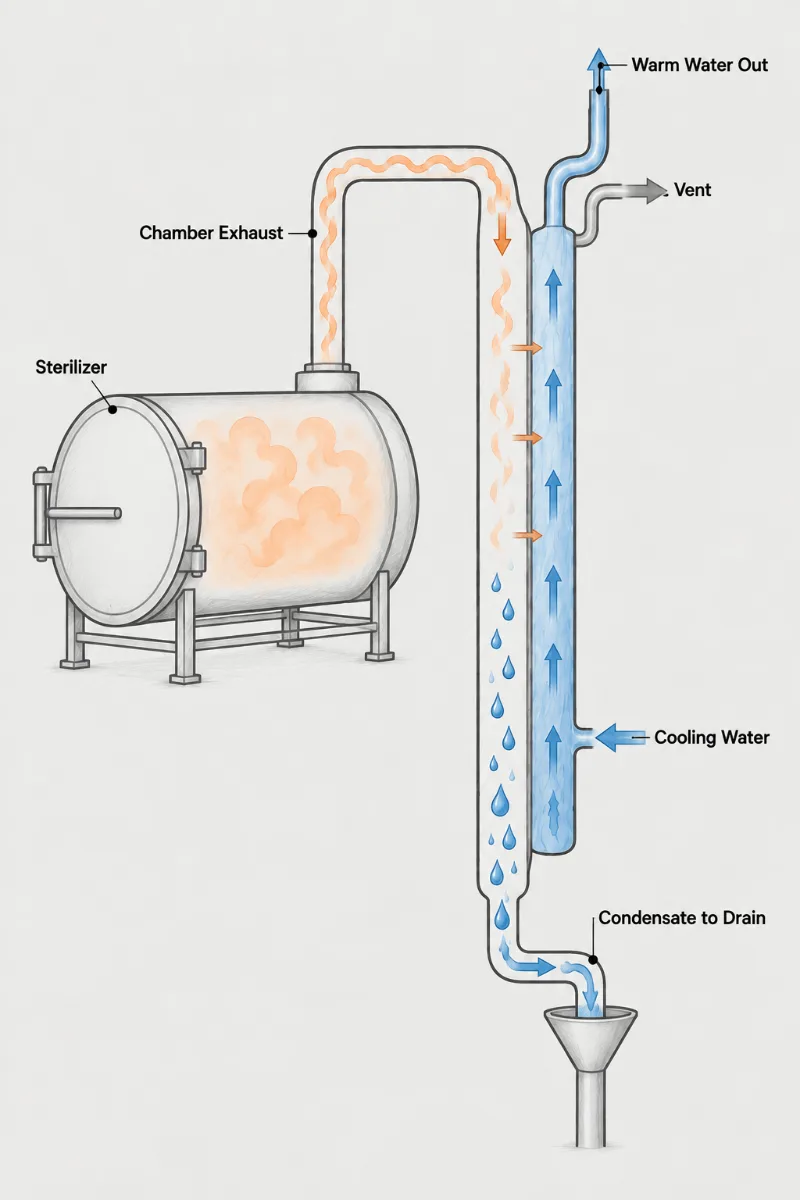
An autoclave or steam sterilizer does not release steam evenly. A prevacuum cycle pulls the chamber down several times to remove air, admits steam between pulses, holds at sterilizing temperature, then exhausts the chamber in a rush and finishes with a drying vacuum. The condenser on the exhaust or vacuum line sees almost nothing for minutes, then a burst of steam and air, then deep vacuum. Sizing it for an average flow guarantees hot discharge to the drain and an overworked vacuum pump; the design must follow the peak of each pulse.
- Pulse Peak: Size on the highest instantaneous exhaust rate at chamber blowdown, not on the steam consumed per cycle divided by cycle time.
- Vacuum Pump Load: Condensing steam ahead of a liquid ring pump removes most of the vapor volume, letting a smaller pump reach the prevacuum setpoint faster.
- Drain Temperature: Many plumbing codes limit discharge to the sanitary drain to a maximum temperature, so the outlet must be cool even during the exhaust surge.
- Water Consumption: Once-through tap water used as coolant is a large utility cost; a temperature-controlled valve uses water only while steam is actually arriving.
- Air Fraction: Early pulses carry mostly air with little steam, so the condenser must pass noncondensables freely while it handles the later steam-rich pulses.
- Pressure Cycling: Shifting between positive chamber pressure and deep vacuum every few minutes stresses gaskets, thin plates and joints far more than steady service.
Condensing a Flow That Arrives in Bursts
The common sterilizer complaint is a drain line that runs too hot to touch, a vacuum pump that cannot reach setpoint on schedule, or both. Each points to a condenser rated on average steam use. Chamber blowdown can release the chamber's steam in seconds, and the first vacuum pulse after a hold pulls a slug of hot vapor straight toward the pump. Size for that instant, and because the burst is short, a modest amount of stored cold water in the shell can help absorb it.
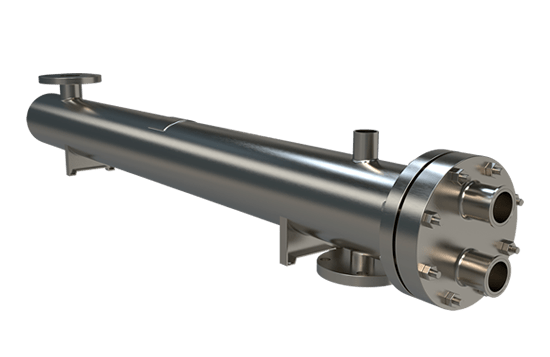
A Fixed Tubesheet shell-and-tube condenser with steam in the tubes and water on the shell side handles this duty well. Welded tube joints tolerate repeated swings between pressure and vacuum, the water-side volume buffers the peak, and the unit drains completely between cycles. Where cooling water is hard or untreated tap water, put it where scale can be removed, and specify an outlet temperature control valve so water flows in proportion to the exhaust instead of running continuously.
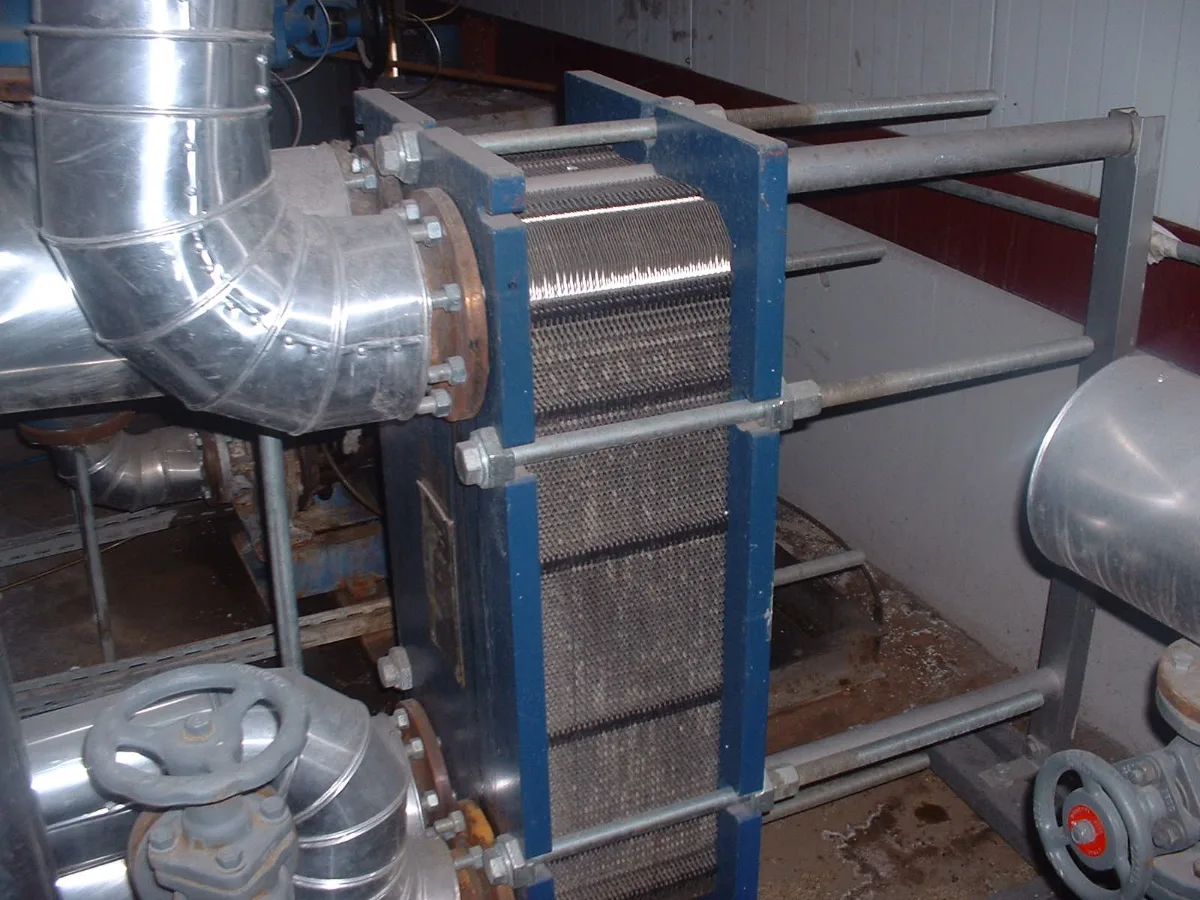
A Gasketed Plate & Frame unit can serve a sterilizer exhaust when the exhaust is mostly steam and the cycle is gentle, and its compact size appeals in crowded equipment rooms. Repeated vacuum pulses, though, work against gasket seating, and the thin plate pack has little thermal mass to take a burst. On frequent prevacuum cycles the shell-and-tube design is usually the safer choice.
For sizing, send the chamber volume and operating pressure, cycle type with the number of vacuum pulses, the vacuum pump type and capacity, cycles per day, coolant source and temperature, and the maximum allowable drain temperature.
Chamber details
Chamber volume, operating pressure and sterilizing temperature
Cycle pattern
Prevacuum pulses, exhaust rate and drying vacuum level
Pump and drain
Vacuum pump type and allowable discharge temperature
Water source
Coolant source, supply temperature and hardness
Sized for
the Burst, Not the Average
1.
Cool to the Drain
Rating on the blowdown peak keeps discharge below the drain temperature limit through every exhaust, avoiding the code violations and damaged plastic drain piping that hot sterilizer discharge causes.
2.
Faster Prevacuum
Condensing steam before the liquid ring pump strips most of the vapor volume from the suction, so the pump reaches its vaccum setpoint in fewer seconds per pulse.
3.
Water Only When Needed
A temperature-controlled coolant valve opens with the exhaust and closes between pulses, cutting once-through water use sharply compared with a condenser that runs on continuous flow.
Sterilizer exhaust questions
Your condenser was sized on steam consumed per cycle rather than on the blowdown surge, so the surface cannot keep up for the thirty seconds that matter. A 30 cubic foot chamber at 30 psig holds steam that, released in about 20 seconds, arrives at a rate many times the hourly average. The fix is seldom a slightly larger unit; it is one rated at that instantaneous rate, with enough cold water held in the shell to soak up the first seconds. Check also that the coolant valve opens before the exhaust begins, since a slow valve delays cooling until the peak has already passed.
Yes, a condenser ahead of the pump removes most of the vapor volume, so a liquid ring pump sized for air alone can reach the prevacuum setpoint on schedule. Without it the pump ingests steam at several hundred cubic feet per pound, its seal water warms, and capacity falls toward zero as that water approaches saturation. With condensed exhaust the pump moves mainly the air fraction from the early pulses, which may be a tenth of the volume. Keep the condensate below about 120 F so it does not reheat the seal water on the way through.
Fit a temperature-controlled valve on the coolant outlet so water flows only while exhaust steam is warming the condenser, then look at recirculation. A sterilizer running 10 cycles a day on continuous once-through water at 5 gpm uses 7,200 gallons daily; with the valve open perhaps 15 minutes a cycle, that drops below 800. Beyond that, tower or chilled water in a closed loop removes the once-through water bill, provided the loop can absorb the blowdown peak without its supply temperature climbing past the drain limit during the surge.
One condenser can handle several sterilizers if the controls prevent two chambers from blowing down at once, or if it is rated for coincident exhaust. Two 30 cubic foot chambers exhausting together deliver twice the peak and double the drain temperature rise, so an interlock that holds one cycle at its last step until the other has finished exhausting is the usual answer. When schedules cannot be staggered, size for the sum of the peaks and give each line its own check valve so one chamber's exhaust pressure cannot push into another's vacuum pulse.