
1-805-484-2992
Quotes - Engineering - SalesSanitary Condensers for Food and Dairy Steam
Food, dairy and beverage plants use culinary steam, plant steam filtered and treated so it can touch product, for direct steam injection, infusion heating, retorts and equipment sterilization. Vapor from those steps, such as the flash vessel after direct steam heating of milk, carries product aroma and solids. Condensing it is a sanitary duty built around 3-A practice rather than pharmaceutical documentation: every product-contact surface must clean in place, there can be no dead legs where milk solids lodge, and gaskets must be food-grade elastomers that survive caustic, acid and hot water rinses day after day.
- Culinary Steam: Steam meeting the 3-A culinary practice is filtered and free of boiler additives that cannot contact food; the condenser must not reintroduce contaminants downstream.
- CIP Coverage: Every product surface must be reached by cleaning solution at velocity; plates and straight tubes clean well, while blind pockets and crevices do not.
- Dead Legs: Branches, instrument tees and drains are kept short so nothing stagnant can culture bacteria or hold residual product between production and wash.
- Gasket Selection: EPDM, FKM or silicone is chosen for the cleaning chemicals and temperatures used; caustic, nitric acid and hot rinses each attack different elastomers.
- Product Carryover: Flash vapor from direct steam heating carries milk or juice volatiles and fines, which foul condensing surfaces and must be removed every cleaning cycle.
- Inspection Access: Food safety audits favor surfaces that can be opened and seen; a frame that unbolts or a bonnet that comes off makes visual verification simple.
Cleanability Comes Before Capacity
What happens when a sanitary condenser is sized right but cannot be cleaned? Product residue builds in the corners the wash never reaches, a swab fails, and the line comes down for manual cleaning. In dairy and food service that is the expensive failure, more than a few degrees of lost approach. Design starts with how the unit will be cleaned: CIP flow rate and direction, wash temperature and chemicals, and whether production allows it to be opened for inspection.
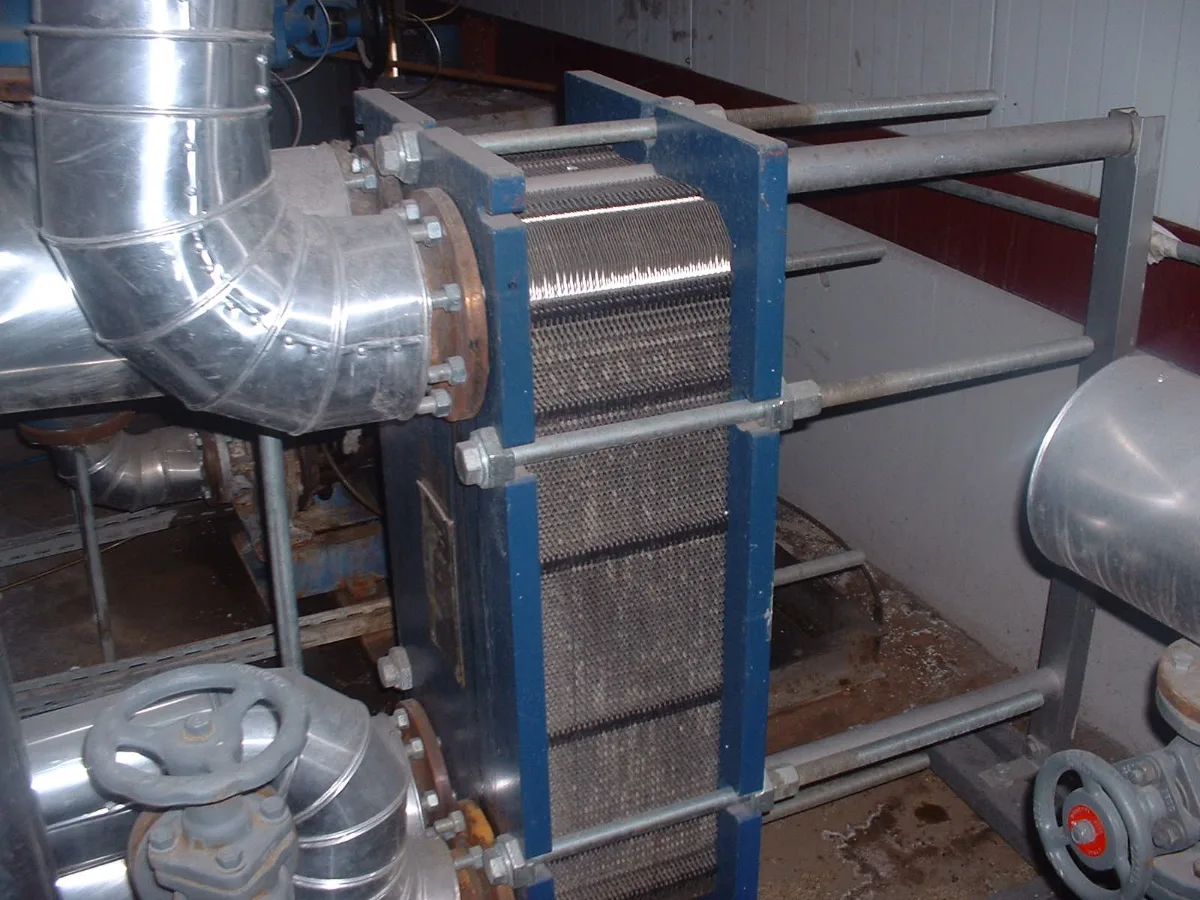
This is the duty where a Gasketed Plate & Frame exchanger often earns first choice. Food plants already run plate heat exchangers through daily CIP, plates can be opened and inspected visually, and turbulent channels keep the condensing surface scrubbed. The cautions are specific: choose a gasket compound rated for your cleaning program, keep vapor-side pressure drop low enough for flash-vessel vacuum, and remember that milk-solid fines need wide enough channels.
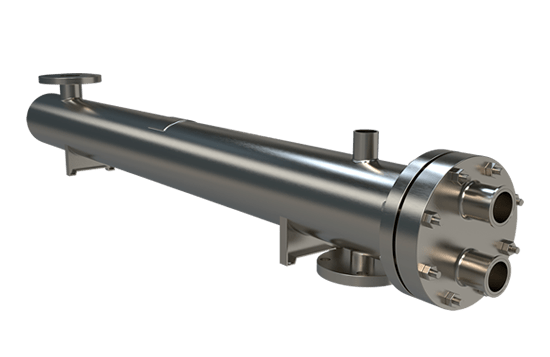
A Fixed Tubesheet shell-and-tube condenser suits sanitary service where vapor volume is large, the duty runs under vacuum, or the vapor carries enough solids to plug plate channels. Product-side tubes in 316L with a sanitary finish and clamp connections clean in place, and there are no elastomers in the vapor path. The trade-off is that the shell side cannot be opened for inspection, so the product must flow inside the tubes.
Before asking for a price, have ready the vapor source and rate, operating pressure or vacuum in the flash vessel, product type and solids content, CIP chemicals and temperatures, coolant conditions, and whether the receiving plant audits against 3-A.
Vapor source
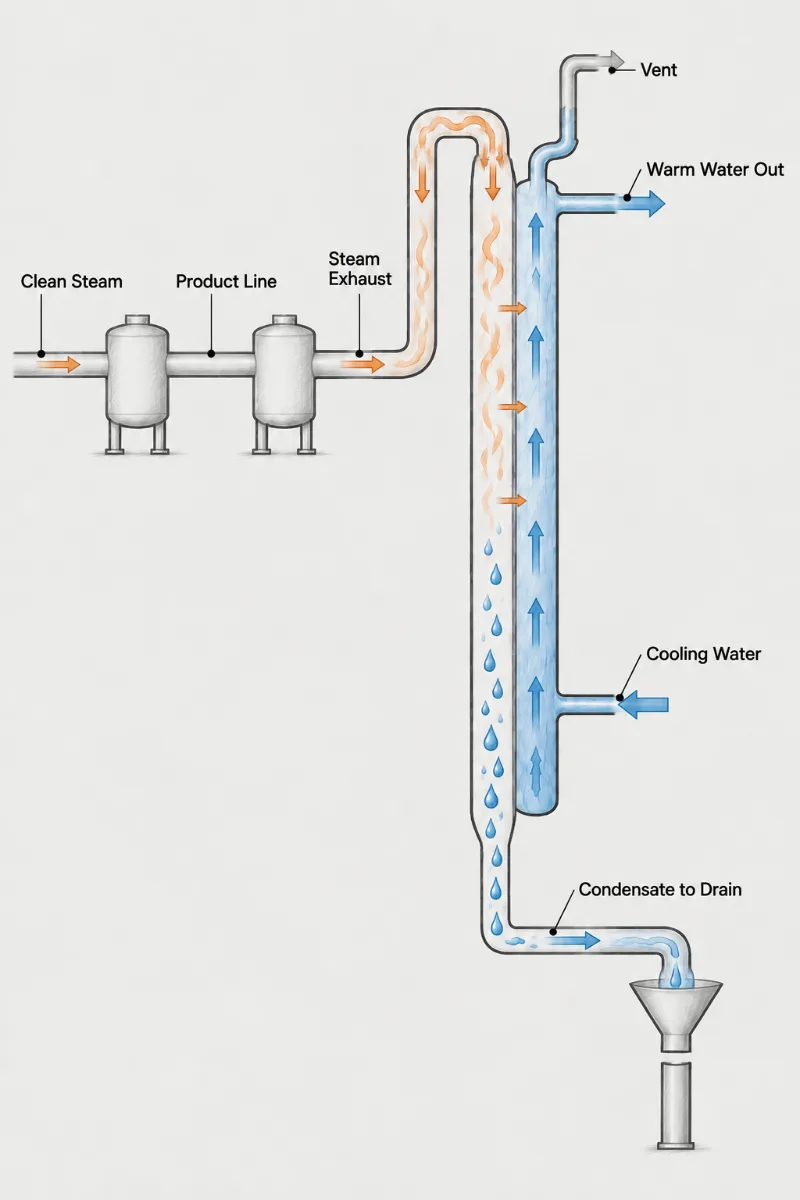
Flash vessel, infusion chamber or retort and its vapor rate
Wash program
Cleaning chemicals, temperatures and circulation direction
Product carried
Milk, juice or other product and its solids content
Sanitary standard
Audit basis and preferred gasket and fitting types
Sanitary Design
That Survives Daily Washdown
1.
Cleans Where It Counts
Turbulent plate channels or straight sanitary tubes keep CIP solution moving across every product surface, so residue does not settle in corners that fail a swab or allergen check.
2.
Gaskets Matched to Chemistry
Elastomers are chosen for your caustic, acid and sanitizer program, extending gasket life and avoiding the swelling or cracking that opens a contamination path between product and coolant.
3.
Open for Inspection
A plate pack that unbolts, or a straight-tube bonnet that comes off, lets quality staff see the product surfaces directly, which simplifies food safety audits and troubleshooting.
Sanitary condensing questions
Yes, a gasketed plate exchanger condenses culinary steam flash vapor well as long as the vapor volume and the solids load stay within what its ports and channels can pass. Flash vapor from a direct steam injection milk line at near-atmospheric pressure fits that envelope; a flash vessel pulled to 20 in Hg of vacuum moves roughly three times the volume per pound and often does not. Check two numbers before you commit: port velocity on the vapor side and the largest particle in the carryover. If fines from scorched protein exceed about a tenth of the channel gap, the pack will bridge between washes and you will see vapor-side pressure drop climbing by the end of a shift.
Pick the elastomer by the harshest step in your wash program, then confirm it against the product itself. EPDM is the default for caustic and hot water CIP up to about 300 F but swells in butterfat and vegetable oil; FKM holds up to fats and nitric acid rinses but loses some resilience in prolonged hot water; silicone stays flexible at low temperature yet tears more easily on repeated opening. A plant running caustic at 180 F and nitric at 140 F on a cream line usually lands on FKM, while a juice line with the same wash stays on EPDM. Ask for a food-contact declaration for the compound you choose, since 3-A auditors will.
Culinary steam shifts the design burden from what the condenser removes to what it must not add, so the product-contact side is specified like a piece of process equipment. That means 316L tubes or plates with a 32 Ra or finer finish, clamp fittings in place of threaded ones, and a slope that drains the last of the condensate rather than leaving a pool to culture overnight. Culinary steam also arrives with no amine treatment, so its condensate is slightly more aggressive to carbon steel than plant steam condensate. Keep carbon steel out of the unit entirely, including the coolant side of the shell, so a leaking tube can never put rust into the product.
Hold any branch off the product path to no more than two pipe diameters, measured from the wall of the main line to the end of the branch, including the instrument or valve body. At a typical CIP velocity of 5 ft/s in the main run, solution reaching into a branch slows sharply past that point and leaves residue the swab will find. On a condenser this rule catches the vent, the thermowell and the sample port, which are usually the three offenders. Flush-mount sensors and a drain that sits at the true low point of the sloped shell remove most of them.
The condensing surface is fouling with product fines carried over from the flash vessel, and the film thickens for as long as the run continues. A film of dried milk solids only a few thousandths of an inch thick cuts the overall coefficient enough to raise condensing temperature several degrees, which is what the sagging flash-vessel vacuum is telling you. Two things slow it: a better entrainment separator ahead of the condenser, and a vapor-side velocity high enough that fines stay entrained to the condensate drain rather than settling on the surface. Size with a fouling allowance that matches your longest run, not an average, and set the CIP interval to the run length.
One condenser can serve several lines if the sanitation program is written for the strictest product among them and the piping lets each line be isolated during its wash. The practical obstacle is allergen control: a juice line and a dairy line sharing a condenser need a validated full wash at every changeover, and that downtime can cost more per year than a second unit. Where the lines run the same product family and stagger their CIP, a shared unit is sensible. Count the changeovers per week; above two or three, separate condensers usually pay for themselves within a year.