
1-805-484-2992
Quotes - Engineering - SalesCondensers for Batch Stills
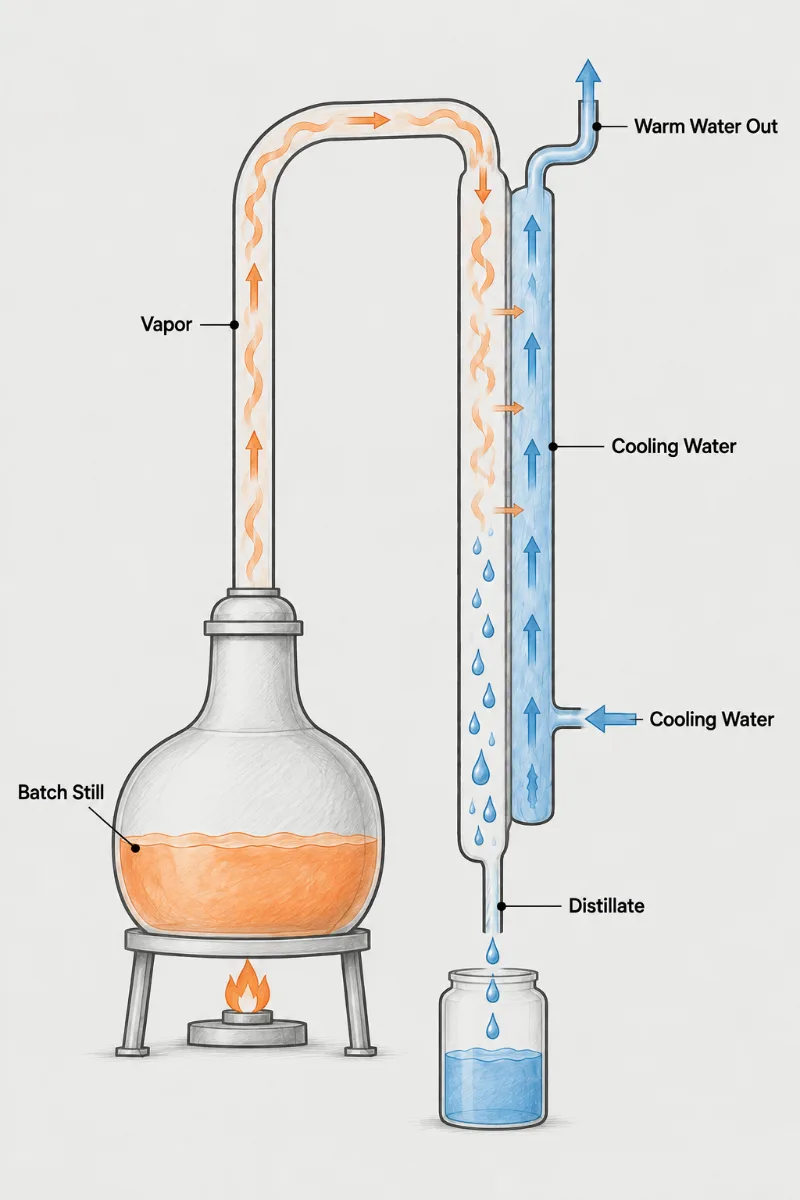
A batch still charges a pot, heats it, and drives off a vapor whose composition changes from the first drop to the last. Light heads come over first at a low condensing temperature, the main cut follows, and the tails arrive hotter and heavier as the pot depletes. The condenser above a batch still therefore never sees one design point. It has to absorb the boil-up surge at the start of each run, keep pace as the condensing curve shifts, and then be washed out before the next charge, which may be a different product altogether.
- Peak Boil-Up: Size on the highest vapor rate of the cycle, usually right after the pot reaches a boil, not on the batch-average throughput shown on a mass balance.
- Cut Changes: Each fraction condenses at its own temperature, so coolant must handle the coldest cut, the one with the smallest driving force, without starving the rest.
- Changeover Washing: Product-to-product campaigns need surfaces that drain dry and accept CIP or solvent flushing, with no dead legs where the last batch can hide.
- Vacuum Finish: Many batches pull vacuum to strip the tails, which swells vapor volume; nozzles and the shell side must pass that flow without throttling the pot.
- Thermal Cycling: The condenser heats and cools with every batch; a U-Tube bundle, or a Fixed Tubesheet with an expansion joint, absorbs the repeated tube-to-shell movement.
- Vent Path: Air left in the pot at charging comes over with the first vapor and must find a vent at the cold end, or it blankets surface at peak load.
Sizing a Condenser That Keeps Up With the Pot
The most common batch-still complaint is a condenser that copes for most of the cycle and then loses vapor out the vent in the opening minutes. That is what happens when the unit is rated on average boil-up. Heat input is highest when the charge first comes to a boil, the pot holds the most light material, and vapor rate can run well above the cycle mean. Ask the process side for the peak; if nobody knows it, estimate it from installed heating capacity divided by the latent heat of the lightest major component.
The changing composition matters as much as the rate. Early heads may condense only a few degrees above the cooling-water supply, while the tails condense far hotter. Rate the condenser at the leanest driving force the batch will see, then let a temperature-controlled coolant valve back the duty off for the hotter cuts so distillate is not chilled more than the receiver needs.
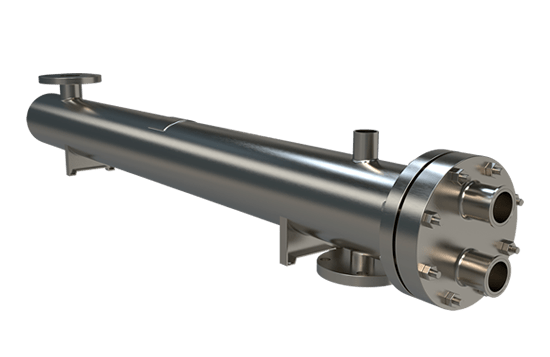
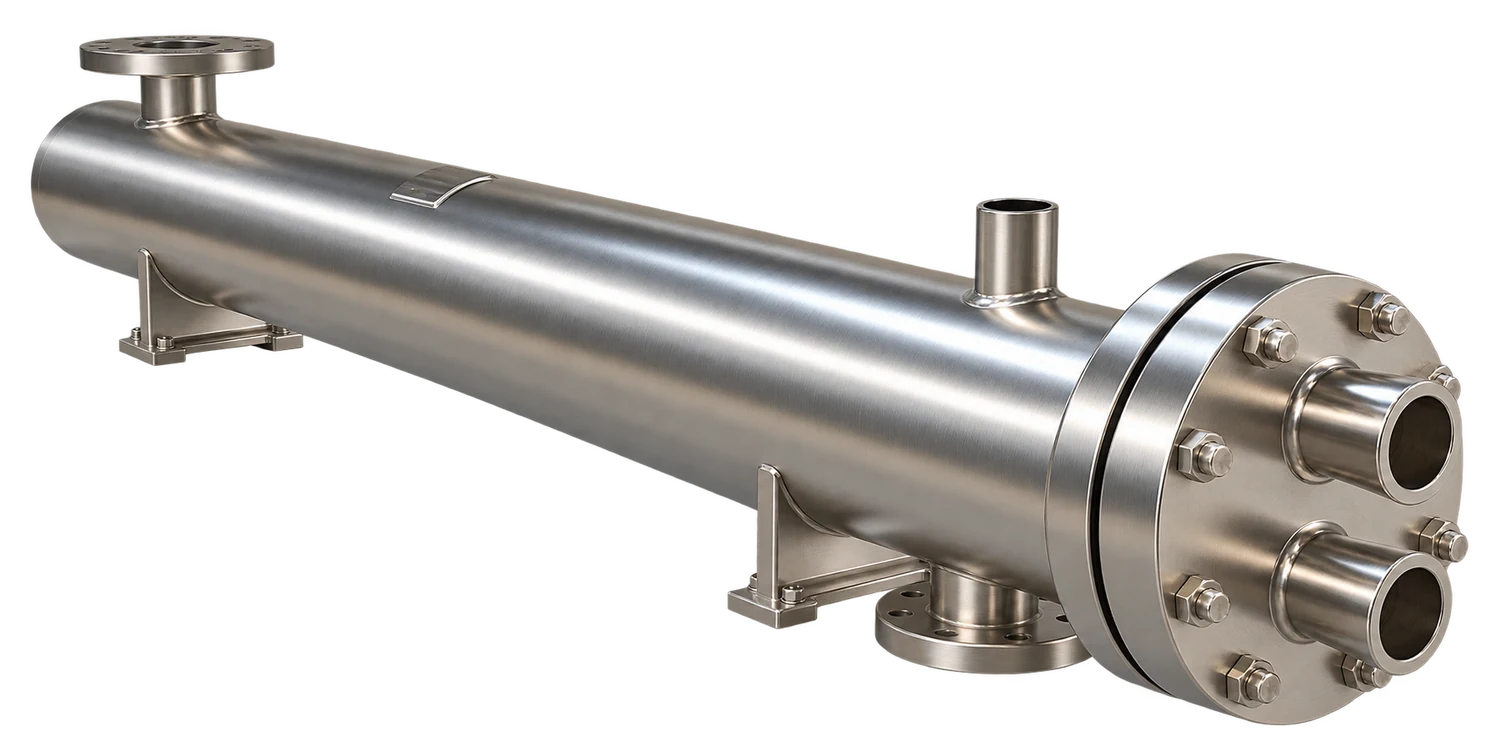
Between the two shell-and-tube constructions on this page, the choice usually comes down to cleaning and thermal movement. A Fixed Tubesheet unit with vapor on the shell side and water in straight tubes lets maintenance rod out scale from the water side, and it can be built in 316L or Hastelloy where a campaign product is corrosive. A U-Tube bundle pulls out of the shell for inspection and tolerates the daily hot-cold swing without an expansion joint, but its bends cannot be mechanically cleaned, so put the cleaner fluid inside the tubes.
Vertical mounting with vapor in the tubes is worth a look when the still runs viscous or fouling tails, since condensate washes the tube walls on the way down and the unit drains completely for changeover.
Before you Request a Quote, gather the heating capacity of the pot, the boiling range of the first and last cuts, the lowest pressure reached in the cycle, coolant supply temperature and available flow, and the full list of products the still will run, because the material choice has to suit the most aggressive one.
Heating capacity
Pot heat input and the boil-up rate at first boil
Cut boiling points
Condensing temperatures of the heads, main cut and tails
Pressure profile
Atmospheric start, vacuum finish, and the lowest pressure reached
Product campaigns
Every product the still runs, for material and wash planning
Built Around
the Whole Batch Cycle
1.
Rated at First Boil
Surface is set by the heaviest vapor load of the cycle, so the opening minutes of each batch condense fully and solvent or product does not escape through the vent while the pot is at full heat.
2.
Drains for Changeover
Sloped shells, low-point drains and vertical options let the condenser empty completely between batches, which shortens wash time and keeps the previous product out of the next campaign's distillate.
3.
Coolant Matched to Cuts
A coolant control loop trims duty as the cut temperture rises, holding distillate at receiver temperature instead of over-chilling hot tails and wasting cooling-water or chiller capacity.
Batch still questions, answered
Because the opening minutes of a batch produce more vapor than any later point, and a condenser sized on the run average simply cannot take it. Put numbers on it: a pot with 1,500,000 BTU/hr of installed heating boiling off ethanol-rich heads at roughly 360 BTU/lb can push over 4,000 lb/hr of vapor at first boil, while a mass balance for an eight-hour run might show 2,500 lb/hr. The shortfall vents as product, and operators learn to throttle the steam for the first half hour, which stretches every run. The air that came in during charging arrives at the same moment and blankets the cold end, which makes the peak look even worse. Rate on the peak, give the vent somewhere to go, and the heads stay in the receiver.
Vertical with vapor inside the tubes when the still changes products or finishes with viscous tails, and horizontal with vapor on the shell side when the vaccum step at the end of the run sets the pressure-drop budget. Headroom is the usual tiebreaker: a vertical unit with 8 ft tubes plus channels and piping wants roughly 12 ft clear above the still nozzle, while a horizontal shell can sit on a frame beside the pot. The vacuum finish is harder than it looks. At 100 mm Hg a pound of vapor occupies around seven times its atmospheric volume, so a vertical unit that was fine at atmospheric pressure can choke the pot once the tails come over, unless its tubes were counted for that step.
Specify the condenser for the harshest product on the schedule and write every product into the quote request with its chloride content, pH and top condensing temperature. The trap is the occasional campaign: 316L that runs for years on alcohol can pit in a single hot run of a brominated solvent, and the failure shows up as coolant in the next product rather than as visible damage. A short list helps: anything with more than a few hundred ppm chloride condensing above 150 F, any acid, and any product with a wash chemistry stronger than caustic should be flagged, because those are what push the material to duplex or a nickel alloy. Also state the coldest and hottest cuts across all products, since the coolant control range must span them.
It can, provided the surface and the coolant were chosen for the vacuum step and not only for the atmospheric peak. The reason is temperature as much as volume. Water-rich tails at 50 mm Hg condense near 100 F, so tower water at 85 F leaves a 15 F driving force where the atmospheric start had well over 100 F; the mass rate is lower, but the usable temperature difference has shrunk by a factor of seven or more. Many batch condensers therefore switch to chilled water or glycol for the vacuum finish, with a control valve that only opens once the pot pressure drops. Make sure the vent to the vacuum pump sits at the cold end, or the air pulled in through the pot seals will block the tubes that matter most.