
1-805-484-2992
Quotes - Engineering - SalesTotal Condensers and Liquid Distillate
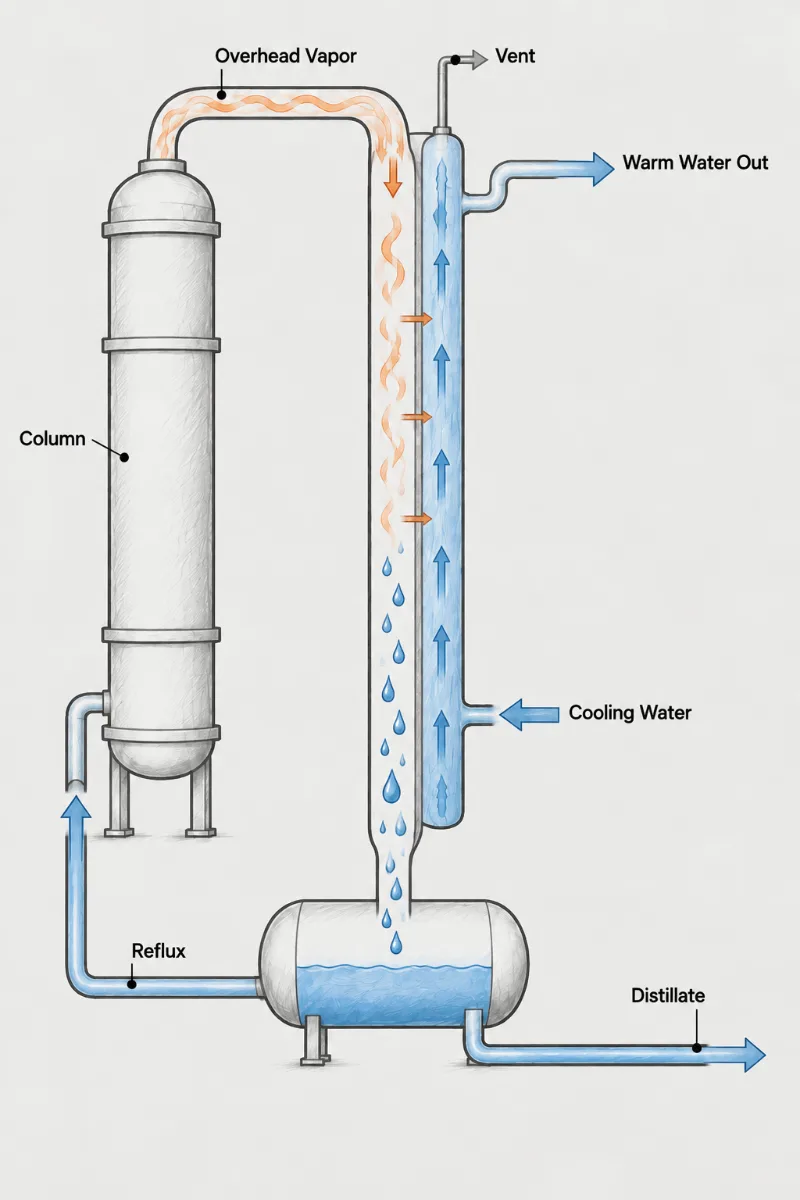
A total condenser liquefies the entire overhead vapor, leaving only a small vent stream for inerts, and the liquid then splits into reflux and distillate in the drum. Because no vapor product leaves, column pressure is tied to the bubble point of the overhead liquid at the temperature the coolant can reach. That makes the total condenser the natural choice whenever the lightest product condenses on cooling water and the downstream user wants a liquid. Getting the last few percent of vapor to condense, at a reasonable size, is where the design effort goes.
- Bubble Point: The outlet must reach the overhead's bubble point at drum pressure, not its dew point, so the full condensing range of the mixture is in play.
- Final Vapor: The last few percent of vapor is the hardest to condense, because it is leanest in heavy components and closest in temperature to the coolant.
- Inerts Vent: Dissolved air or nitrogen still has to leave; a small vent with pressure control prevents gradual blanketing over weeks of operation.
- Pump Protection: A few degrees of subcooling protects reflux and distillate pumps from cavitation; much more raises internal reflux and wastes reboiler heat.
- Column Pressure: Choose column pressure so the overhead bubble point sits comfortably above the coolant supply, typically ten to fifteen degrees or more.
- Coolant Approach: A tight approach between condensing temperature and coolant outlet inflates area quickly; relaxing column pressure slightly is often cheaper than more surface.
Condensing Everything at the Top of the Tower
A total condenser is only as good as its coldest corner. For a multicomponent overhead, condensation begins at the dew point and ends at the bubble point, and the temperature difference to the coolant shrinks steadily along the way. The last fraction of vapor condenses with the smallest driving force and the poorest gas-phase transfer, so it consumes a disproportionate share of the area. A unit rated on the average temperature difference will pass vapor to the drum, and the pressure controller will then vent product to hold pressure.
That is why column pressure and coolant are chosen together. Raising the top pressure lifts the bubble point and widens the driving force, which can cut condenser area substantially, at the cost of a hotter reboiler and usually lower relative volatility. Most designs settle on a pressure that gives a comfortable approach to tower water on the hottest summer day.
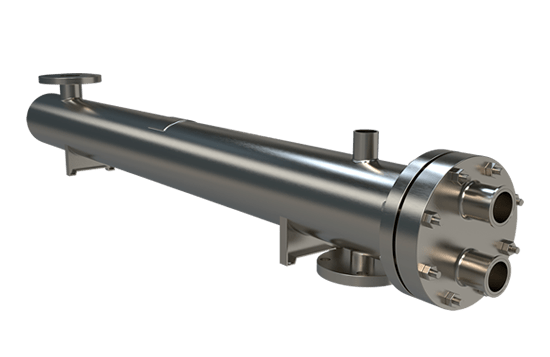
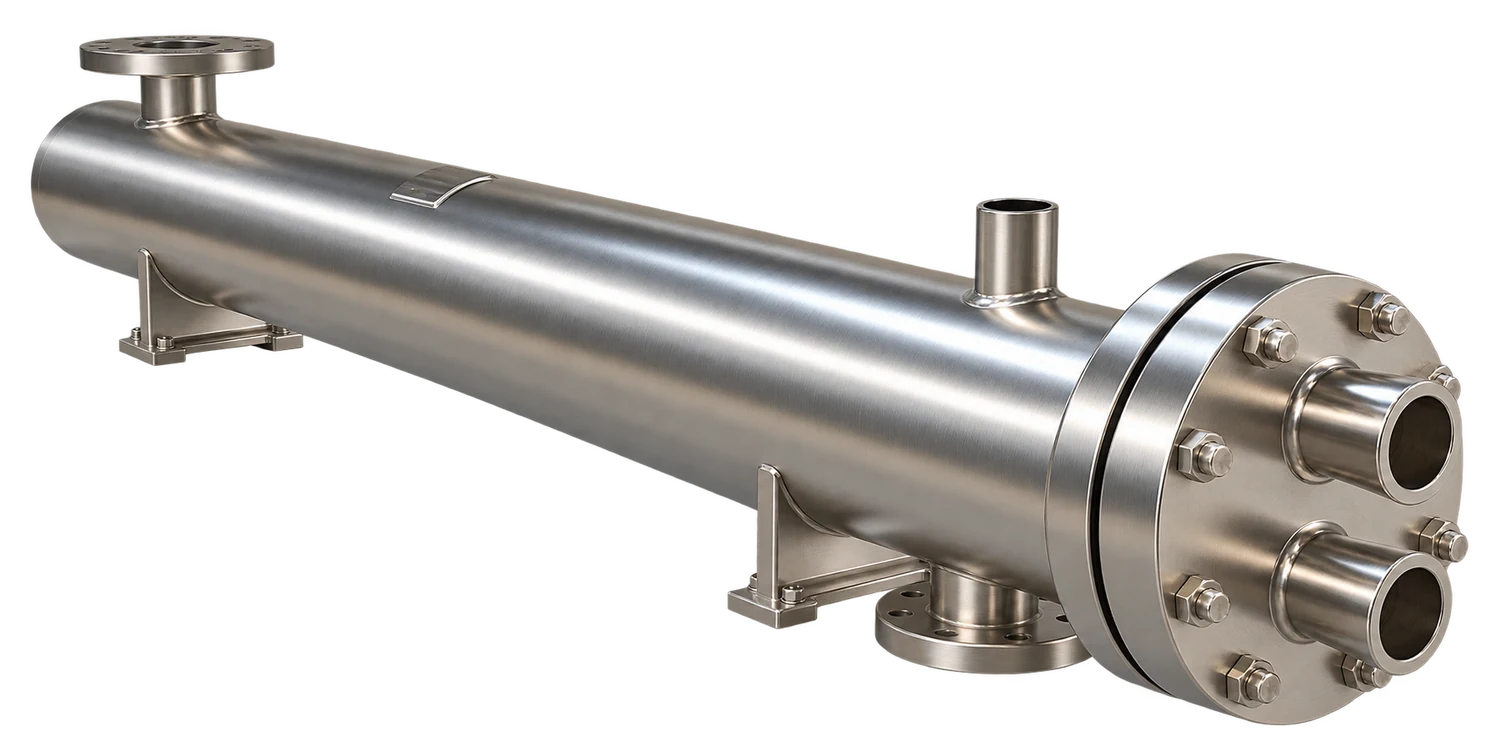
A horizontal Fixed Tubesheet exchanger with vapor entering the top of the shell and liquid leaving the bottom is the workhorse for total condensing on cooling water. The shell-side vapor path has low pressure drop, and water in straight tubes can be cleaned without breaking process piping. A U-Tube bundle is a good choice when the overhead is hot, the temperature difference to the coolant is large, or a removable bundle is wanted for shell-side cleaning.
Keep the vent small but present. Even a total condenser accumulates inerts from the feed and from leaks, and a vent sized for those few pounds per hour, located at the cold end, stops the slow blanketing that otherwise appears as gradual pressure creep.
For a quote, send the overhead composition and rate, column top and drum pressures, coolant supply and return temperatures, allowable pressure drop, and the subcooling needed at the reflux pump suction.
Overhead mixture
Rate and composition leaving the top tray
Drum pressure
Operating pressure held at the reflux drum
Summer coolant
Hottest supply temperature and allowable return
Pump suction
Subcooling the reflux and distillate pumps need
All Liquid,
Nothing Lost to the Vent
1.
Rated to the Bubble Point
The design follows the full condensing range down to the bubble point at drum pressure, so the last of the vapor condenses at design rate instead of leaving through the pressure-control vent.
2.
Pumps That Stay Full
Modest, controlled subcooling gives reflux and distillate pumps the suction margin they need without over-chilling the reflux and raising reboiler duty, so the column runs at the energy use it was designed for.
3.
Pressure and Area Balanced
Column pressure, coolant temperture and condenser area are weighed together, which often finds a smaller condenser at a slightly higher top pressure without hurting the separation.
Bubble point and vent questions
The dew point is where the first liquid appears from a vapor mixture and the bubble point is where the last vapor disappears, so a total condenser is finished only when its outlet reaches the bubble point at drum pressure. For a pure component the two coincide; for a mixture the gap can be 20 to 60 F, and the driving force to the coolant shrinks across it. An overhead whose dew point is 180 F and whose bubble point is 140 F, condensing against water from 85 F to 105 F, has a 75 F difference at the inlet, against the leaving water, and only 55 F where the final vapor meets the entering water. The last ten percent of the heat can take a third of the surface for that reason, and a rating that quotes one condensing temperature has guessed at that third.
Vapor is reaching the drum, and the controller is doing its job by venting it; the question is wether that vapor is inert gas or product, and a sample from the vent line answers it in an afternoon. A vent that is mostly nitrogen or air with a trace of product means inerts are accumulating faster than the vent passes them, so open it a little or move it to the cold end. A vent that is mostly product means the condenser is short of capacity at the leanest vapor: coolant warmer than design, scale on the water side, or an original rating on the average driving force. Compare the condensate temperature with the bubble point at drum pressure; 10 F above it confirms the shortfall. Blanket oversizing will not fix the first case and is an expensive fix for the second.
Often yes, and the easiest test is to run the rating twice, once at the current top pressure and once 5 psi higher, and compare condenser surface against reboiler and reflux duty. On a solvent column with a 140 F bubble point against 85 F water, 5 psi of extra pressure can lift the bubble point 15 to 20 F and cut the condenser by a quarter or more. The costs sit elsewhere: bottoms temperature rises by a similar amount, which may push a product past its degradation limit or move the reboiler from 50 psig to 100 psig steam, and relative volatility usually falls, so the same purity needs more reflux. Where the condenser is the bottleneck in a revamp and the reboiler has headroom, a small pressure increase is the cheapest surface you can buy.