
1-805-484-2992
Quotes - Engineering - SalesOverhead Condensers for Solvent Recovery Columns
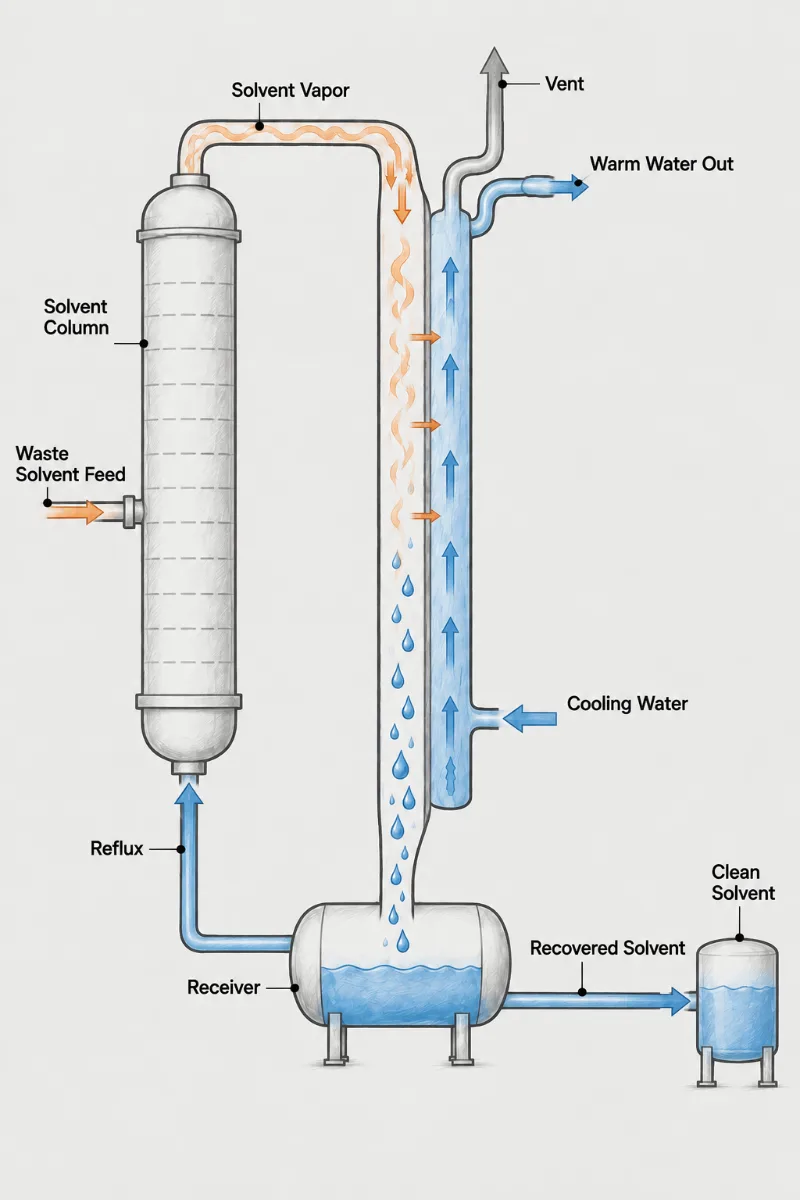
A solvent recovery column takes a spent mixture - wash solvent, mother liquor, extraction solvent carrying water and heavies - and returns a distillate clean enough to go back into the process. The overhead condenser decides how clean. It sets column pressure, supplies the reflux that holds the purity spec, and is the last place light ends and dissolved inerts can be separated from the product. Unlike a vent or dryer condenser, it sees a nearly pure vapor near its bubble point, so the job is total condensation at a stable pressure rather than chasing a dew point.
- Purity Spec: The distillate specification drives reflux ratio, and reflux ratio drives condenser duty; a tighter water or heavies limit can raise the load by half or more.
- Azeotrope Behavior: Solvents that form a water azeotrope condense at a fixed composition, so plan for a decanter or a second column instead of expecting the condenser to separate them.
- Column Pressure: The condenser is the pressure controller on most recovery columns; size enough margin that coolant throttling, not flooded surface, holds the setpoint on a hot day.
- Reflux Temperature: Moderate subcooling keeps reflux from flashing at the top tray, but heavy subcooling adds internal reflux and spends reboiler steam to undo it.
- Light Ends: Dissolved nitrogen and low boilers collect at the cold end; a vent at the condenser outlet or reflux drum keeps them from blanketing tubes.
- Expansion Stress: Steam-heated columns put hot vapor against cold water, so a Fixed Tubesheet unit may need a shell expansion joint to absorb differential growth.
Getting Solvent Back at Spec: The Column Condenser
The overhead condenser on a solvent recovery column earns its keep in purity, not in heat removal. A unit with too little surface does not simply run warm. Column pressure creeps up, relative volatility falls, the operator raises reflux to hold spec, and the extra reflux loads the condenser further. Plants see it as a distillate that drifts off spec on summer afternoons when cooling tower water runs a few degrees warmer.
Duty is the latent heat of the overhead times the vapor rate, and vapor rate is distillate plus reflux. At a reflux ratio of two, the condenser handles three pounds of vapor for every pound of recovered solvent. Most recovery columns run at atmospheric pressure or a modest vacuum; on a vacuum column the vapor-side pressure drop budget is often one to two psi or less, because every psi lost in the condenser raises the temperature at the column bottom.
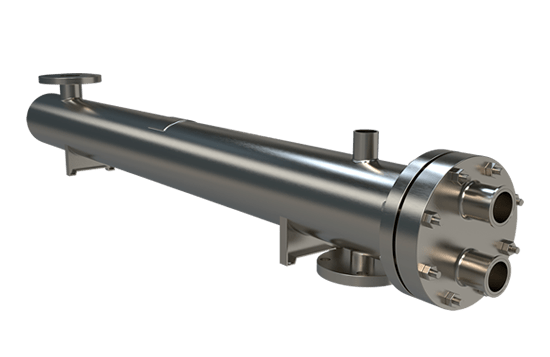
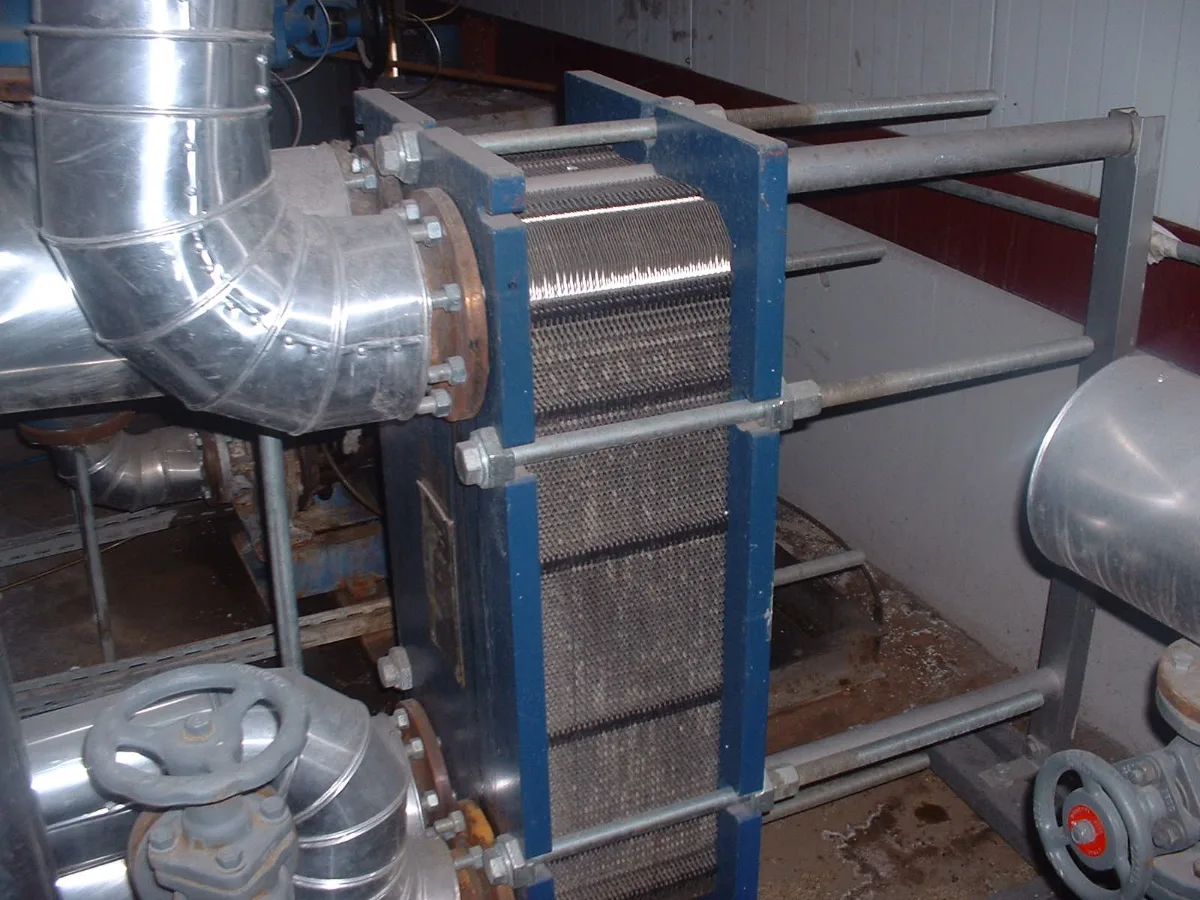
A Fixed Tubesheet shell-and-tube with vapor on the shell side and cooling water in the tubes is the usual answer. Recovered solvent is clean, so the shell side rarely needs mechanical cleaning, while the tube side can be rodded when tower water scales. A Welded Plate exchanger fits where plot space is tight or a close approach against chilled water is needed, and it handles clean, low-fouling solvents well. It is the weaker choice for a deep-vacuum overhead, where vapor volume is large and the allowable pressure drop is tiny.
Before asking for a price, gather the overhead composition and rate at design reflux, column top pressure, the distillate spec and which impurity limits it, the coolant supply temperature in the worst month, and whether the reflux drum runs flooded or vented. That lets us rate the actual condensing curve rather than assume one.
Overhead composition
Solvent, water, heavies and inerts at design reflux
Column top pressure
Operating pressure at the column top, vacuum or atmospheric
Distillate spec
Purity target, water limit and reflux return temperature
Worst-month coolant
Cooling water supply and return temperatures in peak summer
Distillate
That Stays On Spec
1.
Steady Column Pressure
Surface sized for the peak overhead lets the coolant valve, not a flooded bundle, control top pressure. Relative volatility holds, and the operator stops raising reflux to make up for a condenser that has run out of margin.
2.
Clean Reflux Drum
Venting light ends at the condenser outlet keeps nitrogen and low boilers out of the drum, so the reflux pump sees solid liquid and the distillate does not carry a dissolved front-end impurity.
3.
Lower Reboiler Steam
Holding reflux only slightly subcooled avoids creating internal reflux the reboiler must vaporize again. On a column running a high reflux ratio, that trim shows up directly in steam cost per pound of recovered solvent.
Column overhead questions
No, and expecting it to is the most common sizing error on a recovery column: the condenser returns liquid of the same composition as the vapor it received. What it can do is set up the separation that follows. Toluene and water form an azeotrope near 184 F containing roughly 13 percent water by mass, and once that condenses the two liquids part cleanly in a decanter; the toluene layer goes back as reflux or to storage and the water layer is drawn off.
Ethanol and water, by contrast, stay mixed at about 95.6 percent ethanol whatever the condenser does, so the column needs an entrainer, a pressure-swing pair or a molecular sieve bed after it. For a decanter case, subcool the condensate a few degrees, since colder liquid separates faster and leaves less solvent in the water.
Only enough to protect the reflux pump and keep the top tray quiet, which on most solvent columns means 3 to 15 F below the bubble point. Work it from the pump: liquid at its bubble point has no net positive suction head margin, so drum elevation plus subcooling has to supply what the pump needs. Beyond that, every degree of subcooling becomes extra duty for the reboiler.
On a column refluxing 3,000 lb/hr of acetone, an extra 20 F of subcooling adds roughly 30,000 BTU/hr the reboiler must vaporize again, a few percent of the latent load for no gain in purity. A separate product cooler on the distillate draw is the right place to reach a cold storage temperature.
Because the condenser has lost its margin, and column pressure has risen to find a new balance point where the available surface can still reject the full latent load. A 10 F rise in tower water supply, say from 80 F to 90 F in August, costs the same 10 F of mean temperature difference, and a unit rated with little margin pushes top pressure up by a psi or more.
At higher pressure the relative volatility between the solvent and its water or heavies shrinks, so the same trays at the same reflux deliver a lower purity, and the operator responds by raising reflux, which loads the condenser further. The cure is a rating done on the hottest month's water with the full peak overhead. On an existing unit, cleaning the tube side and verifying coolant flow are the first checks.
Shell side, in most recovery column overheads, because the solvent is the clean stream and tower water is the one that scales. Water in the tubes keeps the fouling where straight tubes and removable channel covers let it be rodded out. The exceptions are specific.
A corrosive overhead such as a chlorinated solvent carrying trace HCl goes in the tubes so only the tubes, tubesheets and channels need the alloy and the shell stays carbon steel. A vacuum column with a tight pressure budget also favors shell-side condensing, because the open shell gives a lower vapor-side loss than a tube bundle. Where the overhead is placed in the tubes, specify a vertical unit with condensate draining downward so liquid does not pool in horizontal tubes and blanket surface.