
1-805-484-2992
Quotes - Engineering - SalesCondensers on Solvent Storage Tank Vents
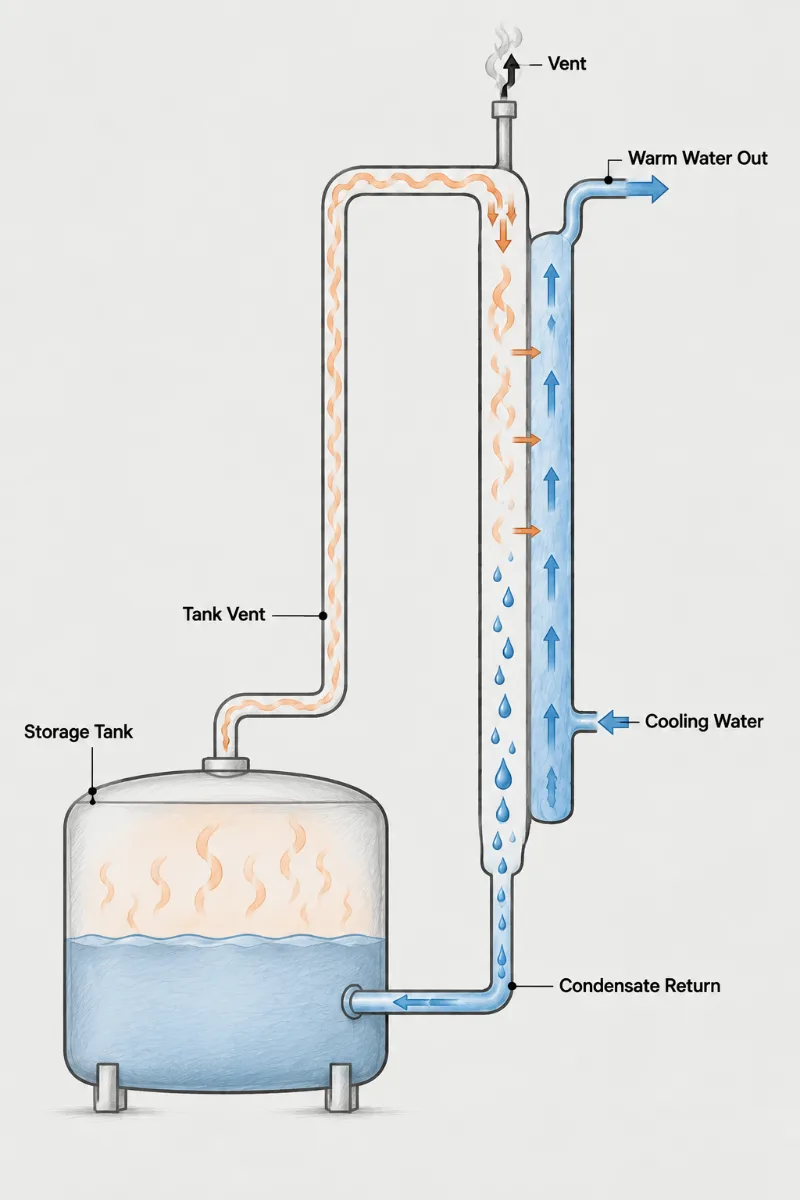
A solvent storage tank loses product two ways: working losses when filling pushes saturated vapor out the vent, and breathing losses as daily temperature swings expand and contract the headspace. A tank vent condenser chills that outgoing vapor and drains the recovered solvent straight back to the tank. Flow is small and irregular, zero for hours and then a surge at the truck unloading rate, and the allowable pressure drop is set by a conservation vent that opens at a few inches of water column.
- Fill Rate: Peak vapor flow equals the liquid pumping rate into the tank plus any pad gas, so size on the fastest unload, not the average day.
- Back Pressure: Total condenser loss must stay below the conservation vent setting, which is measured in ounces per square inch or inches of water column.
- Moist Air: Tanks that breathe air pull humidity in, and at chilled outlet temperatures that water frosts the surface unless it is planned for.
- Return Leg: Condensate drains back to the tank through a sealed leg, so elevation and slope from condenser to roof nozzle belong in the design.
- Idle Hours: The condenser sits cold and nearly unused for much of the day; coolant control that avoids freezing during idle time saves defrost cycles.
- Roof Mounting: Units on the tank roof need low weight and compact nozzles, while grade-mounted units need a pumped or long gravity return.
Small Flow, Tight Pressure: Sizing a Tank Vent Condenser
The tank vent condenser that fails usually does so on the first fast truck unload. Vapor displaced by incoming liquid hits a condenser sized for breathing losses, pressure drop climbs past the conservation vent setting, and the pressure side of the vent lifts. The condenser is bypassed exactly when the most solvent is leaving. The second common failure is frost: humid air drawn in as the tank cools forms ice on a glycol-cooled surface until the vapor path closes.
Recovery depends almost entirely on outlet temperature. Displaced gas is saturated at tank temperature, and cooling it condenses the difference in solvent vapor pressure between tank and outlet. For volatile solvents such as acetone or hexane, recovering most of the vapor takes chilled glycol well below freezing, which brings the frost question back.
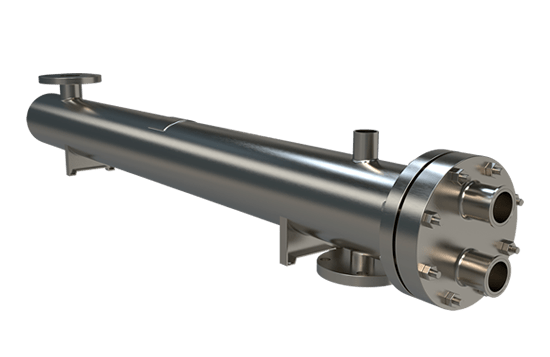
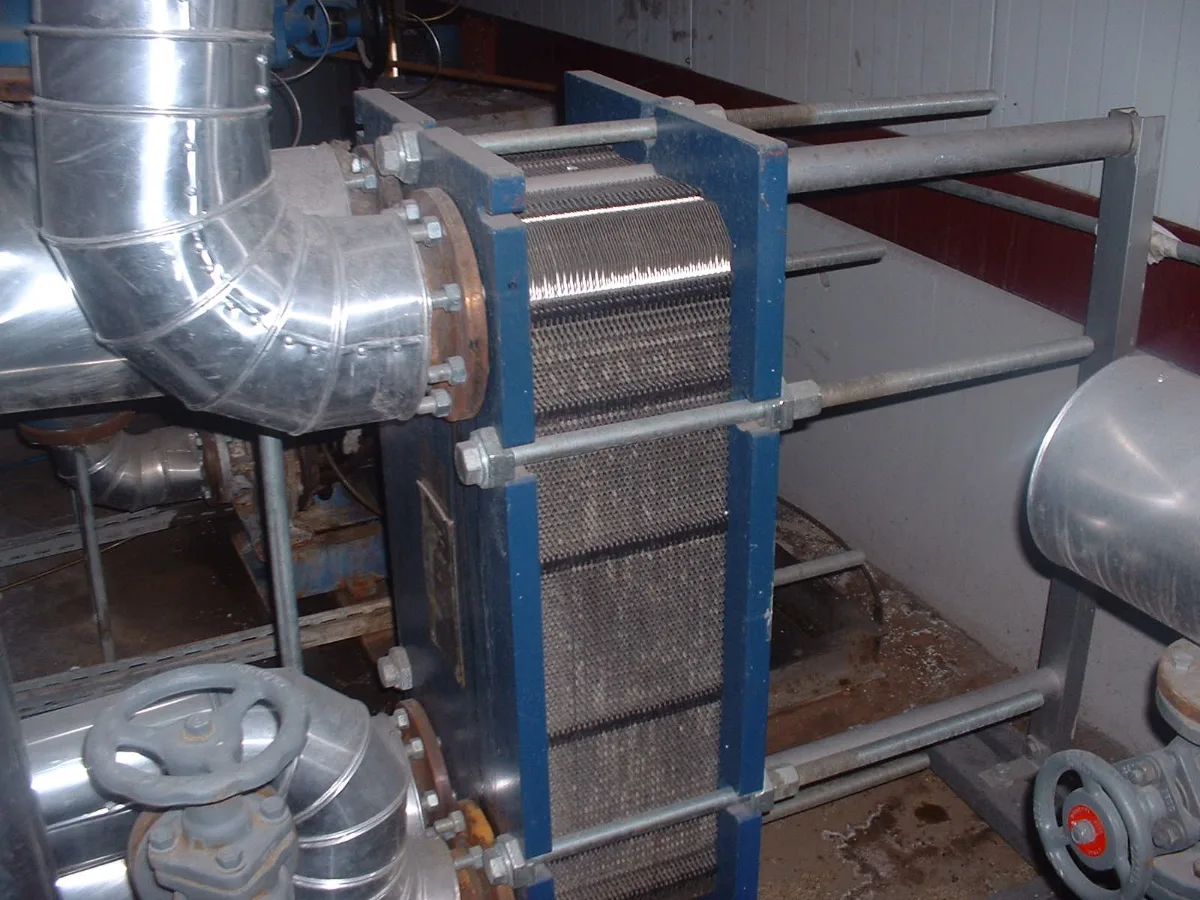
A Fixed Tubesheet shell-and-tube with vapor in the tubes is easiest to drain and defrost: tubes slope toward the outlet, and warm glycol can melt frost in a short cycle. A Welded Plate exchanger is compact and light enough for roof mounting and gives a close approach, but its narrow channels close faster under frost, so it fits nitrogen-padded tanks where little moisture enters.
To size it, we need the solvent and tank temperture range, maximum fill rate, pad gas if any, conservation vent pressure setting, available coolant and the mounting location.
Fastest fill
Peak unloading rate from truck, railcar or transfer pump
Vent settings
Conservation vent pressure and vacuum settings on the tank
Pad and moisture
Nitrogen padded or open to air, and local humidity
Mounting location
Roof or grade, with the elevation back to the tank
Product Kept
In the Tank Where It Belongs
1.
Low Back Pressure
Vapor passages are sized against the conservation vent setting, so the condenser stays in the flow path during a fast unload instead of being bypassed by a lifting vent.
2.
Planned Defrost
Sloped tubes and a warm-glycol cycle clear frost before it closes the vapor path. Recovery holds through humid seasons instead of falling off each time ice builds.
3.
Direct Return
Condensate runs back to the tank through a sealed leg with no pump, so recovered solvent is inventory again within minutes and the gas leaving the condenser is lean.
Breathing-loss questions
Roughly the fraction by which solvent vapor pressure falls between the tank temperature and the condenser outlet, and for a volatile solvent that fraction depends heavily on how cold the outlet runs. Hexane in a tank at 90 F has a vapor pressure of about 5 psia, so displaced air leaves one-third hexane by volume. Cool it to 40 F and the vapor pressure drops near 1.3 psia, capturing about 80 percent of the hexane. Reach 0 F with glycol and the vapor pressure is around 0.4 psia, recovering over 90 percent.
On a 7,000 gallon truck unload, the difference between a 40 F and a 0 F outlet is around 10 lb of hexane per delivery. Over a year of deliveries and daily breathing that number decides whether refrigeration pays, which is why the climate and the truck schedule go into the rating.
Only when two things coincide: the surface runs below 32 F and the tank draws moist air into its headspace. A nitrogen-padded tank with the vacuum side of its conservation vent set tight pulls in little moisture, and a glycol condenser on it may run a whole humid season without frost. An air-breathing tank is different.
A half-full 10,000 gallon tank cooling 20 F overnight draws in roughly 25 cubic feet of humid air, a small number, but it repeats every night and in a Gulf Coast summer nearly all of that water lands on the cold end as ice, so over a humid month a narrow passage closes. The simplest defrost is a timed warm-glycol cycle during a known idle window; a tank that unloads at unpredictable hours is better served by two small units alternating, so one is always cold and open.
Yes, through a common vent header, when the products are compatible, the vent settings are similar and the header is designed as carefully as the condenser. The constraint is pressure: the sum of header friction and condenser loss at the fastest fill on the group must stay under the lowest conservation vent pressure setting, often half an ounce per square inch, which rules out long small-bore headers.
Backflow is the second concern, since gas displaced from one tank can push into another tank that is drawing vacuum, so each branch carries a check valve or its own conservation vent. Recovered condensate drains into a collection pot and is pumped to the right tank by product, since a mixed header cannot return it directly. For solvents that react or form peroxides when mixed, keep separate condensers even if the pressure budget would allow a header.