
1-805-484-2992
Quotes - Engineering - SalesRecovering Solvent From Concentrated Exhaust
Not every exhaust stream is worth recovering. The ones that are tend to be concentrated: desorption gas from a steam-regenerated carbon bed, the purge from a rotor concentrator, a nitrogen sweep off an enclosed extraction or printing process. Here the condenser turns a gas carrying a real solvent load into liquid that can be decanted and reused. With steam regeneration, water condenses alongside the solvent, so what happens in the separator after the condenser decides whether the recovery pays.
- Steam Ratio: Carbon regeneration uses several pounds of steam per pound of solvent desorbed, so most of the condenser duty is steam, not solvent.
- Miscibility: Toluene, hexane and similar solvents decant cleanly from water; acetone, alcohols and THF stay dissolved and need distillation to be recovered.
- Desorption Peak: Solvent comes off the bed early in the steaming step, so the condenser sees a rich front followed by nearly pure steam.
- Decanter Temperature: Colder condensate lowers mutual solubility, sharpens layer separation and leaves less solvent dissolved in water sent to treatment.
- Chlorinated Service: Halogenated solvents hydrolyze in hot steam condensate and form acids, so wetted parts may need duplex, titanium or Hastelloy.
- Vent Recycle: Noncondensables leaving the condenser still carry solvent at saturation and are usually routed back to the inlet of the adsorbing bed.
Desorbate Condensing and the Decanter Behind It
In exhaust recovery, the condenser's output is only as valuable as the separation that follows it. A steam-regenerated carbon system desorbs solvent with low-pressure steam; the mixed vapor goes to a condenser, and the condensate drops into a decanter. Let the condenser outlet run warm and two things happen: more solvent stays in the vent gas, and more dissolves in the water layer, where it becomes a wastewater problem instead of recovered product.
The duty is dominated by steam latent heat, with solvent a minority fraction riding along. Load is cyclic, peaking when a bed switches to regeneration and falling as the bed heats through. Sizing on the average steam rate leaves vapor passing uncondensed during the first minutes of every cycle, which is exactly when solvent concentration is highest.
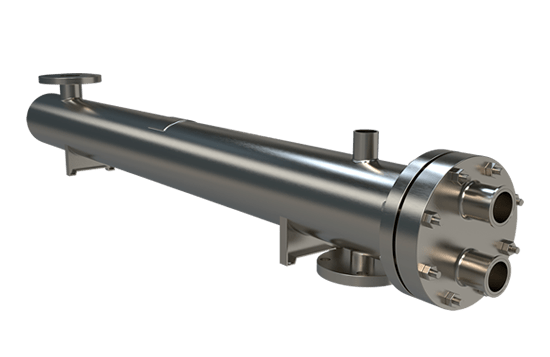
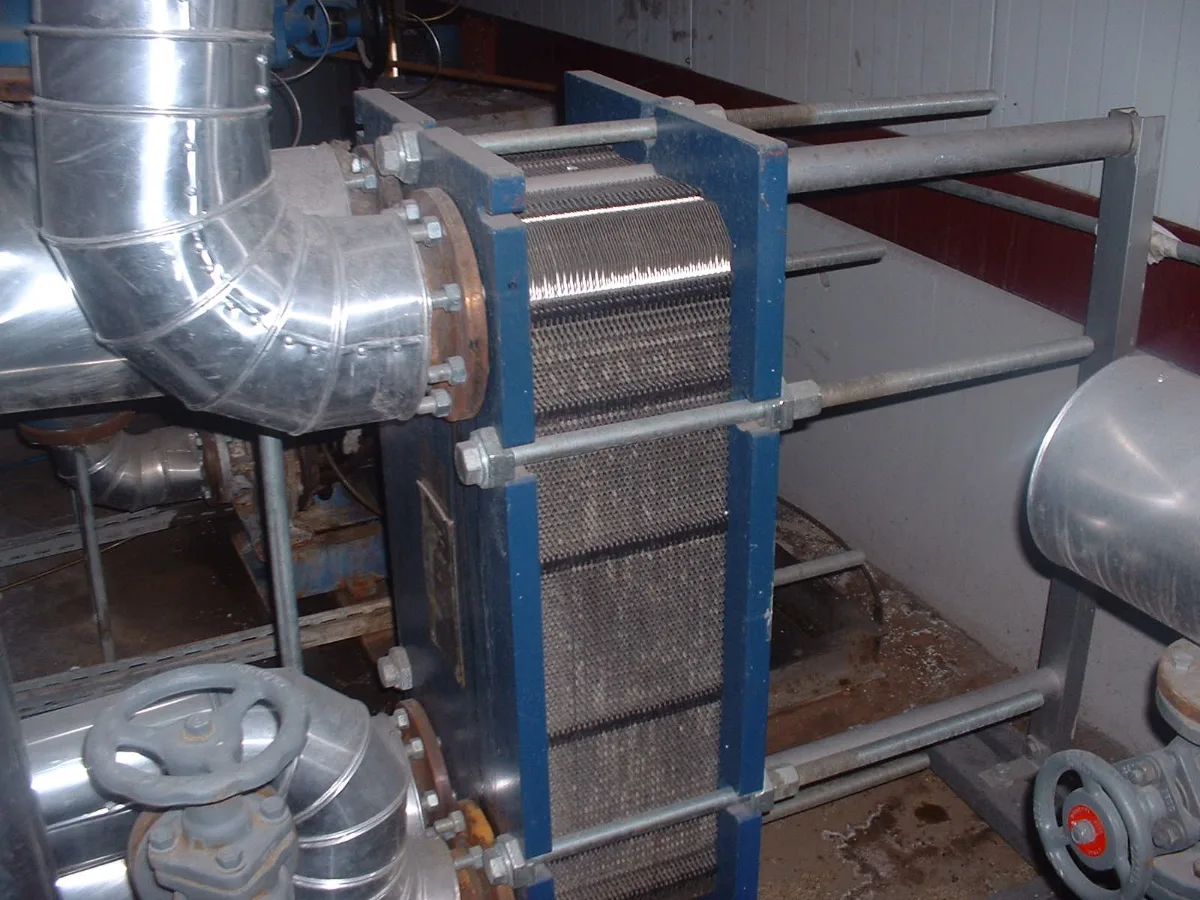
A Fixed Tubesheet shell-and-tube with the desorbate on the shell side is the usual choice. It tolerates the thermal cycling of repeated regenerations, handles steam pressure surges, and can be built with duplex or titanium tubes when chlorinated solvents release acids. A Welded Plate exchanger suits mid-size systems where space is short and the condensate is clean; its counterflow lets the outlet run close to coolant temperature, which helps the decanter. Gasketed construction is best avoided here, since many process solvents attack elastomers.
To quote, we need the solvent or blend, the steam rate and duration of the regeneration step, solvent desorbed per cycle, coolant conditions, the decanter target temperature, and any materials limits set by halogenated content.
Solvent identity
Each solvent in the exhaust and its water solubility
Regeneration cycle
Steam rate, steaming time and solvent released per cycle
Decanter target
Condensate temperature wanted for clean layer separation
Wetted materials
Halogen content and any alloy already specified for the system
More Solvent
Out of Every Regeneration
1.
Sized for the Front
Area matched to the opening minutes of desorption catches the rich vapor front. Solvent that would have slipped through to the vent, or back to the adsorbing bed, is condensed and sent to the decanter.
2.
Cleaner Water Layer
Cold condensate separates faster and holds less dissolved solvent. That trims the organic load on wastewater treatment and keeps solvent that was already paid for out of the drain.
3.
Built for Cycling
Heat-up and cool-down on every regeneration stresses tube joints. A Fixed Tubesheet design with an expansion joint, or an all-welded plate pack, is chosen with the cycle count in mind rather than steady-state rating alone.
Desorbate and decanter questions
Condensing it is straightforward; getting it back as a usable solvent is a distillation problem the condenser hands to the next unit. Steam regeneration delivers condensate that is mostly water, and acetone, methanol, ethanol, THF and IPA dissolve in it completely, so the decanter sees one layer at a few percent organics.
Whether to continue depends on volume: a bed releasing 200 lb of acetone per cycle in 1,000 lb of steam condensate gives a 17 percent solution, and a small stripping column can bring that to a reusable grade. At 20 lb per cycle the same column costs more than the acetone. Plants that stop at the condenser usually send the water to treatment and count the recovery as an emissions step rather than a solvent credit. Partly miscible solvents such as MEK or ethyl acetate split into two layers but leave several percent in the water.
Because a clear interface only shows that the free solvent has separated, not that the water is clean, and every solvent dissolves in water to some extent. Toluene holds at about 500 ppm at room temperature, hexane near 10 ppm, but ethyl acetate reaches roughly 8 percent and MEK about 25 percent. Solubility also rises with temperature, so condensate leaving at 120 F carries more than condensate at 80 F.
For a plant decanting 5,000 lb of water per regeneration, 8 percent ethyl acetate is 400 lb sent to the drain per cycle, often more than was recovered in the organic layer. The fixes are a colder condenser outlet, a longer decanter residence time and, where water solubility is high, a small stripper on the water layer or routing it to boiler feed where the steam cycle recovers it.
It needs to be routed, not treated: the noncondensables leave saturated with solvent at the outlet temperature and go back to the inlet of the bed that is adsorbing, where the carbon takes the solvent out again. The amount matters because it becomes part of the adsorbing bed's load.
A 100 scfm vent at a 100 F outlet carrying toluene at its saturation pressure of roughly 1.1 psia returns about 7 percent toluene by volume; cooling the outlet to 60 F drops that to about 2 percent. On a system that regenerates every eight hours, the warmer outlet can shorten the adsorbing cycle by a noticeable margin. Where the vent cannot be recycled, because the beds are offline together or the stream contains air leakage, it goes to the plant oxidizer or a dedicated small canister.
Duplex 2205 is the usual starting point for a steam-regenerated methylene chloride system; titanium or a nickel-molybdenum alloy follows when chloride levels or temperatures run higher. The hazard is hydrolysis: wet methylene chloride at steam temperature releases hydrochloric acid, and condensate pH in some plants drops below 3 during the rich front of each regeneration.
304 pits within a season under those conditions, and 316 pits more slowly but is exposed to chloride stress cracking at tube-to-tubesheet joints that see 200 F. Duplex resists both at moderate acid levels; titanium shrugs off the chloride but is marginal in hot hydrochloric acid and expensive in a full bundle. Keep the shell in carbon steel when it carries the coolant. A pH probe on the condensate line and a coupon rack in the receiver tell you within six months if the choice was right.